Code: 02027608
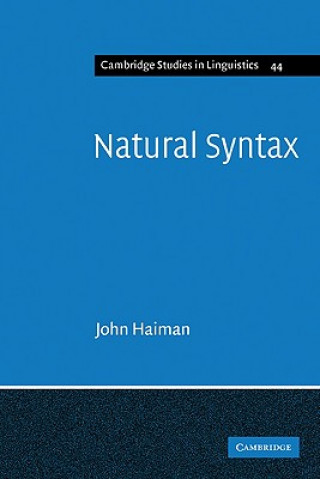
Natural Syntax
by John Haiman
The view that language is in some way 'arbitrary', that there is no formal relationship between a linguistic message and the thought it is meant to convey, is long established and pervasive. The goal of John Haiman's study is to c ... more


- Language:
 English
 - Binding: Paperback
- Number of pages: 296
Publisher: Cambridge University Press, 1984
- More about this


You might also like
-

Living in Japan
26.07 € -26 % -

Star Wars: Rebel Starfighters: Owners' Workshop Manual
21.22 € -24 % -

SEFER YETZIRAH. EL LIBRO DE LA CREACION
21.62 € -14 % -

From Microphysics to Macrophysics
75.61 € -9 % -

La Biblia. Libro del Pueblo de Dios
34.06 € -
MARTYR !
29.61 € -

Human Rights and Civil Liberties
71.36 € -

Advanced Materials in Automotive Engineering
257.38 € -

The Singles Collection 2001-2011
8.08 € -38 % -
Hypochondrie
72.27 € -4 % -
Grammar and Beyond Level 2 Workbook
33.55 € -

W.A.Mozart-Le Nozze Di Figaro
42.55 € -
Caleidoscopios coloniales. Transferencias culturales en el Caribe del siglo XIX / Kaléidoscopes coloniaux.
28.80 € -10 % -
Brand Analysis Axe - Consumer Behaviour Theories
16.17 € -14 % -

In der Arena der preußischen Verfassungsdebatte
145.57 € -19 % -

Das Praxisbuch Samsung Galaxy S24 FE - Anleitung für Einsteiger
19.30 € -11 % -

Geschichte Englands seit den Friedensschlussen von 1814 und 1815
27.89 € -8 % -

NAMASTE
16.97 € -9 % -

La culpa de Till
19.10 € -7 % -

Reasons to Live
12.12 € -2 % -
Histoire secrète de la corruption sous la Ve République
15.15 € -
A History of China
23.85 € -1 % -
Phishing, A Tiger Lily's Cafe Mystery
11.92 € -7 % -

Experiment at Philadelphia
39.32 € -

Mi mundo en inglés
10.60 € -10 % -

Vejez biológica y biográfica
8.58 € -
The Electrical Catechism: 533 Plain Answers to 533 Practical Questions about Electrical Apparatus
25.57 € -2 % -
Bait Seduction Paradigm
33.25 € -2 % -

Exchange
18.39 € -1 % -

Büyülü Öyküler
11.21 € -4 % -

River System Analysis and Management
174.78 € -7 % -
The Dye of God: Essays on Islam and the Qur'an
31.94 € -3 % -
New Yearbook for Phenomenology and Phenomenological Philosophy
122.72 € -

Gandhi and the Ali Brothers
29.71 € -9 % -
Ciencia de los alimentos
76.11 € -

Creating Jobs in Africa's Fragile States
25.47 € -

Alles Gute zum 44. Geburtstag: Besser als eine Geburtstagskarte! Deutsche Flagge Geburtstag Buch mit gezeichneten Seiten, die als Tagebuch oder Notiz
6.36 € -7 % -

Changing Face of Globalization
18.09 € -10 % -

Divergent Paths
63.78 € -
An Embarrassment of Critch's: Immature Stories from My Grown-Up Life
22.84 € -9 % -
The Pardoning Power In The American States (1922)
22.84 € -2 % -
Little Giant Goes To The Dentist
14.04 € -7 % -

Island 2026 - Einzigartige Natur hautnah erleben (Wandkalender 2026 DIN A2 hoch), CALVENDO Monatskalender
54.18 € -2 % -
Von der Weltseele
13.54 € -10 % -
Asymptotic and Numerical Methods for Partial Differential Equations with Critical Parameters, 1
216.23 € -
Innovations n° 64 - Systèmes agroalimentaires - Nouvelles perspectives
29.61 € -
SPA-COMEDIAS COTEJADAS CON LAS
30.92 € -2 % -
Dialogus Part 1, Book 6 (Hardback)
142.43 € -

Te amo abuelita
10.60 € -7 %
Give this book as a present today
- Order book and choose Gift Order.
- We will send you book gift voucher at once. You can give it out to anyone.
- Book will be send to donee, nothing more to care about.
More about Natural Syntax
You get 125 loyalty points
 Book synopsis
The view that language is in some way 'arbitrary', that there is no formal relationship between a linguistic message and the thought it is meant to convey, is long established and pervasive. The goal of John Haiman's study is to challenge the monopoly of arbitrariness, which he believes has affected in significant ways many models of linguistic description and analysis, notably those proposed by Saussure and more recently by Chomsky and his associates. Linguistic structures, Dr Hainian claims, may be compared to (non-linguistic) diagrams of our thoughts, and deviate from iconicity in many of the same ways and for much the same reasons as do diagrams in general. Arbitrariness develops as a result of the relatively familiar principles of economy, generalization and association. In relation to this thesis, Dr Haiman considers a wide variety of constructions, including conditionals and interrogatives, gapping, causative structures, auxiliaries and reflexives, and provides a wealth of exemplification from different languages that also points to typological differences in respect of iconicity.
Book details
Book category Books in English Language linguistics
51.45 €
- Full title: Natural Syntax
- Subtitle: Iconicity and Erosion
- Author: John Haiman
- Language: English
- Binding: Paperback
- Number of pages: 296
- EAN: 9780521319812
- ISBN: 0521319811
- ID: 02027608
- Publisher: Cambridge University Press
- Weight: 446 g
- Dimensions: 153 × 228 × 19 mm
- Date of publishing: 15. March 1984
Trending among others
-

Easy German Step-by-Step, Second Edition
13.74 € -25 % -
Bird by Bird
15.46 € -24 % -
Practice Makes Perfect: Basic Portuguese, Premium Second Edition
13.74 € -25 % -

Most Common Chinese Radicals - New Approaches to Learning Chinese
18.09 € -
English as a Global Language
15.46 € -25 % -
Latin for the Illiterati
26.68 € -18 % -

Gateway to Sindarin
25.06 € -25 % -
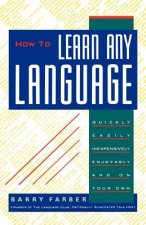
How to Learn Any Language
12.42 € -18 % -
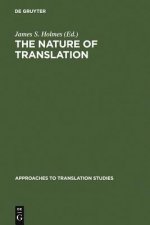
nature of translation
109.27 € -4 % -
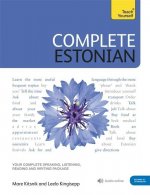
Complete Estonian
47.10 € -19 % -
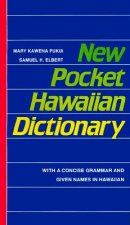
New Pocket Hawaiian Dictionary
7.88 € -25 % -

Ancient Aramaic and Hebrew Letters, Second Edition
24.35 € -6 % -
Learning Irish
28.70 € -23 % -
Introducing Linguistics
10.91 € -10 % -
Codes, Ciphers and Secret Writing
7.27 € -24 % -

Persian Tales, or the Thousand and One Days. in Two Volumes. a New Edition, Embellished with Two Elegant Frontispieces. Vol. II. Volume 2 of 2
20.82 € -25 % -

Origen Against Celsus
29.21 € -10 % -
Art Of Language Invention
21.12 € -

Remembering the Kanji 2
33.55 € -
Linguistics: A Complete Introduction: Teach Yourself
18.29 € -19 % -
Etymologicon
11.01 € -30 % -
Arabic Character Writing For Dummies
12.73 € -25 % -
Syntax - A Generative Introduction Fourth Edition
50.94 € -
Language: The Basics
35.17 € -
Cadenus and Vanessa
11.82 € -25 % -
Remembering the Kanji 3
37.19 € -

Old English Grammar
12.42 € -24 % -
Arabic Script Hacking
14.14 € -19 % -
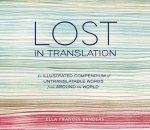
Lost in Translation
12.02 € -25 % -
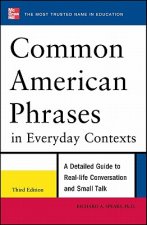
Common American Phrases in Everyday Contexts
20.11 € -23 % -

Chinese For Dummies, 3rd Edition
21.73 € -24 % -

In the Land of Invented Languages
13.74 € -26 % -
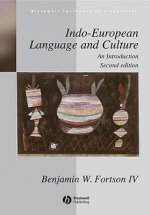
Indo-European Language and Culture - An Introduction 2e
50.74 € -
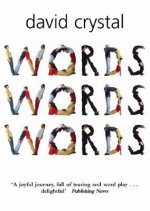
Words Words Words
13.94 € -24 % -
S/Z
13.94 € -20 % -
Stations of Wisdom
27.39 € -2 % -
Language and Linguistics
65.40 € -
Temas de espanol Contrastiva:: Diferencias de usos gramaticales entre esp./portugues
16.77 € -
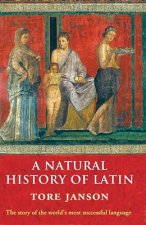
Natural History of Latin
26.38 € -
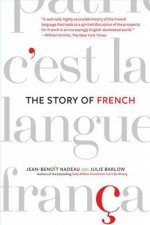
STORY OF FRENCH
22.64 € -28 % -

Story of Hebrew
14.04 € -25 % -
Hebrew
21.02 € -24 % -
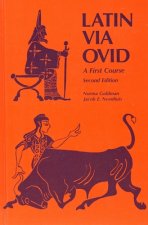
Latin Via Ovid
44.57 € -
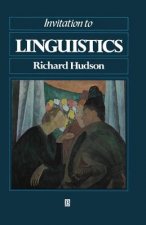
Invitation to Linguistics
47.30 € -
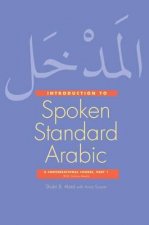
Introduction to Spoken Standard Arabic
37.50 € -20 % -

Abitur Deutsch fur Dummies
18.19 € -10 % -
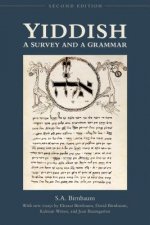
Yiddish
56.91 € -

UNFOLDING OF LANGUAGE
16.87 € -24 % -
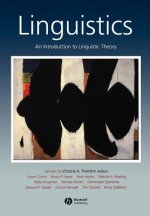
Linguistics - An Introduction to Linguistic Theory
49.43 €
Collection points Bratislava a 13216 dalších
Copyright ©2008-26 najlacnejsie-knihy.sk All rights reservedPrivacyCookies

 26436 collection points
 Delivery 2.99 €
 02/210 210 99 (8-15.30h)