Code: 05092447
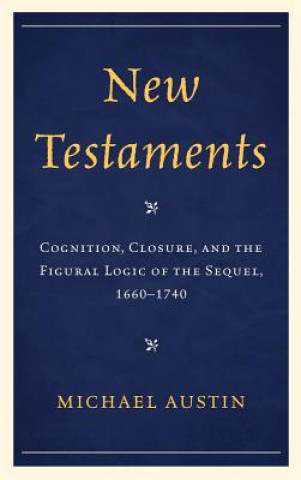
New Testaments
by Michael Austin
In the seventeenth and eighteenth centuries, popular works of literature attracted-as they attract today-sequels, prequels, franchises, continuations, and parodies. Sequels of all kinds demonstrate the economic realities of the li ... more


- Language:
 English
 - Binding: Hardback
- Number of pages: 180
Publisher: Rowman & Littlefield, 2011
- More about this

114.54 €
RRP: 114.60 €
You save 0.05 €

In stock at our supplier
Shipping in 10 - 18 days
You might also like
-
In the Days of Giants
23.71 € -2 % -

Petite chouette d'emilie (La)
6.55 €
Give this book as a present today
- Order book and choose Gift Order.
- We will send you book gift voucher at once. You can give it out to anyone.
- Book will be send to donee, nothing more to care about.
More about New Testaments
You get 278 loyalty points
 Book synopsis
In the seventeenth and eighteenth centuries, popular works of literature attracted-as they attract today-sequels, prequels, franchises, continuations, and parodies. Sequels of all kinds demonstrate the economic realities of the literary marketplace. This represents something fundamental about the way human beings process narrative information. We crave narrative closure, but we also resist its finality, making such closure both inevitable and inadequate in human narratives. Many cultures incorporate this fundamental ambiguity towards closure in the mythic frameworks that fuel their narrative imaginations. New Testaments: Cognition, Closure and the Figural Logic of the Sequel, 1660-1740 examines both the inevitability and the inadequacy of closure in the sequels to four major works of literature written in England between 1660 and 1740: Paradise Lost, The Pilgrim's Progress, Robinson Crusoe, and Pamela. Each of these works spawned sequels, which-while often different from the original works-connected themselves through rhetorical strategies that can be loosely defined as figural. Such strategies came directly from the culture's two dominant religious narratives: the Old and New Testaments of the Christian Bible-two vastly dissimilar works seen universally as complementary parts of a unified and coherent narrative.
Book details
Book category Books in English Literature & literary studies Literature: history & criticism Literary studies: general
114.54 €
- Full title: New Testaments
- Subtitle: Cognition, Closure, and the Figural Logic of the Sequel, 1660-1740
- Author: Michael Austin
- Language: English
- Binding: Hardback
- Number of pages: 180
- EAN: 9781611493641
- ISBN: 1611493641
- ID: 05092447
- Publisher: Rowman & Littlefield
- Weight: 431 g
- Dimensions: 241 × 161 × 17 mm
- Date of publishing: 17. November 2011
Trending among others
-
How to Read a Book
14.62 € -7 % -

Zofloya or The Moor
10.39 € -24 % -

Karamazov Brothers
9.78 € -31 % -

Weird and the Eerie
11.39 € -12 % -
Art of Rhetoric
4.53 € -24 % -
Metamorphoses
7.16 € -25 % -

Saga of Tanya the Evil, Vol. 3
12.20 € -14 % -
If Not, Winter: Fragments Of Sappho
18.06 € -25 % -

Annotated Alice
10.49 € -29 % -
Tempest
8.57 € -25 % -
Twilight and Philosophy - Vampires, Vegetarians and the Pursuit of Immortality
19.27 € -2 % -

Daphne Du Maurier
10.99 € -30 % -
Aeneid
10.79 € -24 % -
Problems of Dostoevsky's Poetics
22.50 € -5 % -

Lyrical Ballads
11.19 € -20 % -

Cambridge Companion to Edgar Allan Poe
31.58 € -

Selected Journals of L. M. Montgomery: Volume I: 1889-1910
31.38 € -
Complete Plays of Sophocles
6.95 € -26 % -

Riverside Chaucer
31.38 € -26 % -

Woman in Her Garden
14.02 € -19 % -
Donne's Augustine
135.94 € -
Silent Catastrophes
12.20 € -30 % -
Myth, Literature and the African World
15.43 € -25 % -

Le Morte Darthur
22.09 € -

Reading Rilke Reflections On The Problems Of Translations
23.20 € -

Boyhood
10.59 € -28 % -
Study Guide for Louis Sachar's "Holes"
11.19 € -2 % -
Weird Realism - Lovecraft and Philosophy
18.96 € -10 % -

Alienation and Freedom
48.13 € -22 % -

On the Wilder Shores of Love
11.80 € -25 % -
Notes on Blood Meridian
24.92 € -5 % -
Daphne du Maurier, Haunted Heiress
26.84 € -6 % -

Under My Skin
16.44 € -19 % -

Study Guide for Paul Zindel's The Pigman
11.19 € -2 % -
Dubliners
8.97 € -29 % -

The Picture of Dorian Gray
7.16 € -29 % -
Count of Monte Cristo
10.18 € -29 % -
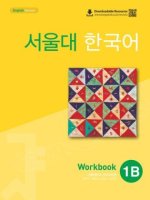
SEOUL University Korean 1B Workbook (QR), m. 1 Audio
34 € -
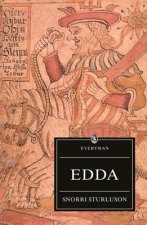
Edda
7.86 € -24 % -

Simple Passion
7.86 € -29 % -
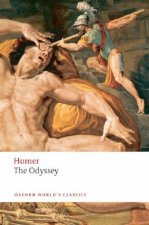
Odyssey
10.18 € -23 % -
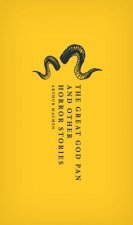
Great God Pan and Other Horror Stories
16.74 € -25 % -

Moveable Feast
8.57 € -30 % -
SEOUL University Korean 1B Student's Book (QR), m. 1 Audio
49.95 € -
Complete Short Stories of Ambrose Bierce
21.59 € -25 % -

Captain is Out to Lunch
13.72 € -30 % -

Selected Poems
9.88 € -25 % -
Rumi: The Big Red Book
12.81 € -25 % -

Persuasion
5.04 € -26 %
Collection points Bratislava a 12797 dalších
Copyright ©2008-26 najlacnejsie-knihy.sk All rights reservedPrivacyCookies

 25598 collection points
 Delivery 2.99 €
 02/210 210 99 (8-15.30h)