Code: 04530774
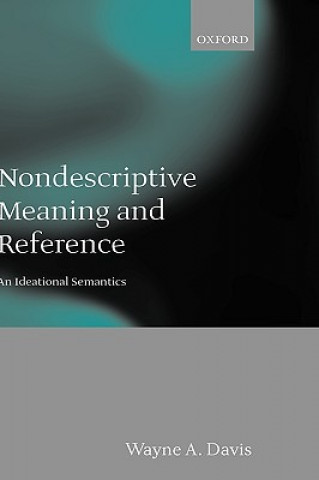
Nondescriptive Meaning and Reference
by Wayne Davis
"Nondescriptive Meaning and Reference" extends Wayne Davis's groundbreaking work on the foundations of semantics. Davis revives the classical doctrine that meaning consists in the expression of ideas, and advances the expression t ... more


- Language:
 English
 - Binding: Hardback
- Number of pages: 466
Publisher: Oxford University Press, 2005
- More about this


You might also like
-

One Piece, Vol. 83
9.70 € -25 % -

Northanger Abbey
16.18 € -28 % -

Bed of Roses
7.27 € -24 % -

Machining Fundamentals
210.80 € -

Native American Tribes: The History and Culture of the Comanche
10 € -7 % -

Caesarea Reports and Studies: Excavations 1995-2007 within the Old City and the Ancient Harbor
92.45 € -

Europeanization of Citizenship
199.78 € -
London Assurance
14.05 € -6 % -

Modernist Imagination
188.34 € -

Brazil
109.44 € -

Divinity and History
175.90 € -

Western Medical Guide for Energy Healing Practitioners
51.68 € -6 % -

Heaven, Texas
11.83 € -25 % -

Korean Lay Training Manual Elder
14.76 € -25 % -

Einfach nur mal so !
5.55 € -

Duns - Burgh on the Merse
13.44 € -2 % -

Rother Selection Alpine Klettersteige Ostalpen
22.35 € -11 % -

Les isolés / Vincent Van Gogh
13.14 € -

Garden of Sand
20.73 € -17 % -

Dream Factories of a Former Colony
31.96 € -

BABADADA, Ikirundi - Romană, kazinduzi y ibicapo - lexicon vizual
26.90 € -7 % -

Future of Liberal Education
209.08 € -

Perversity of Poetry
34.18 € -5 % -

Biosafety of Forest Transgenic Trees
154.36 € -7 % -

Creating Joy Daily
17.59 € -24 % -

Arabic Club Readers: Yellow Band: Elephants
8.59 € -

Suzuki Viola School Volume 7
27.81 € -7 % -

Algorithm Synthesis: A Comparative Study
102.97 € -7 %
Give this book as a present today
- Order book and choose Gift Order.
- We will send you book gift voucher at once. You can give it out to anyone.
- Book will be send to donee, nothing more to care about.
More about Nondescriptive Meaning and Reference
You get 417 loyalty points
 Book synopsis
"Nondescriptive Meaning and Reference" extends Wayne Davis's groundbreaking work on the foundations of semantics. Davis revives the classical doctrine that meaning consists in the expression of ideas, and advances the expression theory by showing how it can account for standard proper names, and the distinctive way their meaning determines their reference. He also shows how the theory can handle interjections, syncategorematic terms, conventional implicatures, and other cases long seen as difficult for both ideational and referential theories. The expression theory is founded on the fact that thoughts are event types with a constituent structure, and that thinking is a fundamental propositional attitude, distinct from belief and desire. Thought parts ('ideas' or 'concepts') are distinguished from both sensory images and conceptions. Word meaning is defined recursively: sentences and other complex expressions mean what they do in virtue of what thought parts their component words express and what thought structure the linguistic structure expresses; and unstructured words mean what they do in living languages in virtue of evolving conventions to use them to express ideas. The difficulties of descriptivism show that the ideas expressed by names are atomic or basic. The reference of a name is the extension of the idea it expresses, which is determined not by causal relations, but by its identity or content together with the nature of objects in the world. Hence a name's reference is dependent on, but not identical to, its meaning. A name is directly and rigidly referential because the extension of the idea it expresses is not determined by the extensions of component ideas. The expression theory thus has the strength of Fregeanism without its descriptivist bias, and of Millianism without its referentialist or causalist shortcomings. The referential properties of ideas can be set out recursively by providing a generative theory of ideas, assigning extensions to atomic ideas, and formulating rules whereby the semantic value of a complex idea is determined by the semantic values of its components. Davis also shows how referential properties can be treated using situation semantics and possible worlds semantics. The key is to drop the assumption that the values of intension functions are the referents of the words whose meaning they represent, and to abandon the necessity of identity for logical modalities. Many other pillars of contemporary philosophical semantics, such as the twin earth arguments, are shown to be unfounded.
Book details
Book category Books in English Language linguistics Philosophy of language
172.36 €
- Full title: Nondescriptive Meaning and Reference
- Subtitle: An Ideational Semantics
- Author: Wayne Davis
- Language: English
- Binding: Hardback
- Number of pages: 466
- EAN: 9780199261659
- ISBN: 0199261652
- ID: 04530774
- Publisher: Oxford University Press
- Weight: 840 g
- Dimensions: 242 × 165 × 31 mm
- Date of publishing: 14. July 2005
Trending among others
-

Language Hoax
13.44 € -24 % -
Trivium
21.54 € -

Construction of Social Reality
14.15 € -23 % -

Making the Social World
14.66 € -9 % -
Practice Makes Perfect English Pronouns and Prepositions, Second Edition
14.66 € -18 % -

Rosicrucian Manual
13.04 € -
What Kind of Creatures Are We?
12.74 € -24 % -

Adam's Tongue
16.18 € -25 % -
Reference
58.46 € -

Language Instinct
13.04 € -29 % -
Semiotics and the Philosophy of Language
22.95 € -2 % -

How Language Works
12.94 € -30 % -

Image Music Text
11.02 € -30 % -

Infancy and History
13.14 € -18 % -
Atoms Of Language
14.76 € -25 % -

Introduction to Cognitive Linguistics
73.03 € -
Naming and Necessity
29.43 € -5 % -
Logic of Sense
19.61 € -24 % -

Making It Explicit
57.35 € -
Handbook of Semiotics
56.74 € -10 % -
Philosophy of Language
28.31 € -1 % -
Inquiry into Modes of Existence
21.74 € -24 % -

Language Animal
25.08 € -25 % -

When the Word Becomes Flesh
13.75 € -26 % -

Critical Introduction to the Philosophy of Language
58.96 € -
Philosophy of Language
58.96 € -

Rhetoric of Motives
33.47 € -
Language and Reality
19.51 € -22 % -
LOT 2
42.17 € -

Documentality
45.11 € -
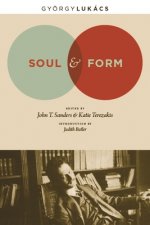
Soul and Form
38.43 € -

The Natural History of the Sign
16.18 € -25 % -
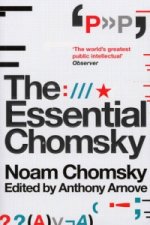
Essential Chomsky
21.23 € -25 % -

Practice Makes Perfect English Articles and Determiners Up Close
12.13 € -20 % -
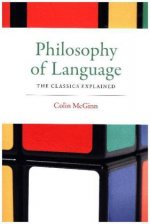
Philosophy of Language
44.70 € -

More than Cool Reason
31.96 € -

Lectures on Rhetoric & Belles Lettres
14.15 € -10 % -
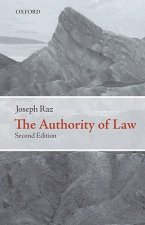
Authority of Law
70.60 € -
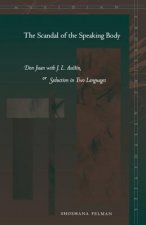
Scandal of the Speaking Body
15.16 € -37 % -

Literary Mind
24.47 € -
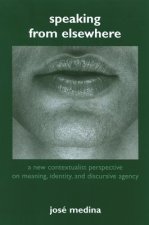
Speaking from Elsewhere
36.31 € -

Practice Makes Perfect English Verb Tenses Up Close
16.98 € -17 % -

Latin
28.92 € -

Language, Proof, and Logic
100.24 € -
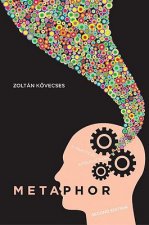
Metaphor
39.24 € -

How to Do Things with Words
54.72 € -
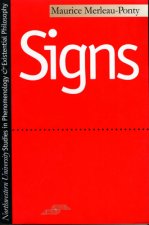
Signs
30.94 € -2 % -

Introduction to the Philosophy of Language
48.75 € -
Being Realistic about Reasons
29.12 €
Collection points Bratislava a 12880 dalších
Copyright ©2008-26 najlacnejsie-knihy.sk All rights reservedPrivacyCookies

 25764 collection points
 Delivery 2.99 €
 02/210 210 99 (8-15.30h)