Code: 04636314
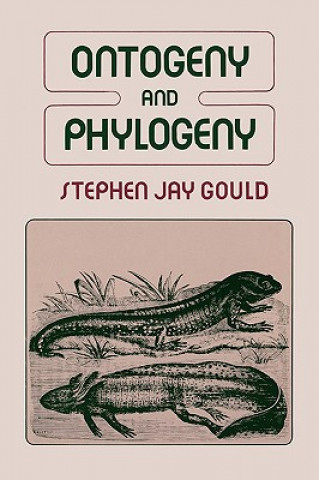
Ontogeny and Phylogeny
by Stephen Jay Gould
Ontogeny recapitulates phylogeny was Haeckel's answer--the wrong one--to the most vexing question of nineteenth-century biology: what is the relationship between individual development (ontogeny) and the evolution of species and l ... more


- Language:
 English
- Binding: Paperback
- Number of pages: 520
Publisher: Harvard University Press, 1990
- More about this


You might also like
-

Monster: The Perfect Edition, Vol. 1
19.25 € -28 % -

Tokyo Ghoul: re Complete Box Set
159.43 € -22 % -
The Pragmatic Programmer
41.74 € -14 % -

Three Musketeers
11.89 € -24 % -

The Rebel
13.30 € -27 % -

Masochism
22.18 € -24 % -
Against the Grain
17.23 € -28 % -

Shibari You Can Use
18.65 € -24 % -

Nightbane: Collector's Edition (The Lightlark Saga Book 2)
27.42 € -20 % -

Wonderful Life
13.91 € -24 % -

Roberto Burle Marx Lectures: Landscape as Art and Urbanism
27.62 € -17 % -

To Engineer is Human
14.41 € -25 % -
Hidden Spring
14.81 € -27 % -

The Modern Professional Planting Designer
32.76 € -25 % -

Brighter Ideas: Level 2: Class Book with Online Practice
18.04 € -7 % -

Hidden Japan: Food, Fun & Experiences Off the Beaten Path in Tokyo & Beyond
19.35 € -19 % -

John Coltrane
14.61 € -27 % -

Permanent Revolution and Results and Prospects
15.82 € -25 % -

Venus in Furs
6.34 € -14 % -

The Stress-Proof Brain
19.65 € -19 % -

Emerald Planet
15.92 € -25 % -

Song of Everlasting Sorrow
24.90 € -27 % -

Delivering Happiness
7.35 € -34 % -

KOREAN MADE EASY FOR BEGINNERS (+CD) 2ND EDITION en 2021
35.59 € -

Existential Physics
12.90 € -15 % -

The Complete Maus
28.63 € -29 % -

Brain from Inside Out
48.40 € -

Heated Face-Off
22.58 € -1 % -

The Art of Electronics: The x Chapters
75.83 € -

Lives of Beetles
37 € -12 % -

Ship Model Builder's Assistant
18.04 € -24 % -

Competitive Strategy
34.18 € -25 % -

Greasepaint
11.69 € -39 % -

Moon Is a Ball
13.91 € -24 % -

To Sir Phillip, With Love
11.08 € -15 % -
How to Read a Person Like a Book
11.89 € -18 % -

Brain and the Inner World: An Introduction to the Neuroscience of the Subjective Experience
28.02 € -2 % -

Profiles in Courage
20.76 € -25 % -

TRINITY SEVEN REVISION V03
10.18 € -25 % -

Light of Impossible Stars: An Embers of War Novel
9.67 € -25 % -

Slanted 45 Sex
19.65 € -15 % -
The Philosophy of Evolutionary Theory
20.06 € -25 % -

Leaf Man
15.12 € -25 % -

Hare + Klein Interior
59.29 € -

Modern Electrodynamics
87.02 € -

Teach Reading With Orton-gillingham
15.02 € -28 % -
Mastering the Chess Openings
26.71 € -

Architecture Today: Sustainable Homes
40.14 € -9 % -

Birds and Us
17.74 € -16 % -

Magnet Therapy
14.92 € -18 % -

Are You a Butterfly?
7.35 € -25 % -

Something in the Walls
20.76 € -25 % -

Walt Disney
47.89 € -

Lust Geass, Vol. 4
11.18 € -21 % -

Copyediting and Proofreading for Dummies
18.04 € -24 % -
Understanding Earth
104.77 € -1 % -

Mathematics and Its History
51.42 € -7 % -

Materialism and Empirio-criticism
19.35 € -25 % -
Art of Activism
26.31 € -15 % -
Growth of Biological Thought
45.57 € -2 % -

Fourier-Mukai Transforms in Algebraic Geometry
12.90 € -93 % -

Religion in Human Evolution
32.66 € -3 % -

Tree of Life
48.90 € -

All to Play For
11.79 € -24 % -

Massive Book of Picross Hanjie Griddlers Nonograms
36.29 € -6 % -

Inventing the Cave Man
36.90 € -
Triumph of the Embryo
10.18 € -24 % -

Practical Carriage Building
21.87 € -18 % -

Four Seasons of Flowers - A Selection of Botanical Illustrations from the Rare Book Collection at Dumbarton Oaks
29.94 € -

Latvian: An Essential Grammar
71.59 € -
JavaScript Cookbook
57.47 € -25 % -

Phylogenetic Trees Made Easy
134.82 € -

Phylogenetic Handbook
80.87 € -

Canadian Warplanes II
79.76 € -1 % -

How to Write and Illustrate a Scientific Paper
34.38 € -

Brain and the Inner World
60.40 € -

Encyclopedia of Intensive Care Medicine
3073.19 € -7 % -
Pan
13.30 € -1 % -

Antitrust and the Bounds of Power
132.70 € -

The Joy of PHP: A Beginner's Guide to Programming Interactive Web Applications with PHP and mySQL
23.08 € -7 % -

Vertebrate Life
147.53 € -

Romanian Revolution of December 1989
73.71 € -

All My Yesterdays
18.04 € -24 % -

Metaphysics and the Origin of Species
40.13 €
Give this book as a present today
- Order book and choose Gift Order.
- We will send you book gift voucher at once. You can give it out to anyone.
- Book will be send to donee, nothing more to care about.
More about Ontogeny and Phylogeny
You get 136 loyalty points
 Book synopsis

Ontogeny recapitulates phylogeny was Haeckel's answer--the wrong one--to the most vexing question of nineteenth-century biology: what is the relationship between individual development (ontogeny) and the evolution of species and lineages (phylogeny)? In this, the first major book on the subject in fifty years, Stephen Gould documents the history of the idea of recapitulation from its first appearance among the pre-Socratics to its fall in the early twentieth century. Mr. Gould explores recapitulation as an idea that intrigued politicians and theologians as well as scientists. He shows that Haeckel's hypothesis--that human fetuses with gill slits are, literally, tiny fish, exact replicas of their water-breathing ancestors--had an influence that extended beyond biology into education, criminology, psychoanalysis (Freud and Jung were devout recapitulationists), and racism. The theory of recapitulation, Gould argues, finally collapsed not from the weight of contrary data, but because the rise of Mendelian genetics rendered it untenable. Turning to modern concepts, Gould demonstrates that, even though the whole subject of parallels between ontogeny and phylogeny fell into disrepute, it is still one of the great themes of evolutionary biology. Heterochrony--changes in developmental timing, producing parallels between ontogeny and phylogeny--is shown to be crucial to an understanding of gene regulation, the key to any rapprochement between molecular and evolutionary biology. Gould argues that the primary evolutionary value of heterochrony may lie in immediate ecological advantages for slow or rapid maturation, rather than in long-term changes of form, as all previous theories proclaimed. Neoteny--the opposite of recapitulation--is shown to be the most important determinant of human evolution. We have evolved by retaining the juvenile characters of our ancestors and have achieved both behavioral flexibility and our characteristic morphology thereby (large brains by prolonged retention of rapid fetal growth rates, for example). Gould concludes that there may be nothing new under the sun, but permutation of the old within complex systems can do wonders. As biologists, we deal directly with the kind of material complexity that confers an unbounded potential upon simple, continuous changes in underlying processes. This is the chief joy of our science.
Book details
Book category Books in English Mathematics & science Biology, life sciences
55.96 €
- Full title: Ontogeny and Phylogeny
- Author: Stephen Jay Gould
- Language: English
- Binding: Paperback
- Number of pages: 520
- EAN: 9780674639416
- ISBN: 0674639413
- ID: 04636314
- Publisher: Harvard University Press
- Weight: 766 g
- Dimensions: 230 × 154 × 33 mm
- Date of publishing: 01. July 1990
Trending among others
-
Behave
16.73 € -27 % -

Beyond Darwin
23.69 € -11 % -

Immortal Life of Henrietta Lacks
10.07 € -29 % -
Behave
26.41 € -25 % -
Bioinformatics For Dummies 2e
23.59 € -25 % -
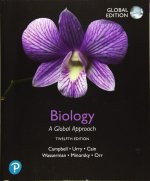
Biology: A Global Approach, Global Edition
102.15 € -
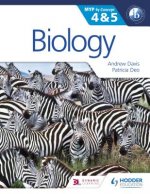
Biology for the IB MYP 4 & 5
67.66 € -
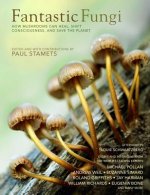
Fantastic Fungi
25.71 € -25 % -
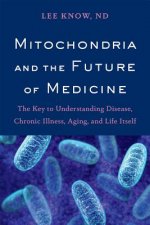
Mitochondria and the Future of Medicine
18.65 € -24 % -
A-Level Biology: AQA Year 1 & 2 Complete Revision & Practice with Online Edition
30.65 € -10 % -
Genius of Birds
14.92 € -29 % -
Ecology - From Individuals to Ecosystems 5e
75.42 € -5 % -
Molecular & Cell Biology For Dummies, 2nd Edition
18.75 € -30 % -

Equine Neonatal Medicine and Surgery
362.33 € -7 % -

Blood and Its Third Element
15.22 € -7 % -

Life from an RNA World
28.23 € -

Dostoevsky
45.57 € -2 % -

Essential Forensic Biology 3e
77.84 € -

Scent and Chemistry - The Molecular World of Odors
90.15 € -15 % -
Biophilia
31.76 € -12 % -
Oxford IB Diploma Programme: Biology Course Companion
68.87 € -10 % -
Biology Coloring Workbook, 2nd Edition
18.44 € -27 % -
Cartoon Guide to Biology
15.52 € -27 % -

She Has Her Mother's Laugh
11.99 € -45 % -

ISE Prescott's Microbiology
80.77 € -5 % -

Queen Breeding and Genetics - How to get better bees
25.50 € -10 % -

Goodness Paradox
15.02 € -28 % -

Tale of the Dueling Neurosurgeons
17.23 € -25 % -
Biology - A Self-Teaching Guide, Third Edition
20.76 € -25 % -

Lizards of the World
147.43 € -

Molecular Biotechnology - Principles and Applications of Recombinant DNA, 6th Edition
130.48 € -6 % -

Biosupplynet Laboratory Research Notebook
12.90 € -

Orgonakkumulator Handbuch
27.12 € -1 % -

More Than Life Itself
197.85 € -4 % -

Population Ecology in Practice
96.80 € -

Comb Honey Book
22.78 € -1 % -

BIOINFORMATICS & BIOSTATISTICS
19.25 € -4 % -

Oxford IB Study Guides: Biology for the IB Diploma
45.27 € -

Biology for the IB Diploma Second Edition
99.42 € -

Alan Turing - The Enigma - The Book That Inspired the Film The Imitation Game - Updated Edition
15.12 € -25 % -

ISE Harper's Illustrated Biochemistry Thirty-First Edition
40.23 € -

Pearson Baccalaureate Biology Higher Level 2nd edition print and ebook bundle for the IB Diploma
82.88 € -10 % -
ISE Vertebrates: Comparative Anatomy, Function, Evolution
78.14 € -5 % -

Biology
341.35 € -

Biology for the IB Diploma Study and Revision Guide
36.09 € -14 % -

DNA
12.90 € -30 % -

Oxford IB Diploma Programme: IB Biology Print and Enhanced Online Course Book Pack
114.85 € -
Biology For Dummies 3e
17.23 € -25 % -

Introduction to Light Microscopy
32.76 € -25 %
Collection points Bratislava a 13537 dalších
Copyright ©2008-26 najlacnejsie-knihy.sk All rights reservedPrivacyCookies

 27078 collection points
 Delivery 2.99 €
 02/210 210 99 (8-15.30h)
