
Code: 02181289
Parallel Processing in the Visual System
by Jonathan Stone
In the mid-sixties, John Robson and Christina Enroth-Cugell, without realizing what they were doing, set off a virtual revolution in the study of the visual system. They were trying to apply the methods of linear systems analysis ... more


- Language:
 English
 - Binding: Paperback
- Number of pages: 454
Publisher: Springer-Verlag New York Inc., 2012
- More about this

102.97 €
RRP: 111.59 €
You save 8.63 €

In stock at our supplier
Shipping in 5 - 8 days
You might also like
-

I Kill Giants Fifteenth Anniversary Edition
16.58 € -34 % -

Průvodce literární hysterií 19. století
12.23 € -19 % -

Liszt, Franz - Isoldens Liebestod aus "Tristan und Isolde" (Richard Wagner)
9.50 € -14 % -

Genesis 11:27-50:26: The Christian Standard Commentary
25.08 € -25 % -

Keys To The Kingdom
7.88 € -25 % -

Transcultural Things and the Spectre of Orientalism in Early Modern Poland-Lithuania
31.25 € -9 % -

Inspiration and Innovation in Teaching and Teacher Education
114.80 € -

Wild Party
17.59 € -24 % -

Examination of Roman Bronze Coin Distribution in the Western Empire A.D. 81-192
139.99 € -

Reasserting America in the 1970s
32.06 € -4 % -

Textbook on Formulation & Evaluation of Bilayer Tablet
48.95 € -14 % -

Sexual Culture 2 Selections 2
7.27 € -6 % -

Les Nasses Identitaires En Afrique
52.59 € -11 % -

Building Citizenship: Civics and Economics, Spanish Reading Essentials and Study Guide, Student Workbook
21.54 € -

Hooker's Icones Plantarum, Volume 2
24.67 € -2 % -

Flaschenpost ahoi! - Der zweite Bodensee-Krimi fur Kinder
13.24 € -6 % -
![Euclides [Elementa Mathematica, Propositiones Et Diffinitiones Librorum I-XV] (Ed.1549)](https://media.libris.to/jacket/08899069t.jpg "Euclides [Elementa Mathematica, Propositiones Et Diffinitiones Librorum I-XV] (Ed.1549)")
Euclides [Elementa Mathematica, Propositiones Et Diffinitiones Librorum I-XV] (Ed.1549)
14.76 € -8 % -

Handbook of Drug Abuse Prevention
109.34 € -

How Planets Affect You: Philosophy Of Planetary Vibrations
24.67 € -2 % -

Bichionario
26.39 € -2 % -

The Veil'D Delight (The Rainbow In The Mirror)
16.98 € -17 %
Give this book as a present today
- Order book and choose Gift Order.
- We will send you book gift voucher at once. You can give it out to anyone.
- Book will be send to donee, nothing more to care about.
More about Parallel Processing in the Visual System
You get 249 loyalty points
 Book synopsis
In the mid-sixties, John Robson and Christina Enroth-Cugell, without realizing what they were doing, set off a virtual revolution in the study of the visual system. They were trying to apply the methods of linear systems analysis (which were already being used to describe the optics of the eye and the psychophysical performance of the human visual system) to the properties of retinal ganglion cells in the cat. Their idea was to stimulate the retina with patterns of stripes and to look at the way that the signals from the center and the antagonistic surround of the respective field of each ganglion cell (first described by Stephen Kuffier) interact to generate the cell's responses. Many of the ganglion cells behaved themselves very nicely and John and Christina got into the habit (they now say) of calling them I (interesting) cells. However. to their annoyance, the majority of neurons they recorded had nasty, nonlinear properties that couldn't be predicted on the basis of simple summ4tion of light within the center and the surround. These uncoop erative ganglion cells, which Enroth-Cugell and Robson at first called D (dull) cells, produced transient bursts of impulses every time the distribution of light falling on the receptive field was changed, even if the total light flux was unaltered.
Book details
Book category Books in English Mathematics & science Physics Applied physics
102.97 €
- Full title: Parallel Processing in the Visual System
- Subtitle: The Classification of Retinal Ganglion Cells and its Impact on the Neurobiology of Vision
- Author: Jonathan Stone
- Language: English
- Binding: Paperback
- Number of pages: 454
- EAN: 9781468444353
- ISBN: 1468444352
- ID: 02181289
- Publisher: Springer-Verlag New York Inc.
- Weight: 861 g
- Dimensions: 254 × 178 × 25 mm
- Date of publishing: 17. March 2012
Trending among others
-

Astrophysics for People in a Hurry
17.29 € -7 % -

Origin and Nature of Life on Earth
53.91 € -
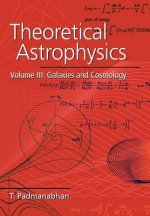
Theoretical Astrophysics: Volume 3, Galaxies and Cosmology
105.29 € -

Galactic Dynamics
121.38 € -11 % -

Introduction to Modern Astrophysics
99.33 € -5 % -

Dance to the Tune of Life
22.55 € -24 % -

Life on the Edge
10.41 € -30 % -

End of Everything
14.05 € -25 % -

Schaum's Outline of Applied Physics, 4ed
30.54 € -17 % -

Big Bang in a Little Room
20.63 € -25 % -

Weltall, Neutrinos, Sterne und Leben
33.98 € -11 % -

Magnetohydrodynamics of the Sun
113.08 € -

Die Wirklichkeit ist auch nicht wahr
24.37 € -9 % -

Neutrinoastronomie
26.90 € -11 % -

Alien Skies
23.76 € -24 % -

Electromagnetism and Life
6.36 € -39 % -

Welcome to the Universe
29.93 € -25 % -

Rainbow And The Worm, The: The Physics Of Organisms (3rd Edition)
35.19 € -

Relativistic Hydrodynamics
56.13 € -

Fundamentals of Geophysics
65.34 € -9 % -

First Course in General Relativity
73.23 € -

Feynman's Lost Lecture
8.79 € -44 % -

Black Holes: A Very Short Introduction
10 € -24 % -
Physics: A Very Short Introduction
10 € -27 % -
Astrophysics: A Very Short Introduction
10 € -24 % -
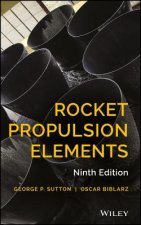
Rocket Propulsion Elements 9e
150.21 € -

Introduction to Cosmology
59.07 € -

Fundamental Astronomy
80.61 € -9 % -

Breast MRI
174.99 € -

Exact Space-Times in Einstein's General Relativity
105.40 € -

Atmosphere: A Very Short Introduction
10 € -24 % -

Biomechanics For Dummies
20.63 € -25 % -

Black Holes: A Student Text (3rd Edition)
40.15 € -

Atlas of Antarctica
51.68 € -7 % -

Quantum Theory of Color Strings
14.05 € -6 % -

Physics in Biology and Medicine
102.36 € -

Fluxgate Magnetometers for Space Research
17.89 € -14 % -

Pulse of the Planet No.2
16.58 € -2 % -
Physics of Rainclouds
56.23 € -

Stephen Hawking
16.07 € -24 % -

Character of Physical Law, with New Foreword
14.76 € -25 % -

Introduction to Radio Astronomy
61.59 € -

At the Edge of Time
26.19 € -5 % -

Electronic Structures and the Properties of Solids
21.64 € -25 % -

Short Course in Cloud Physics
80.71 € -

Satellite Orbits
80.61 € -9 % -

Glorious Geology of Iceland's Golden Circle
35.50 € -24 % -

Concise History of Solar and Stellar Physics
42.07 € -

Stellar Magnetism
161.74 €
Collection points Bratislava a 12830 dalších
Copyright ©2008-26 najlacnejsie-knihy.sk All rights reservedPrivacyCookies

 25664 collection points
 Delivery 2.99 €
 02/210 210 99 (8-15.30h)