
Code: 04531875
Pascal's Wager
by Jeff Jordan
What if there is no strong evidence that God exists? Is belief in God when faced with a lack of evidence illegitimate and improper? Evidentialism answers yes. According to Evidentialism, it is impermissible to believe any propos ... more


- Language:
 English
 - Binding: Hardback
- Number of pages: 240
Publisher: Oxford University Press, 2006
- More about this


You might also like
-

Vagabond (VIZBIG Edition), Vol. 7
18.76 € -22 % -
Fire & Blood
8.77 € -27 % -

Maths for GCSE and IGCSE (R) Textbook, Higher (for the Grade 9-1 Course)
28.95 € -15 % -
Verity
14.92 € -7 % -
Auset Egyptian Oracle Cards
18.15 € -25 % -

Democratic Ideals and Reality
18.35 € -2 % -

The Princess and the Pea and Other Favorite Tales (With Original Illustrations)
8.87 € -6 % -

Aranysárkány
2.21 € -

HR Analytics Essentials You Always Wanted To Know
43.78 € -10 % -

Harri Potter i kelykh vohnyu
23.60 € -

Harry Potter i kamień filozoficzny (Gryffindor)
10.38 € -

Vězeň času
13.11 € -20 % -

That's The Way It Is (Legacy Edition), 2 Audio-CDs
18.05 € -
The Road to Freedom
21.38 € -29 % -

US Navy Destroyer Escorts of World War II
13.92 € -24 % -

Chemistry
12.70 € -25 % -
Beginning C++ Game Programming
53.47 € -1 % -

Costas Salvajes
21.89 € -

MICKEY. PLUTO Y LOS DINOS. PEQUECUENTOS
5.24 € -

Design Patterns
62.55 € -

Чебурашка. Апельсиновые приключения. Весёлые задания (с наклейками)
9.68 € -12 % -

Theorie Und Praxis Pharmakologischer Forschung. Technische Verfahren Zur Isotopentrennung
52.97 € -4 % -

No Bed For Bacon
26.83 € -

The Lettering Workbook for Absolute Beginners
12.10 € -2 % -

Surgery of the Thoracic Spine
182.53 € -
Carnal Instinct
12.30 € -7 % -

El nombre de la rosa. La novela gráfica
18.15 € -17 % -
Dreams of Gods & Monsters
22.09 € -18 % -

Physically Unclonable Functions
51.55 € -7 % -

Fargo: Complete Years 1, 2 & 3
26.43 € -10 % -
Samsung Way: Transformational Management Strategies from the World Leader in Innovation and Design
32.68 € -17 % -

Nancy Wake: World War Two's Most Rebellious Spy
11.70 € -25 % -

Golden Age of Cinema - Hollywood 1929-1945
123.50 € -

Ta naše postmoderna česká…
6.35 € -16 % -

Technologies of Coatings and Surface Hardening for Tool Industry
55.59 € -17 % -

Kahoot! Quiz Time Space
7.66 € -24 % -

Shonen Manga
19.16 € -25 % -

deutsch.kompetent. Allgemeine Ausgabe, m. 1 CD-ROM
47.11 € -

Feldbahngeschichten
23.40 € -16 % -

Le Verbe Grec Ancien: Elements de Morphologie Et de Syntaxe Historiques
64.17 € -
Richest Man in Babylon
16.64 € -1 % -

Le Duc de Guise A Naples
24.01 € -

Green Smoothie Recipe Book
10.59 € -25 % -

Busca que te busca en el mar
14.52 € -

Albertine
21.08 € -1 % -

Promise
25.02 € -

Auf dem Pferdehof - Puzzle mit 40 Teilen
6.75 € -4 % -

Pracli és Pandúr - Csodás csontok és különös kincsek
9.78 € -10 % -

Geist der Kochkunst
9.07 € -10 % -

Inaudible
13.01 € -1 % -

Running
14.02 € -25 % -

On the Logic of the Social Sciences
24.11 € -5 % -

Salome
125.92 € -

Wonders for English Learners G5 Companion Worktext Intermediate/Advanced
19.57 € -

Little Dreidel Learns to Spin
6.55 € -24 % -

Tagalog Word Search - Level of Difficulty
9.98 € -24 % -
Pour comprendre DYS Français - Maths - Anglais 6e
18.86 € -
Isocrate, Discours: Tome I: Contre Euthynous. - Contre Callimakhos. - Contre Lokhites. - Sur L'Attelage. - Trapezitique. - Eginetique. - A
51.45 € -

Nia und Lily im Drachenland
13.51 € -16 % -

Identification of Hakka Cultural Markers
11.59 € -10 % -

Hz. Hasan ve Hz. Hüseyin
14.12 € -4 % -

Natural Sinks of CO2
153.97 € -7 % -
Neo-Latin Commentaries and the Management of Knowledge in the Late Middle Ages and the Early Modern Period (1400-1700)
108.06 € -

Camden Market - Ausgabe 2013
13.11 € -

Transnational Women Writers in the Wilmot Coteri – Beyond Borders and Boundaries
122.69 € -

Giro Del Mondo
31.78 € -2 % -

Modernity and the Jews in Western Social Thought
43.58 € -
Inside the mind of ISIS: understanding its goals and ideology to better protect the homeland
22.59 € -6 % -

Signs and Symbols Llustrated and Explained in a Course of Twelve Lectures on Freemasonry
25.52 € -2 % -

Dinamite. Storie di anarchici e poliziotti, indagini e terrore
28.75 € -

Leistungen Building Information Modeling - Die BIM-Methode im Planungsprozess der HOAI
22.19 € -11 % -

dynamoelektrische Maschine
37.33 € -11 % -

READINGS IN CRITICAL THINKING
169.21 € -

Two Girls, One Schmuck
11.49 € -7 % -

Das Meer Als Quelle Der Volkergrosse: Eine Politisch-Geographische Studie (1911)
20.17 € -1 % -

Meditations by the Sea: Personal Moments with God
9.78 € -6 % -

The Girlhood Of Shakespeare's Heroines
51.55 € -2 %
Give this book as a present today
- Order book and choose Gift Order.
- We will send you book gift voucher at once. You can give it out to anyone.
- Book will be send to donee, nothing more to care about.
More about Pascal's Wager
You get 343 loyalty points
 Book synopsis
What if there is no strong evidence that God exists? Is belief in God when faced with a lack of evidence illegitimate and improper? Evidentialism answers yes. According to Evidentialism, it is impermissible to believe any proposition lacking adequate evidence. And if any thesis enjoys the status of a dogma among philosophers, it is Evidentialism. Presenting a direct challenge to Evidentialism are pragmatic arguments for theism, which are designed to support belief in the absence of adequate evidence. Pascal's Wager is the most prominent theistic pragmatic argument, and issues in epistemology, the ethics of belief, and decision theory, as well as philosophical theology, all intersect at the Wager. Other prominent theistic pragmatic arguments include William James's celebrated essay, 'The Will to Believe'; a posthumously published and largely ignored pragmatic argument authored by J.S. Mill, supporting the propriety of hoping that quasi-theism is true; the eighteenth-century Scottish essayist James Beattie's argument that the consoling benefit of theistic belief is so great that theistic belief is permissible even when one thinks that the existence of God is less likely than not; and an argument championed by the nineteenth-century French philosopher Jules Lachelier, which based its case for theistic belief on the empirical benefits of believing as a theist, even if theism was very probably false. In Pascal's Wager: Pragmatic Arguments and Belief in God, Jeff Jordan explores various theistic pragmatic arguments, and the objections employed against them. Jordan presents a new version of the Wager, what he calls the 'Jamesian Wager', and argues that the Jamesian Wager survives the objections hurled against theistic pragmatic arguments and provides strong support for theistic belief. In addition to arguing for a sound version of the Wager, Jordan also argues that there is a version of Evidentialism compatible with a principled use of pragmatic arguments, and that the Argument from Divine Silence fails. Objections found in Voltaire, Hume, and Nietzsche against the Wager are scrutinized, as are objections issued by Richard Swinburne, Richard Gale, and other contemporary philosophers. The ethics of belief, the many-gods objection, the problem of infinite utilities, and the propriety of a hope based acceptance are also examined.
Book details
Book category Books in English Humanities Religion & beliefs Religion: general
141.26 €
- Full title: Pascal's Wager
- Subtitle: Pragmatic Arguments and Belief in God
- Author: Jeff Jordan
- Language: English
- Binding: Hardback
- Number of pages: 240
- EAN: 9780199291328
- ISBN: 0199291322
- ID: 04531875
- Publisher: Oxford University Press
- Weight: 418 g
- Dimensions: 226 × 149 × 21 mm
- Date of publishing: 26. October 2006
Trending among others
-

The Righteous Mind
16.34 € -23 % -
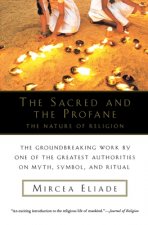
Sacred and the Profane
13.41 € -24 % -

The Psychology of Selling
17.75 € -9 % -

Art of Worldly Wisdom
8.47 € -2 % -
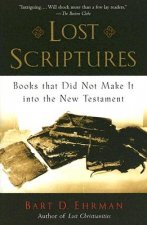
Lost Scriptures
18.25 € -24 % -
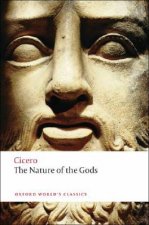
Nature of the Gods
10.59 € -25 % -
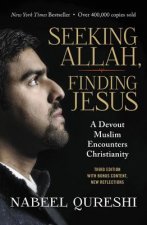
Seeking Allah, Finding Jesus
19.06 € -25 % -

More Than Allegory - On religious myth, truth and belief
16.14 € -24 % -

Jesus, Buddha, Krishna, and Lao Tzu
18.15 € -25 % -

The Greatness of Saturn
11.29 € -24 % -

Treasures of Darkness
26.93 € -20 % -

Conversations with God - Book 3
10.99 € -30 % -

Anointing
12 € -25 % -

Story of Christianity
13.92 € -24 % -

Hidden Lamp
16.14 € -24 % -

Kosovo
12.70 € -24 % -

Dumitru Staniloae: An Ecumenical Ecclesiology
55.49 € -

Anthropology of Performance
16.54 € -12 % -
![Ancient Egypt: The Light of the World [Two Volumes In One]](https://media.libris.to/jacket/09177158t.jpg "Ancient Egypt: The Light of the World [Two Volumes In One]")
Ancient Egypt: The Light of the World [Two Volumes In One]
31.57 € -

How Not to be Secular
14.72 € -25 % -

Filioque
65.98 € -

Aramaic
14.92 € -6 % -

The Screwtape Letters
11.80 € -24 % -

A History of Christianity
18.96 € -29 % -
Can Science Explain Everything?
9.68 € -25 % -
Return of the God Hypothesis
23 € -27 % -

Varieties of Religious Experience
12.70 € -25 % -
Waking Up
12.30 € -17 % -

Mindfulness Bliss and Beyond
24.21 € -17 % -
Waking, Dreaming, Being
18.35 € -29 % -

A Secular Age
18.86 € -25 % -
The Happiness Hypothesis: Finding Modern Truth in Ancient Wisdom
14.72 € -25 % -

Conversations With God
9.88 € -33 % -

The Courage to Be
13.41 € -24 % -

Knowing God
11.80 € -24 % -

Early History of God
27.84 € -24 % -
Experience of God
14.82 € -24 % -
Dialogues Concerning Natural Religion
10.38 € -25 % -
Evolution of God
14.02 € -25 % -

Comfortable with Uncertainty
13.31 € -25 % -

Tibetan Thangka Painting
28.65 € -25 % -
Heretics
7.86 € -24 % -

Symbols, Sex and the Stars
18.15 € -25 % -

Bhagavad Gita
7.15 € -25 % -
Wisdom Of Insecurity
12.91 € -30 % -

Apotheosis - The Ultimate Beginner's Guide to Luciferianism & the Left-Hand Path
23.70 € -
Living Goddesses
35.51 € -10 % -

Story of Christianity Volume 1
20.47 € -26 % -

American Cosmic
21.69 € -24 %
Collection points Bratislava a 13193 dalších
Copyright ©2008-26 najlacnejsie-knihy.sk All rights reservedPrivacyCookies

 26390 collection points
 Delivery 2.99 €
 02/210 210 99 (8-15.30h)