Code: 04369925
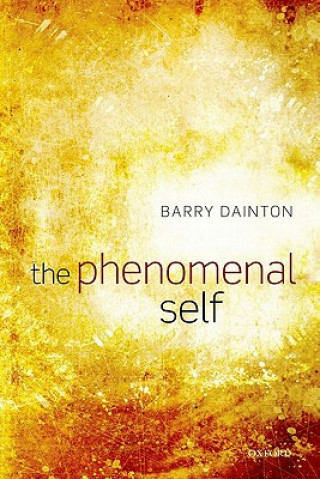
Phenomenal Self
by Barry Dainton
Barry Dainton presents a fascinating new account of the self, the key to which is experiential or phenomenal continuity. Provided our mental life continues we can easily imagine ourselves surviving the most dramatic physical alter ... more


- Language:
 English
 - Binding: Paperback
- Number of pages: 472
Publisher: Oxford University Press, 2011
- More about this


You might also like
-

Chutné krémeše
1.41 € -31 % -
¿QUIÈN SOY?
19.72 € -9 % -

BABADADA, Sesotho sa Leboa - Turkce, pukuntsu e bonagalago - goersel soezluk
26.90 € -7 % -

Vertical Transportation Handbook, 4e
169.53 € -4 %
Give this book as a present today
- Order book and choose Gift Order.
- We will send you book gift voucher at once. You can give it out to anyone.
- Book will be send to donee, nothing more to care about.
More about Phenomenal Self
You get 122 loyalty points
 Book synopsis
Barry Dainton presents a fascinating new account of the self, the key to which is experiential or phenomenal continuity. Provided our mental life continues we can easily imagine ourselves surviving the most dramatic physical alterations, or even moving from one body to another. It was this fact that led John Locke to conclude that a credible account of our persistence conditions - an account which reflects how we actually conceive of ourselves - should be framed in terms of mental rather than material continuity. But mental continuity comes in different forms. Most of Locke's contemporary followers agree that our continued existence is secured by psychological continuity, which they take to be made up of memories, beliefs, intentions, personality traits, and the like. Dainton argues that a better and more believable account can be framed in terms of the sort of continuity we find in our streams of consciousness from moment to moment. Why? Simply because provided this continuity is not lost - provided our streams of consciousness flow on - we can easily imagine ourselves surviving the most dramatic psychological alterations. Phenomenal continuity seems to provide a more reliable guide to our persistence than any form of continuity. The Phenomenal Self is a full-scale defence and elaboration of this premise. The first task is arriving at an adequate understanding of phenomenal unity and continuity. This achieved, Dainton turns to the most pressing problem facing any experience-based approach: losses of consciousness. How can we survive them? He shows how the problem can be solved in a satisfactory manner by construing ourselves as systems of experiential capacities. He then moves on to explore a range of further issues. How simple can a self be? How are we related to our bodies? Is our persistence an all-or-nothing affair? Do our minds consist of parts which could enjoy an independent existence? Is it metaphysically intelligible to construe ourselves as systems of capacities? The book concludes with a novel treatment of fission and fusion.
Book details
Book category Books in English Humanities Philosophy History of Western philosophy
50.57 €
- Full title: Phenomenal Self
- Author: Barry Dainton
- Language: English
- Binding: Paperback
- Number of pages: 472
- EAN: 9780199692248
- ISBN: 0199692246
- ID: 04369925
- Publisher: Oxford University Press
- Weight: 686 g
- Dimensions: 232 × 147 × 26 mm
- Date of publishing: 30. June 2011
Trending among others
-
Why I Am so Clever
4.54 € -7 % -

Meditations
8.18 € -30 % -
The Myth of Sisyphus
9.90 € -11 % -
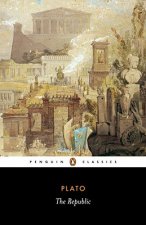
The Republic
10.71 € -19 % -
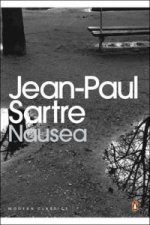
Nausea
11.62 € -14 % -

Beyond Good and Evil
10 € -24 % -

Ride the Tiger
18.91 € -22 % -
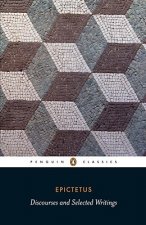
Discourses and Selected Writings
11.22 € -24 % -
Simulacra and Simulation
21.84 € -2 % -
Thus Spoke Zarathustra: A Book for Everyone and No One
11.02 € -25 % -
Letters from a Stoic
10.92 € -24 % -
On the Shortness of Life
7.88 € -29 % -
Aphorisms on Love and Hate
4.04 € -17 % -

Either/Or
14.86 € -30 % -
Anti-Oedipus
16.88 € -24 % -
Phenomenology of Spirit
17.59 € -24 % -
The Nicomachean Ethics
10.41 € -30 % -
Myth of Sisyphus
12.63 € -19 % -
On the Genealogy of Morals
9.70 € -34 % -

Fear and Trembling
11.12 € -29 % -
Letters from a Stoic
14.15 € -29 % -
The Symposium
8.59 € -25 % -
Meditations
14.86 € -19 % -
Intellectual Life
4.85 € -79 % -
Nicomachean Ethics
6.16 € -30 % -
Symposium
7.17 € -25 % -
World as Will and Representation, Vol. 1
21.74 € -19 % -
Camera Lucida
10.51 € -29 % -
Plato: Five Dialogues
16.68 € -10 % -
History of Western Philosophy
21.74 € -24 % -
Human, All Too Human & Beyond Good and Evil
6.36 € -19 % -
Human, All Too Human
12.33 € -21 % -

On War
6.77 € -14 % -
Montaigne
12.84 € -25 % -

World as Will and Representation, Vol. 2
29.53 € -30 % -
Joyous Science
12.03 € -28 % -

Ecce Homo
10.81 € -24 % -
Basic Works of Aristotle
18.91 € -25 % -

Candide and Other Stories
6.56 € -24 % -

Dark Ecology
24.87 € -12 % -
Iamblichus on The Mysteries
52.49 € -7 % -
Existential Psychotherapy
63.82 € -

Twilight of the Idols
9.60 € -26 % -

Aquinas
11.02 € -30 % -
Guide to the Good Life
18.50 € -18 % -
History of Philosophy Volume 1
27.10 € -20 % -
Ecce Homo
6.97 € -
Early Greek Philosophy
33.98 € -
Phenomenology of Perception
38.03 € -18 %
Collection points Bratislava a 12880 dalších
Copyright ©2008-26 najlacnejsie-knihy.sk All rights reservedPrivacyCookies

 25764 collection points
 Delivery 2.99 €
 02/210 210 99 (8-15.30h)