Code: 02031428
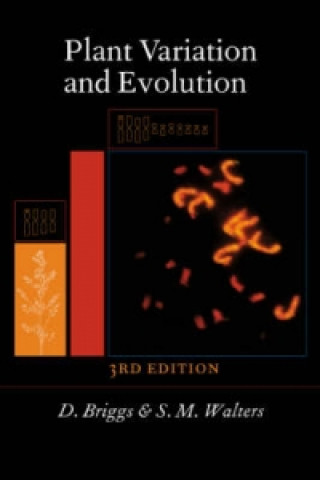
Plantvariation and Evolution
by David BriggsStuart Max Walters
Natural populations of plants show intricate patterns of variation. European botanists of the eighteenth and nineteenth centuries used this variation to classify different 'kinds' into a hierarchy of family, genus, and species. Al ... more


- Language:
 English
 - Binding: Hardback
- Number of pages: 536
Publisher: Cambridge University Press, 1997
- More about this

146.74 €
Availability:
50/50 We think title might be available. Upon your order we will do our best to get it within 6 weeks.
We search the world
You might also like
-

Blue Lock - Band 12
7.79 € -9 % -

365 IDEAS PARA UNA VIDA PLENA
20.16 € -

Explore My World: Honey Bees
5.16 € -24 % -

Biofeedback
103.16 € -7 % -

Perfekt in Deutsch
20.77 € -6 % -

Physiotherapy in Respiratory Care
134.07 € -7 % -

Joe Bar Team Un gag par jour 2015
13.37 € -

incubi del Fazbear. Blackbird. Five nights at Freddy's
23.30 € -9 % -

Bandada
24.01 € -

Lebensweltorientierte Soziale Arbeit
18.13 € -5 % -

Value Creation in the Pharmaceutical Industry - The Critical Path to Innovation
111.98 € -9 % -

Student Study Guide to Accompany Anatomy and Physiology
74.48 € -

Les Aventures du Capitaine Hatteras
13.98 € -

Revelation
10.33 € -2 % -

High-Level System Modeling, 1
103.16 € -7 % -

Choice of Law
292.58 € -

Queer Whispers: Gay and Lesbian Voices of Irish Fictions
39.51 € -

LA GRAN TRAMPA
21.37 € -

Secret of the Crest Trilogy
21.17 € -6 % -

Quantum Dots: a Doorway to Nanoscale Physics
51.78 € -7 % -

On a Wing and a Prayer
15.29 € -20 % -

Untersuchungen uber Goethes Faust in seiner altesten Gestalt
20.56 € -11 % -

One of Our Lions Is Missing
13.98 € -1 % -

Elijah's Journey-He Danced Up
14.08 € -7 % -

Write-On Wipe-Off My First Unicorn Hidden Pictures
14.38 € -9 % -

Introduction to Conventional Transmission Electron Microscopy
148.26 € -

Litigating Transnational Human Rights Obligations
70.02 € -

Flyers
8.20 € -14 % -

After-Toil Songs
27.45 € -2 % -

I Love T
20.36 € -

Love and Marriage in Renaissance Florence
40.02 € -

Didaktik des außerschulischen Lernens
14.38 € -5 % -

Wie eine Perle im Ozean
15.29 € -16 % -

He Is the Product . . .
14.58 € -

Life and Opinions of Tristram Shandy, Gentleman. ... the Fifth Edition. Volume 2 of 9
13.27 € -25 % -

Sexuality, Gender and Nationalism in Caribbean Literature
73.97 € -
Gesamtwirtschaftliche und strukturelle Auswirkungen von Veränderungen der Struktur des öffentlichen Sektors.
75.19 € -

Coastal Lagoons
46.91 € -

Proces En Police Correctionnelle Le 19 Octobre 1832: Avec Le Portrait Du Pere
16.61 € -2 % -

UNIDROIT - How it contributed to international trade harmonization
17.12 € -14 % -

Passionsoratorium
26.14 € -

Belastung und Entartung
26.85 € -11 %
Give this book as a present today
- Order book and choose Gift Order.
- We will send you book gift voucher at once. You can give it out to anyone.
- Book will be send to donee, nothing more to care about.
Availability alert
Enter your e-mail address and once book will be available,
we will send you a message. It's that simple.
More about Plantvariation and Evolution
You get 354 loyalty points
 Book synopsis
Natural populations of plants show intricate patterns of variation. European botanists of the eighteenth and nineteenth centuries used this variation to classify different 'kinds' into a hierarchy of family, genus, and species. Although useful, these classifications were based on a belief in the fixity of species and the static patterns of variation. Darwin's theory of evolution changed this view; populations and species varied in time and space and were part of a continuing process of evolution. The development of molecular techniques has transformed our understanding of microevolution and the evolutionary history of the flowering plants. This new edition reviews recent progress in its historical context, showing how hypotheses and models developed in the past have been critically tested. The authors consider the remarkable insights that molecular biology has given us into the processes of evolution in populations of cultivated, wild and weedy species, the threats of extinction faced by many endangered species and the wider evolutionary history of the flowering plants as revealed by cladistic methods.
Book details
Book category Books in English Mathematics & science Biology, life sciences Life sciences: general issues
146.74 €
- Full title: Plantvariation and Evolution
- Author: David BriggsStuart Max Walters
- Language: English
- Binding: Hardback
- Number of pages: 536
- EAN: 9780521452953
- ISBN: 0521452953
- ID: 02031428
- Publisher: Cambridge University Press
- Weight: 1022 g
- Dimensions: 150 × 221 × 45 mm
- Date of publishing: 13. November 1997
Trending among others
-

The Selfish Gene
16.81 € -9 % -

The Molecule of More
19.55 € -1 % -

Story Genius
13.47 € -24 % -

Power of Habit
13.87 € -15 % -

Homo Deus
34.24 € -

Oxygen
14.18 € -23 % -

The Story of the Human Body
15.90 € -14 % -

Seven Daughters Of Eve
11.14 € -29 % -

Case-Based Practical Training of Colposcopy and Cervical Pathology
168.43 € -10 % -

Bonobo and the Atheist
13.37 € -25 % -

Endless Forms Most Beautiful
13.87 € -25 % -

Chest Blunt Trauma
152.41 € -10 % -
Altered States of Consciousness
18.54 € -26 % -

An Illustrated Guide to Anatomical Eponyms
206.13 € -7 % -
Almost Like A Whale
16 € -25 % -

Conscious Mind
21.88 € -24 % -

Descartes' Error
15.19 € -18 % -

Brain
12.46 € -24 % -
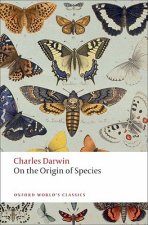
On the Origin of Species
9.31 € -24 % -

Life Ascending
11.85 € -32 % -

Origin of Species
6.17 € -30 % -

Incognito
11.54 € -34 % -

The Storytelling Animal
14.48 € -23 % -

Brain's Way of Healing
13.87 € -25 % -

Stealing Fire
11.85 € -24 % -

Moral Animal
16.31 € -20 % -

Blind Watchmaker
13.27 € -34 % -

Brain Rules (Updated and Expanded)
11.34 € -29 % -

Power, Sex, Suicide
13.47 € -24 % -
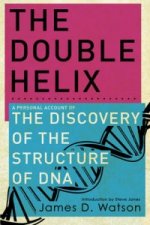
Double Helix
11.85 € -24 % -

Race Differences in Intelligence
31.91 € -

Human Brain Coloring Book
21.37 € -25 % -

Social Conquest of Earth
14.08 € -25 % -

Homo Deus
18.94 € -25 % -

The Extended Phenotype
14.99 € -24 % -

Biocentrism
12.46 € -26 % -

Feeling Of What Happens
13.87 € -25 % -

Letters to a Young Scientist
11.34 € -24 % -

Psychopath Inside
14.38 € -26 % -

Undoing Project
11.54 € -14 % -
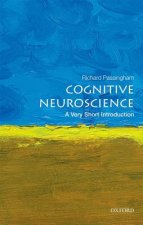
Cognitive Neuroscience: A Very Short Introduction
10.02 € -24 % -
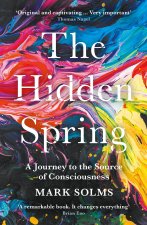
Hidden Spring
14.28 € -29 % -

Hidden History of the Human Race
15.29 € -9 % -

Systems View of Life
24.92 € -29 % -

Diversity of Life
13.87 € -25 % -
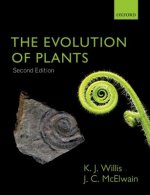
Evolution of Plants
86.44 € -5 % -

Natural History of Color
20.36 € -24 % -
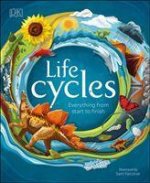
Life Cycles
20.06 € -16 % -
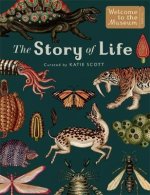
Story of Life: Evolution (Extended Edition)
13.87 € -25 %
Collection points Bratislava a 13292 dalších
Copyright ©2008-26 najlacnejsie-knihy.sk All rights reservedPrivacyCookies

 26588 collection points
 Delivery 2.99 €
 02/210 210 99 (8-15.30h)