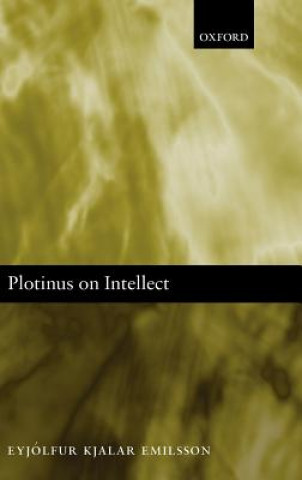
Code: 04477880
Plotinus on Intellect
by Emilsson
Plotinus (205-269 AD) is considered the founder of Neoplatonism, the dominant philosophical movement of late antiquity, and a rich seam of current scholarly interest. Whilst Plotinus' influence on the subsequent philosophical trad ... more


- Language:
 English
 - Binding: Hardback
- Number of pages: 242
Publisher: Oxford University Press, 2007
- More about this


You might also like
-
Enneads
15.45 € -25 % -

Hospital
10.80 € -25 % -

Pencak Silat
17.87 € -5 % -

Die Welten von Thorgal - Thorgals Jugend. Band 9
12.72 € -16 % -

Loki Variations
8.17 € -25 % -
Po proudu plavou jenom chcíplé ryby
8.58 € -16 % -

Le Dahlia Noir
29.39 € -

Chaos Sudoku 12x12 - Extrem Schwer - Band 19 - 276 Ratsel
12.11 € -6 % -
Die Lehre von der Aufmerksamkeit in der Psychologie des 18. Jahrhunderts
26.76 € -11 % -
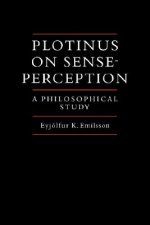
Plotinus on Sense-Perception
54.35 € -

stanze buie
15.65 € -

Datos sobre la nieve y los glaciares en las cordilleras españolas
32.72 € -

Migration and Health
94.86 € -9 % -

A La Soupe!
19.49 € -

Lystlognerens paradis
15.55 € -14 % -

Life of James Dwight Dana
27.67 € -14 % -

Social Entrepreneurship
138.61 € -

Dictations for Discussion
28.89 € -21 % -

Michel de Certeau lesen. Lire Michel de Certeau
39.29 € -
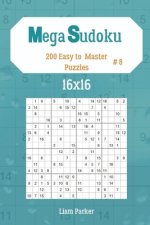
Mega Sudoku 16x16 - 200 Easy to Master Puzzles vol.8
7.26 € -6 % -

Differential Geometry, Peniscola 1985
36.16 € -7 %
Give this book as a present today
- Order book and choose Gift Order.
- We will send you book gift voucher at once. You can give it out to anyone.
- Book will be send to donee, nothing more to care about.
More about Plotinus on Intellect
You get 271 loyalty points
 Book synopsis
Plotinus (205-269 AD) is considered the founder of Neoplatonism, the dominant philosophical movement of late antiquity, and a rich seam of current scholarly interest. Whilst Plotinus' influence on the subsequent philosophical tradition was enormous, his ideas can also be seen as the culmination of some implicit trends in the Greek tradition from Parmenides, Plato, Aristotle, and the Stoics. Emilsson's in-depth study focuses on Plotinus' notion of Intellect, which comes second in his hierarchical model of reality, after the One, unknowable first cause of everything. As opposed to ordinary human discursive thinking, Intellect's thought is all-at-once, timeless, truthful and a direct intuition into 'things themselves'; it is presumably not even propositional. Emilsson discusses and explains this strong notion of non-discursive thought and explores Plotinus' insistence that this must be the primary form of thought. Plotinus' doctrine of Intellect raises a host of questions that Emilsson addresses. First, Intellect's thought is described as an attempt to grasp the One and at the same time as self-thought. How are these two claims related? How are they compatible? What lies in Plotinus' insistence that Intellect's thought is a thought of itself? Second, Plotinus gives two minimum requirements of thought: that it must involve a distinction between thinker and object of thought, and that the object itself must be varied. How are these two pluralist claims related? Third, what is the relation between Intellect as a thinker and Intellect as an object of thought? Plotinus' position here seems to amount to a form of idealism, and this is explored.
Book details
Book category Books in English Humanities Philosophy History of Western philosophy
112.03 €
- Full title: Plotinus on Intellect
- Author: Emilsson
- Language: English
- Binding: Hardback
- Number of pages: 242
- EAN: 9780199281701
- ISBN: 019928170X
- ID: 04477880
- Publisher: Oxford University Press
- Weight: 510 g
- Dimensions: 240 × 160 × 20 mm
- Date of publishing: 15. February 2007
Trending among others
-

Meditations
8.07 € -31 % -
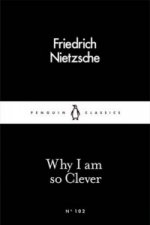
Why I Am so Clever
4.54 € -

The Myth of Sisyphus
9.89 € -14 % -
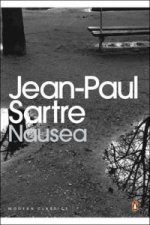
Nausea
11.61 € -26 % -

Ride the Tiger
18.88 € -22 % -
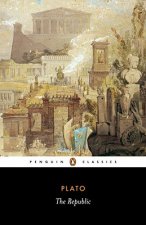
The Republic
10.60 € -20 % -
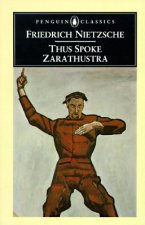
Thus Spoke Zarathustra: A Book for Everyone and No One
11 € -30 % -

Beyond Good and Evil
10.60 € -20 % -

On the Shortness of Life
8.68 € -25 % -
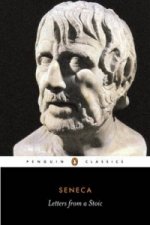
Letters from a Stoic
10.90 € -24 % -
Simulacra and Simulation
22.12 € -2 % -
City of God
14.03 € -25 % -

Fear and Trembling
11.10 € -29 % -
On the Genealogy of Morals
9.69 € -34 % -
Phenomenology of Spirit
17.57 € -24 % -
Critique of Pure Reason
16.16 € -25 % -
The Sickness Unto Death
11.81 € -25 % -

Myth of Sisyphus
12.72 € -19 % -
Gay Science
11.31 € -25 % -
The Symposium
8.58 € -25 % -
Nicomachean Ethics
11.10 € -14 % -
Nicomachean Ethics
6.15 € -30 % -
Beyond Good and Evil
15.95 € -29 % -
Symposium
7.16 € -25 % -
Meditations on First Philosophy
9.29 € -24 % -
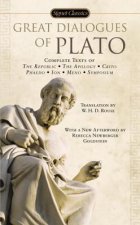
Great Dialogues Of Plato
2.82 € -31 % -
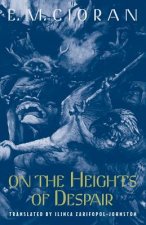
On the Heights of Despair
31.61 € -
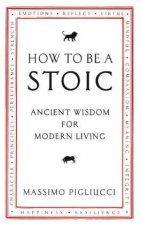
How To Be A Stoic
15.95 € -29 % -
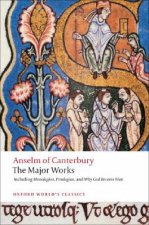
Anselm of Canterbury: The Major Works
11.31 € -24 % -
Early Greek Philosophy
13.93 € -24 % -
Symposium
14.44 € -23 % -
World as Will and Representation, Vol. 1
21.71 € -19 % -
Leviathan
6.66 € -24 % -
Of Human Freedom
8.07 € -30 % -
Philosophy as a Way of Life - Spiritual Exercises from Socrates to Foucault
43.94 € -5 % -

Sex, Ecology, Spirituality
42.22 € -25 % -
Complete Works of Aristotle, Volume 2
69.20 € -4 % -
Complete Works of Aristotle, Volume 1
65.46 € -
How To Read Foucault
17.06 € -

World as Will and Representation, Vol. 2
25.05 € -25 % -
Groundwork for the Metaphysics of Morals
9.49 € -28 % -

Philosophical Investigations 4e
35.45 € -9 % -
Timaeus and Critias
9.89 € -25 % -
Anecdotes of the Cynics
4.54 € -25 % -
Selected Writings
13.43 € -24 % -

Nietzsche: A Very Short Introduction
9.99 € -24 % -
World in Fragments
33.43 € -12 % -
Twenty-Five Years of Philosophy
35.86 € -
Politica
12.82 € -12 %
Collection points Bratislava a 12927 dalších
Copyright ©2008-26 najlacnejsie-knihy.sk All rights reservedPrivacyCookies

 25858 collection points
 Delivery 2.99 €
 02/210 210 99 (8-15.30h)