
Code: 09016491
Pluralism in Software Engineering
by Edgar G Daylight
"What an absolutely cool guy!" --- Dennis Shasha, NYU "Fascinating... very worthwhile" --- Robert Harper, CMU What mathematical rigor has and has not to offer to software engineers. Peter Naur wrote his first research p ... more


- Language:
 English
 - Binding: Paperback
- Number of pages: 134
Publisher: Lonely Scholar, 2011
- More about this

17.48 €
RRP: 17.85 €
You save 0.36 €

In stock at our supplier
Shipping in 9 - 15 days
You might also like
-

Let My People Go Surfing
21.33 € -10 % -

Speciální otorinolaryngologie
10.51 € -15 % -

February february 2022
25.27 € -11 % -

Histoire Du Siege D'Orleans (1867)
28.30 € -1 % -

A YOUNG GIRL VERSUS THE GIANT SNAKE (niveau 150 MOTS, bilingue chinois - anglais)
9.70 € -

Apprendre ? aimer la nuit
11.92 € -4 % -

From Our Hearts to Yours
12.02 € -25 % -

Diary of a Tar Heel Confederate Soldier
6.36 € -7 % -

Verstehst du auch, was du liest? Konstruktivistische Lehr-Lernprozesse in Hausbibelkreisen
16.17 € -10 % -

Les Dominos de la vie
31.94 € -

Should schools be colorblind?
59.75 € -2 % -

L'introduction du changement dans les systemes de sante
77.24 € -14 % -

Egypt's Revolutions
53.28 € -4 % -

From Jihad to Jesus
18.39 € -2 %
Give this book as a present today
- Order book and choose Gift Order.
- We will send you book gift voucher at once. You can give it out to anyone.
- Book will be send to donee, nothing more to care about.
More about Pluralism in Software Engineering
You get 42 loyalty points
 Book synopsis
"What an absolutely cool guy!" --- Dennis Shasha, NYU "Fascinating... very worthwhile" --- Robert Harper, CMU What mathematical rigor has and has not to offer to software engineers. Peter Naur wrote his first research paper at the age of 16. Soon an internationally acclaimed astronomer, Naur's expertise in numerical analysis gave him access to computers from 1950. He helped design and implement the influential ALGOL programming language. During the 1960s, Naur was in sync with the research agendas of McCarthy, Dijkstra, and others. By 1970, however, he had distanced himself from them. Instead of joining Dijkstra's structured programming movement, he made abundantly clear why he disapproved of it. Underlying Naur's criticism is his plea for pluralism: a computer professional should not dogmatically advocate a method and require others to use it in their own work. Instead, he should respect the multitude of personal styles in solving problems. What philosophy has to do with software engineering. Though Peter Naur definitely does not want to be called a philosopher, he acknowledges having been influenced by Popper, Quine, Russell, and others. Naur's writings of the 1970s and 1980s show how he borrowed concepts from philosophy to further his understanding of software engineering. In later years, he mainly scrutinized the work in philosophy and mathematical logic & rules in particular. By penetrating deeply into the 1890 research of William James, Naur gradually developed his own theory of how mental life is like at the neural level of the nervous system. This development, in turn, helps explain why he always opposed the Turing Test and Artificial Intelligence, why he had strong misgivings about the Formal Methods movement and Dijkstra's research in particular.
Book details
Book category Books in English Humanities Philosophy
17.48 €
- Full title: Pluralism in Software Engineering
- Subtitle: Turing Award Winner Peter Naur Explains
- Author: Edgar G Daylight
- Language: English
- Binding: Paperback
- Number of pages: 134
- EAN: 9789491386008
- ISBN: 9789491386008
- ID: 09016491
- Publisher: Lonely Scholar
- Weight: 202 g
- Dimensions: 229 × 155 × 8 mm
- Date of publishing: 19. October 2011
Trending among others
-

The Conspiracy Against the Human Race
13.03 € -29 % -

Imitation of Christ
4.54 € -25 % -

What Does It All Mean?
32.95 € -
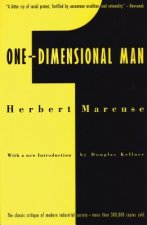
One-Dimensional Man
18.29 € -24 % -

Mortal Questions
15.46 € -25 % -

Philosophical Dictionary
12.12 € -28 % -

Spinoza
22.34 € -25 % -

Infocracy: Digitization and the Crisis of Democrac y
15.76 € -6 % -

Letters from a Stoic - The Ancient Classic
12.22 € -28 % -

Philosophy of Zen Buddhism
15.76 € -6 % -

Simulations
10.81 € -27 % -

Men Among the Ruins
18.19 € -25 % -

I Am a Strange Loop
16.17 € -25 % -

Teachings of Don Juan
8.58 € -24 % -

How the World Thinks
10.91 € -29 % -

In Search of Being
21.33 € -28 % -

I am That
40.84 € -

Art of Worldly Wisdom
10.30 € -2 % -

Wisdom of Life
6.56 € -24 % -

Built to Last
13.34 € -29 % -

Nietzsche and Philosophy
19.61 € -24 % -

Republic
21.73 € -9 % -

Galileo's Error
18.80 € -30 % -

On Liberty
6.56 € -24 % -
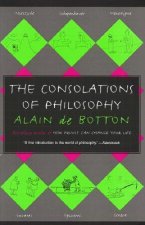
The Consolations of Philosophy
14.05 € -25 % -
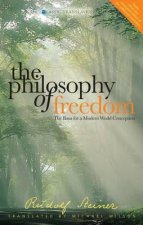
Philosophy of Freedom
15.76 € -15 % -

Technics and Time, 2
26.58 € -13 % -

Antichrist
4.54 € -25 % -

Machiavelli: The Art of Teaching People What to Fear
13.74 € -26 % -

Monkey Business
14.45 € -29 % -

Mode One
22.84 € -2 % -

On Ideology
13.44 € -14 % -

Imaginary Institution of Society
30.93 € -9 % -

Hidden Third
14.25 € -25 % -

For the Time Being
13.44 € -24 % -

Time and Free Will: an Essay on the
12.02 € -24 % -

Human Happiness
8.69 € -25 % -

Sacred Dance Meditations
19.20 € -26 % -

Upside down: a Primer for the Looking-Glass World
18.90 € -25 % -

People's History Of Civilization
13.94 € -24 % -

Confession
5.85 € -24 % -

Expanse and Philosophy - So Far Out Into the Darkness
17.48 € -25 % -

Ultimate Star Trek and Philosophy
14.05 € -25 % -

German Idealism
54.19 € -

Whose Justice? Which Rationality?
43.57 € -

Antichrist
9.80 € -

Between Kant and Hegel
41.35 € -

Taking Time
26.68 € -22 % -

Meditations on Quixote
16.17 € -17 %
Collection points Bratislava a 12619 dalších
Copyright ©2008-26 najlacnejsie-knihy.sk All rights reservedPrivacyCookies

 25242 collection points
 Delivery 2.99 €
 02/210 210 99 (8-15.30h)