
Code: 01376736
Polymeric Materials in Medication
by Charles G. Gebelein, Charles E. Carraher Jr.
The art of using chemical agents for medication dates back into antiquity, although most of the earliest examples used plants, herbs, and other natural materials. The old Egyptian medical papyri, which date from before 1400 B. C. ... more


- Language:
 English
 - Binding: Hardback
- Number of pages: 302
Publisher: Springer Science+Business Media
- More about this

154.13 €
RRP: 166.98 €
You save 12.85 €

In stock at our supplier
Shipping in 10 - 13 days
You might also like
-

The Way I Used to Be
11.10 € -9 % -

Classics Magnetic Bookmarks - The Great Wave
3.22 € -25 % -

Zpěv lamie X-HAWK 2
7.06 € -

Beasts of a Little Land
11.10 € -22 % -

Crowleyho tarot základní kniha
12.62 € -21 % -

Introduction to International Relations
88.07 € -
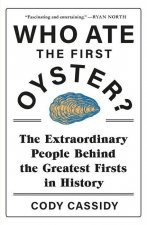
Who Ate the First Oyster?
13.93 € -24 % -

Oxford Read and Discover Camouflage Activity Book
4.64 € -5 % -

Guernsey Literary and Potato Peel Pie Society
14.03 € -25 % -

Stew Recipes Cookbook: 30 Flavoursome Recipes!
20.80 € -7 % -

Poster
57.16 € -13 % -

Painting Portraits
24.74 € -9 % -

Profesor Astrokot obserwuje gwiazdy. Profesor Astrokot
7.67 € -22 % -

Political Campaign Desk Reference
19.89 € -18 % -

Earlyreads
6.15 € -7 % -

Placebo Effects
129.18 € -

Im mroczniej, tym lepiej (ilustrowane brzegi)
15.24 € -5 % -

Encyclopedia of Military Technology and Innovation
105.04 € -

JANE GOODALL
29.38 € -

History of the Wars
33.42 € -4 % -

The Romantic Revolution
16.96 € -17 % -

New Introduction to Multiple Time Series Analysis
211 € -

From Greenhouse to Icehouse
126.05 € -

Madagascar Low Intermediate Book with Online Access
10.70 € -8 % -
Biologia Repetytorium dla maturzystow i kandydatow na uczelnie medyczne Tom 1
11.91 € -

On
6.45 € -34 % -

Clarissa Harlowe, or the history of a young lady - Volume 1
13.53 € -14 % -

Reinforcement Learning
65.45 € -9 % -

Plantas en la Biblia
57.06 € -9 % -

Psychobattery
50.80 € -

Voice over IP in Wireless Heterogeneous Networks
102.82 € -7 % -
Metswalle e mmedi e meholo (Sesotho)
5.65 € -5 % -

ACT Math Test Preparation and study guide
18.17 € -
Femmes-déesses dans la mythologie grecque
17.06 € -

Rome after Sulla
159.69 € -

Domestic Politics, International Bargaining and China's Territorial Disputes
63.83 € -

IP Multimedia Subsystem (IMS): Session Control and Other Network Operations
94.54 € -

Getting Started in Ballet
140.29 € -

Croquet Secrets
54.43 € -

Boston's Freedom Trail
8.58 € -18 % -

Alligator Creek
20.29 € -

One Death, Nine Stories
15.75 € -9 % -

Occult World
23.73 € -2 % -

Schriften. Band 5
118.98 € -4 % -

Filmjuwelen mit Peter Alexander: 4 Komödien voller Evergreens!
43.63 € -

Anthropology
19.89 € -18 % -

Alzheimer's Ascent And Autumn's Alleviation
21.71 € -24 % -

Berlin Dancer
13.83 € -2 % -

The surprising world of Zero: The emancipation of the First Cardinal
12.21 € -6 % -

Introduction to the International Criminal Court
35.85 € -

24 Wichtel-Rätsel | Advents-Rätselspaß mit den Wichteln
5.65 € -

Coastal Navigation Using GPS
27.06 € -9 % -

St. Patrick and the early Church of Ireland
19.69 € -14 % -

Álxebra linear
13.32 € -

Florentine Villas in the Fifteenth Century
64.13 € -

Blitzen Benz BANG. Daimler Art Collection
98.98 € -

Doodling for Food Lovers
35.24 € -

A TOPOGRAPHICAL DESCRIPTION OF THE DOMIN
21.91 € -2 % -

Der Ueberfall Von Nidwalden, 9 September 1798 (1899)
18.37 € -1 % -

What is philosophy?
9.38 € -17 % -

Aging of Polymers, Polymer Blends & Polymer Composites
200.40 € -10 % -

Dynamics Reported.1
42.41 € -9 % -

Cocina y restauración. Cuaderno de trabajo
17.87 € -

Tropical Forest Community Ecology
85.95 € -10 % -

Clinical Applications of Learning Theory
239.39 € -

Erbe e sparasi. Ricette con erbe spontanee
6.25 € -

Poems on Several Occasions.
11.81 € -25 % -

Young Ladies' English Grammar; Adapted to the Differential Classes of Learners. With an Appendix, ... By Jane Gardiner,
29.18 € -1 % -

Origines de la formation des noms indo-européens
35.55 € -

Landing in the Executive Chair
13.83 € -21 % -

Roman Holidays
52.52 € -

Very British Revolution
18.07 € -9 % -

Tombstone By Tombstone: Here Lies the Old West
8.98 € -6 % -

Kein Zug Nach Nirgendwo
18.27 € -27 % -

2013 International Cheese Throwdown
14.94 € -6 % -
Quand il dit bleu, je vois rouge
6.76 € -

Beyond Rules in Society and Business
189.49 € -

Environment and Health
53.32 € -14 % -

Zwoelf Hebelstundlein
38.27 € -11 % -

Way Worse Than Being a Dentist: The Lawyer's Quest for Meaning
22.01 € -1 % -

Piezoelectric Multilayer Beam Bending Actuators
154.13 € -7 % -

Model Yachts and Boats
34.94 € -10 % -

Ritu Sanhara Or Assemblage Of Seasons
19.28 € -2 % -

German Course
37.06 €
Give this book as a present today
- Order book and choose Gift Order.
- We will send you book gift voucher at once. You can give it out to anyone.
- Book will be send to donee, nothing more to care about.
More about Polymeric Materials in Medication
You get 373 loyalty points
 Book synopsis
The art of using chemical agents for medication dates back into antiquity, although most of the earliest examples used plants, herbs, and other natural materials. The old Egyptian medical papyri, which date from before 1400 B. C. , contain dozens of examples of such medicinal plants and animal extracts. In the Old Testament of the Bible, we can find references to using oil to soften the skin and sores (Isaiah 1:6), the use of tree leaves for medicine (Ezekiel 47:12) and various medical balms (Jeremiah 8:22). Not all these recipes were effective in curing the ailments for which they were used and sometimes the treatment was worse than the disease. Nevertheless, the art of using chemical derived agents for medicines continued to develop and received great impetus during the present century with the rise of synthetic organic chemistry. One of the most vexing problems has always been to achieve specifici ty with the medications. While some medical agents do indeed possess a relatively high degree of specificity, most agents are far more systemic than would be desired. Much of the research efforts to correct this deficiency has centered on modifying the chemical agents themselves. Unfortunately, there are severe limitations in this approach since minor modifications often drastically affect the therapeutic activity and can even render the drug completely ineffective, or worse.
Book details
Book category Books in English Medicine Other branches of medicine Pharmacology
154.13 €
- Full title: Polymeric Materials in Medication
- Author: Charles G. Gebelein, Charles E. Carraher Jr.
- Language: English
- Binding: Hardback
- Number of pages: 302
- EAN: 9780306421150
- ISBN: 0306421151
- ID: 01376736
- Publisher: Springer Science+Business Media
- Weight: 1370 g
- Dimensions: 254 × 178 × 22 mm
Trending among others
-
Community Pharmacy
61.91 € -4 % -

A is for Arsenic
11.61 € -29 % -

Clinical Pharmacy and Therapeutics
48.48 € -24 % -
Rang & Dale's Pharmacology
73.73 € -1 % -

New Bach Flower Body Maps
14.74 € -25 % -

Poisoner's Handbook
14.03 € -25 % -

Peyote and Other Psychoactive Cacti
11.30 € -24 % -
Crash Course Pharmacology
42.21 € -14 % -
ESC Handbook on Cardiovascular Pharmacotherapy
82.42 € -
Fundamentals of Pharmacognosy and Phytotherapy
59.79 € -5 % -

New Bach Flower Therapies
12.72 € -24 % -
Bach Remedies Repertory
13.93 € -24 % -
Color Atlas of Pharmacology
58.48 € -9 % -
Oxford Handbook of Practical Drug Therapy
43.93 € -4 % -

Uninformed Consent
16.76 € -25 % -

Psychiatric Drug Withdrawal
72.31 € -

Antibiotics
98.48 € -27 % -

Handbook of Psychopharmacology
51.61 € -7 % -
Chinese Traditional Herbal Medicine
21.61 € -25 % -
Concise Guide to Medicine & Drugs 7th Edition
11.81 € -25 % -

Bach Flower Massage
13.63 € -21 % -
Elsevier’s 2026 Intravenous Medications
66.56 € -
Essentials of Inorganic Chemistry - For Students of Pharmacy, Pharmaceutical Sciences and Medicinal Chemistry
57.06 € -9 % -

Manual of Chinese Herbal Medicine
21.40 € -17 % -
Prescriber's Guide - Children and Adolescents: Volume 1
62.92 € -
Netter's Illustrated Pharmacology Updated Edition
61.91 € -4 % -

Health from God's Garden
12.72 € -24 % -

Case Files Pharmacology, Third Edition
49.18 € -

Cannabis Alchemy
14.03 € -25 % -

Toxin Solution
11.81 € -25 % -
Bartram's Encyclopedia of Herbal Medicine
18.07 € -25 % -
Disulfiram and its Metabolite, Diethyldithiocarbamate
51.61 € -7 % -

Brenner and Stevens' Pharmacology
80.90 € -5 % -

Merck Index
137.97 € -1 % -
Case Studies: Stahl's Essential Psychopharmacology
83.53 € -

Psychedelic Chemistry
18.17 € -25 % -
Clinical Pharmacology
68.17 € -

Truth About the Drug Companies
13.42 € -24 % -

Medical Toxicology: Antidotes and Anecdotes
26.66 € -

Prescriber's Guide: Antidepressants
82.62 € -

Prescriber's Guide: Antipsychotics
48.58 € -
Botulinum Neurotoxin Injection Manual
74.84 € -
Herb, Nutrient, and Drug Interactions
92.92 € -3 % -

Thieme Test Prep for the USMLE (R): Learning Pharmacology through Clinical Cases
68.58 € -

Clinician's Guide to ADHD
75.55 € -9 % -
Clinical Pharmacology for Prescribing
73.02 € -
Promise of Low Dose Naltrexone Therapy
21.30 € -16 % -

Bitterest Pills
39.08 € -
Aulton's Pharmaceutics
69.59 € -14 %
Collection points Bratislava a 12824 dalších
Copyright ©2008-26 najlacnejsie-knihy.sk All rights reservedPrivacyCookies

 25652 collection points
 Delivery 2.99 €
 02/210 210 99 (8-15.30h)