
Code: 02179765
Prochloron: A Microbial Enigma
by Ralph A. Lewin
Ralph A. LewiQand Lanna Cheng In physics, the discovery of new (more properly, hitherto undetected) particles has often resulted from a search: like the discovery of America, their existence had been postulated but their actual ex ... more


- Language:
 English
- Binding: Paperback
- Number of pages: 130
Publisher: Springer-Verlag New York Inc., 2011
- More about this

51.33 €
RRP: 55.56 €
You save 4.23 €

In stock at our supplier
Shipping in 5 - 8 days
You might also like
-

Lonely Planet Vietnam
20.99 € -21 % -

AusBlick 02
19.28 € -21 % -

Cognitive-Behavioral Treatment of Borderline Personality Disorder
90.21 € -

Naoki Urasawa's 20th Century Boys, Vol. 8
9.84 € -27 % -

The Stars and The Stage
13.25 € -2 % -

Gardener
16.07 € -26 % -

Deluge
19.68 € -30 % -

Stokrát Antarktida
12.85 € -11 % -

Hra o trůny
17.17 € -16 % -

I Can Catch a Monster
12.75 € -25 % -

mia casa, le mie cose
16.17 € -

J.S. Bach 6 Cello Suites for Solo Guitar
26.51 € -10 % -

One Man on a Bike
8.63 € -25 % -

Cinemaps, cartographie de 35 films de légende
43.19 € -

Die Haftung Der Benannten Stelle Fur Medizinprodukte
71.73 € -4 % -

I drammi de' campi Padre Don Giuseppe-La vendetta-Proprietari e fittaiuoli- Sequestro.
17.77 € -14 % -

Counselling Skills for Health Professionals
78.76 € -

Caracterizacion fisica de un varistor (pastilla MOVs)
176.12 € -14 % -

Stoffwechsel Des Kindes
22.19 € -11 % -

Sticker Fun - Teddy Bears
3.41 € -25 % -

Love, unto thine own who camest
4.51 € -14 % -

À vous de jouer !
26.21 € -

Música, 2 ESO. Gua del profesor
12.65 € -

Silent as the Falling Snow: My experience with bowel cancer
7.43 € -6 % -

Pregúntale a un ángel (Incluye cartas)
31.84 € -

Entwicklung und Leistungsbewertung eines Konferenzdienstes unter CORBA
33.75 € -11 % -

Fogbound Manor: A Gothic Novel
14.36 € -6 % -

Colloid Process Engineering
100.06 € -9 % -

From the Rio Grande Valley
26.62 € -1 % -
Bereavement Counselling and Care
18.28 € -9 % -

Producción de Reportajes Deportivos en TV
60.27 € -

Humor of the Old Southwest
36.86 € -

Vivencias Con El
12.35 € -

Rise and Fall of American Air Mastery
14.16 € -2 % -

Platypus Tales
10.54 € -1 % -

Public Participation, Science and Society
36.36 € -

Medical Interpreting and Cross-cultural Communication
50.63 € -

Dr. Martin Luther King, Jr. (Color and Learn)
8.03 € -25 % -

Oil Mill On The Texas Plains
17.77 € -

Doppelklick
14.26 € -10 % -

Le grand livre Vagnon de la plongée - Découvrir, se former, s'équiper
41.18 € -

Montana's Dimple Knees Sex Scandal: 1960s Prostitution, Payoffs and Politicians
23.50 € -25 % -

La polyarthrite rhumatoïde en milieu rural au Sénégal
25.81 € -11 % -

Evaluación de la intervención socioeducativa
45.50 € -

5 Year Personal Expense Tracker
6.72 € -3 % -

Pollos libro para colorear 4
9.94 € -7 % -

Emerging Quantum
132.91 € -7 % -

Social Collective Intelligence
51.33 € -7 % -

Oeffentlich-Rechtlicher Rechtsschutz Der Zielgesellschaft Und Ihrer Aktionaere in Uebernahmesituationen
139.75 € -

Normas de eficacia del curso de ESP para estudiantes de psicología
49.54 € -14 % -

Glimpses of Peebles
25.31 € -9 % -

Poems from Homeroom: A Writer's Place to Start
12.95 € -25 % -

Ślimak do ciągnięcia odcienie szarości Plan Toys
18.78 € -30 % -

Psihologiya cheloveka v organizacii: shemy, tablicy, testy, tezaurus
37.16 € -14 % -

The Power of Pragmatic Passion: 7 Common Sense Principles for Achieving Personal and Professional Success
23 € -7 % -

Austriaca in Prosa Und Versen
17.77 € -11 % -

Structure and Analogy in the Playful Lexicon of Spanish
108.50 € -4 % -

An Inquiry Into the Causes of the General Poverty and Dependence of Mankind,
33.45 € -1 % -

Oxford Handbook of International Business
304.42 € -

Determinantes de Práticas Sustentáveis de Gest?o de Terras
48.62 € -14 % -

Atlas of Mylonites - and related microstructures
153.31 € -7 % -

Every Young Man, God's Man: Confident, Courageous, and Completely His
15.17 € -12 % -

Power & Authority in British Universities
261.92 €
Give this book as a present today
- Order book and choose Gift Order.
- We will send you book gift voucher at once. You can give it out to anyone.
- Book will be send to donee, nothing more to care about.
More about Prochloron: A Microbial Enigma
You get 125 loyalty points
 Book synopsis

Ralph A. LewiQand Lanna Cheng In physics, the discovery of new (more properly, hitherto undetected) particles has often resulted from a search: like the discovery of America, their existence had been postulated but their actual existence awaited confirmation. In biology, new discoveries are rarely made in this way. The existence of an alga like Prochloron, as a putative ancestor of chloro plasts, had been postulated, but in fact its discovery was a consequence of fortuitous events. Green algal symbionts in didemnid ascidians had been known for decades to a few marine zoologists who had worked in coral reef areas, but nobody had bothered much about them. When we happened to find them, under boulders on a seashore in Baja California, Mexico, where we were taking part in a student expedition, we didn't bother much either at first, though they worried us a little. With our portable microscope we could see no nuclei in the cells, which, according to the dogma accepted at the time, indicated that they were blue-green algae-yet they didn't look blue-green. They were leaf-green, like green algae and higher plants. We made desultory attempts to grow them in culture, in variously enriched seawater media, but failed. (This proved to be a frustrating experience, all too frequently repeated on subsequent expeditions. ) We collected enough for electron microscopy, though, and transmission electron microscopy (TEM) studies indicated that the cells were unequivocally prokaryotic.
Book details
Book category Books in English Mathematics & science Biology, life sciences Botany & plant sciences
51.33 €
- Full title: Prochloron: A Microbial Enigma
- Author: Ralph A. Lewin
- Language: English
- Binding: Paperback
- Number of pages: 130
- EAN: 9781461282037
- ISBN: 1461282039
- ID: 02179765
- Publisher: Springer-Verlag New York Inc.
- Weight: 271 g
- Dimensions: 229 × 152 × 11 mm
- Date of publishing: 12. October 2011
Trending among others
-
#Coloreanding: Bótanica
9.64 € -9 % -

Finding the Mother Tree
15.86 € -22 % -

Native American Ethnobotany
57.26 € -25 % -
Plant Behaviour and Intelligence
82.68 € -

Introduction to Bryophytes
65.80 € -

Le glossaire illustré pour la botanique de terrain
32.14 € -5 % -

Moss Flora of Britain and Ireland
191.89 € -
Genus Utricularia
65.10 € -9 % -

Redwood Classic
11.64 € -27 % -

Illustrated Moss Flora of Antarctica
279.60 € -10 % -

Tobacco and Shamanism in South America
42.39 € -

Transformative Paleobotany
130.20 € -10 % -

Plants from Test Tubes : An Introduction to Micropropagation
29.13 € -25 % -

RHS Genealogy for Gardeners
21.39 € -23 % -

How the Earth Turned Green
61.28 € -

Teaming with Nutrients
23.30 € -24 % -

Maria Sibylla Merian
21.39 € -17 % -
Brilliant Green
17.77 € -22 % -

Plants: A Very Short Introduction
10.14 € -25 % -
Physicochemical and Environmental Plant Physiology
128.90 € -

Tropical Fruits and Other Edible Plants of the World
32.64 € -25 % -
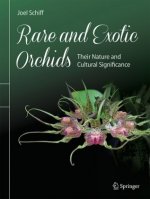
Rare and Exotic Orchids
52.14 € -14 % -

Plants for the People
20.99 € -25 % -

American Herbal Products Association's Botanical Safety Handbook
233.59 € -

Arctic Plants of Svalbard
39.17 € -25 % -

Kansas Wildflowers and Weeds
32.64 € -25 % -
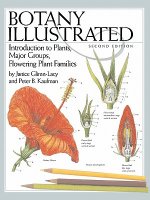
Botany Illustrated
72.33 € -

Plant Biochemistry
225.15 € -

Routledge Handbook of Forest Ecology
70.32 € -

Dictionary of Weeds of Eastern Europe
73.84 € -

Fractals: A User's Guide for the Natural Sciences
108.10 € -

Plant
11.95 € -9 % -
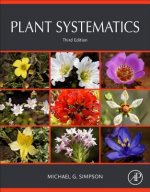
Plant Systematics
112.82 € -

Tree Ferns
17.97 € -18 % -
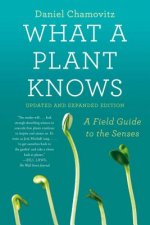
What a Plant Knows
14.36 € -25 % -

Plant Pathology
83.28 € -21 % -
Plant Pathology and Plant Diseases
77.66 € -

Field Guide to Plants of Costa Rica
34.75 € -25 % -
Atlas of Poetic Botany
25.51 € -
Flowers of Greece and the Balkans
89.61 € -

Orchids of Tropical America
22.09 € -24 % -
Darwin's Most Wonderful Plants
12.55 € -26 % -

Comfortably Unaware
12.55 € -22 % -
Raven Biology of Plants
113.22 € -

In Praise of Plants
20.29 € -18 % -

Animal, Vegetable, Miracle
12.55 € -29 % -
Strawberry
176.22 € -

Plant Ecology
85.09 € -9 % -

Language of Plants
34.75 €
Collection points Bratislava a 13517 dalších
Copyright ©2008-26 najlacnejsie-knihy.sk All rights reservedPrivacyCookies

 27038 collection points
 Delivery 2.99 €
 02/210 210 99 (8-15.30h)
