Code: 45252490
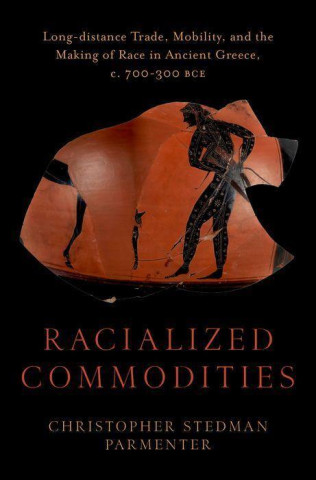
Racialized Commodities
by Parmenter, Christopher Stedman (Assistant Professor of Classics, Assistant Professor of Classics, The Ohio State University)
Between c. 700-300 BCE, the ancient Greeks developed a vivid imaginary of the world''s peoples. Ranging from the light-skinned, "gray-eyed Thracians" of the distant north to the "dark-skinned Ethiopians" of the far south, as the p ... more


- Language:
 English
 - Binding: Hardback
- Number of pages: 400
Publisher: Oxford University Press, USA, 2024
- More about this


You might also like


Give this book as a present today
- Order book and choose Gift Order.
- We will send you book gift voucher at once. You can give it out to anyone.
- Book will be send to donee, nothing more to care about.
More about Racialized Commodities
You get 318 loyalty points
 Book synopsis
Between c. 700-300 BCE, the ancient Greeks developed a vivid imaginary of the world''s peoples. Ranging from the light-skinned, "gray-eyed Thracians" of the distant north to the "dark-skinned Ethiopians" of the far south, as the poet Xenophanes described them around 540 BCE, Greeks envisioned a world populated by human groups with distinct physiognomies. Racialized Commodities traces how Greece''s "racial imaginary"--a confluence of thinking about cultural geography, commodity production, and human physiognomy--emerged from cross-cultural trade between Greece and its Mediterranean neighbors during the Archaic and Classical Periods. It adopts the model of a "commodity biography" to investigate how trade led to the entanglement of cultures, bodies, and things in Archaic and Classical Greece. For merchants, the racial imaginary might be used to play up the "exotic" provenance of their goods to consumers. It might also circulate practical information about customs, pricing, navigation, and doing business in foreign ports. Archaic Greek attempts to explain foreign bodies were rarely pejorative, and Racialized Commodities begins with some of their earliest images of African peoples, described by Greeks as Egyptians or Ethiopians, before seeking to explain what changed in the early Classical Period. As the Persian Empire loomed and Greek cities became increasingly dependent on enslaved labor, negative stereotypes of Thracians and Scythians became widespread and coalesced into the charged idea of the barbarous--the "barbarian."
Book details
Book category Books in German Geisteswissenschaften, Kunst, Musik Geschichte Mittelalter
131.29 €
- Full title: Racialized Commodities
- Author: Parmenter, Christopher Stedman (Assistant Professor of Classics, Assistant Professor of Classics, The Ohio State University)
- Language: English
- Binding: Hardback
- Number of pages: 400
- EAN: 9780197757116
- ISBN: 0197757111
- ID: 45252490
- Publisher: Oxford University Press, USA
- Weight: 684 g
- Date of publishing: 30. July 2024
Trending among others
-

Alexander
21.84 € -18 % -

Celtic Ancient Origins
15.16 € -3 % -

Classical Mythology of the Constellations
20.22 € -

Sumerian Mythology
9.40 € -1 % -
Polis
28.21 € -2 % -
Ancient Egypt
34.59 € -28 % -
Hubris
21.64 € -25 % -

Pantheon - The Minoans
14.66 € -8 % -

Talking Classics
17.79 € -22 % -
Persia's Greek Campaigns
146.87 € -

How the World Made the West
16.18 € -14 % -

After 1177 B.C.
13.54 € -24 % -

Meditations
5.86 € -25 % -

Meditations
11.32 € -25 % -

Pandora's Jar
12.33 € -21 % -

Leaky Aqueducts, Battle Pigeons, and Mystery Cults
16.07 € -28 % -

The Anthology
34.08 € -25 % -

Talking Classics
16.38 € -27 % -
The Last Dynasty
13.14 € -24 % -

Roman Cavalry Helmets
16.28 € -23 % -
Warriors of Anatolia
23.36 € -3 % -

The Roots of the Federal Reserve: Tracing the Nephilim from Noah to the US Dollar
25.68 € -6 % -

Penelope's Bones
14.86 € -24 % -

The Buried City
14.76 € -34 % -

The Immortality Key
18.10 € -29 % -

A History of the Roman Empire in 21 Women
13.04 € -15 % -

Roman Infantry Helmets
16.07 € -24 % -

El infinito en un junco
13.95 € -10 % -
Mystery Cults in the Ancient World
16.88 € -20 % -

Armies of the Byzantine Empire, 395-1204
26.29 € -25 % -
Goliath's Curse
28.41 € -19 % -
The Seven Wonders of the Ancient World
12.43 € -28 % -
Highlights of the National Museum of Egyptian Civilization in Cairo
29.43 € -12 % -

The Apocalypse of Yajnavalkya
18.30 € -24 % -

Bronze Age Military Equipment
16.07 € -24 % -

Tiberius
30.64 € -24 % -
The Libyan Pharaohs of Egypt
29.53 € -11 % -

The Enigma Of the Codex Gigas
10.31 € -2 % -
The Lives of the Caesars
14.86 € -24 % -

The Decline and Fall of the Ptolemies
26.39 € -25 % -

War and Violence in Early and High Medieval Venice
56.03 € -

Awakening Osiris: The Spiritual Keys to the Egyptian Book of the Dead
15.26 € -22 % -

Fausto & Felice Niccolini. Houses and Monuments of Pompeii
134.43 € -11 % -

Carrhae 53 BC
17.09 € -24 % -

The Giza Death Star Revisited: An Updated Revision of the Weapon Hypothesis of the Great Pyramid
14.76 € -25 % -
The Battle of Thapsus (46 Bc)
28.21 € -21 % -

Rome and Persia
16.18 € -25 % -
Knossos: Myth, History and Archaeology
33.68 € -

Evil Roman Emperors
21.64 €
Collection points Bratislava a 12880 dalších
Copyright ©2008-26 najlacnejsie-knihy.sk All rights reservedPrivacyCookies

 25764 collection points
 Delivery 2.99 €
 02/210 210 99 (8-15.30h)