Code: 04646248
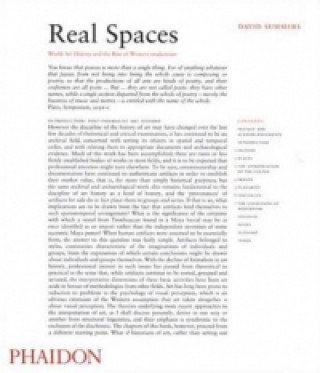
Real Spaces
by David Summers
David Summers sets forth that current formalist, contextual and post-structural approaches fail to provide an adequate account of all art, particularly art produced outside the Western tradition. He argues that there are profound ... more


- Language:
 English
 - Binding: Hardback
- Number of pages: 704
Publisher: Phaidon Press Ltd, 2003
- More about this

105.62 €
Availability:
50/50 We think title might be available. Upon your order we will do our best to get it within 6 weeks.
We search the world
You might also like
-

Dungeon Crawler Carl
27.03 € -11 % -

Historic Costumes and How to Make Them
9.88 € -25 % -

LE NEZ DU VIN 54 ARÔMES Anglais
369.74 € -

The Fourth Turning
20.07 € -11 % -

FRIEREN: BEYOND JOURNEY'S END ARTWORKS 1 (ARTBOOK VO JAPONAIS)
51.74 € -

Topfit A2. Übungsbuch mit 5 Modelltests und 5 Übungstests
37.82 € -

Dinoszauruszok
5.54 € -21 % -

Wind, Sand and Stars
13.41 € -24 % -

Klinická dietologie a výživa
18.75 € -9 % -

English Literature in Context
34.69 € -5 % -

Optimal Control
31.87 € -25 % -

Wind, Sand and Stars
10.18 € -29 % -

Sheep Princess in Wolf's Clothing Vol. 1
15.12 € -24 % -

Art and Making of Narcos
23.09 € -17 % -

LE NEZ DU VIN 54 ARÔMES FRANÇAIS
369.74 € -

Art of Love
7.66 € -25 % -

How to Stop Losing Your Sh*t with Your Kids: A Practical Guide to Becoming a Calmer, Happier Parent
14.72 € -25 % -

Art of Love
11.79 € -25 % -

Hello, My Name is Awesome
16.84 € -13 % -

Marine Ecology - Concepts and Applications
112.48 € -

RTF Pocket Guide
7.86 € -24 % -

Lonely Planet Canada
34.49 € -

Complete Blues Guitar Book
20.87 € -9 % -

Nazywam sie Kurdystan
9.17 € -13 % -

Project 3 Third Edition: iTools
47.71 € -4 % -

Wóz policyjny. Świat na kółkach
5.14 € -9 % -

Шмяк и пингвины
17.44 € -12 % -

On Meditation
9.88 € -14 % -

Wolfszeit
23.60 € -16 % -

Ninety Degrees North
12.60 € -15 % -

Tupac 187
18.15 € -

Kursk
21.18 € -25 % -

Ballad of the White Horse
22.79 € -2 % -

SETAS EN EL ARTE BOTANICO
23.50 € -2 % -

Encyclopedie des gens du monde, repertoire universel des sciences, des lettres et des arts- T 12.1
27.73 € -

Why Does My Heart Pump? Level 6 Factbook
7.35 € -8 % -

Cleveland Steamer and His Faithful Dog Blumpkin
12.30 € -7 % -

Algebraic Theories
56.59 € -7 % -

Alexander Dalrymple and the Expansion of British Trade
46.90 € -

A Stitch in Time
6.95 € -20 % -

Works of Music
114.70 € -

The Pro-Slavery Argument: As Maintained By The Most Distinguished Writers Of The Southern States
49.73 € -2 % -

Bedeutung Der Globalisierung Fur Kleine Und Mittlere Industrielle Unternehmungen
17.04 € -10 % -

El saqueo de Roma
27.03 € -

Values of Bureaucracy
224.76 € -

A History of British Poetry
39.94 € -

Fin du monde - Les prédictions mayas 2012
22.99 € -

A sárkány nyomában
10.99 € -13 % -

Black Rainbow
14.72 € -19 % -

Deskriptive deutsche Syntax - lineare und hierarchische Struktur
16.13 € -10 % -

HIV/AIDS Prevention In The Deaf Community In Western Region, Kenya
21.38 € -14 % -

The Old Testament in Syriac: According to the Peshitta Version; Part III, I Isaiah
149.20 € -

Notes in the Category of C
45.09 € -

Fifth Category
14.82 € -2 % -

Nicaise, Observateur Au Salon de 1822, Dialogue Mele de Couplet
12.10 € -1 % -

À l'écoute du bébé prématuré
22.79 € -

Global Contemporary and the Rise of New Art Worlds
38.73 € -25 % -

Irrigation Engineering
40.75 € -2 % -

Strażak + CD
6.95 € -

ERlebt
12.80 € -4 % -

Moor Music
9.68 € -25 % -

Sri Lanka - Ein Bildband
15.22 € -10 % -

Psychology of Demonization
189.35 €
Give this book as a present today
- Order book and choose Gift Order.
- We will send you book gift voucher at once. You can give it out to anyone.
- Book will be send to donee, nothing more to care about.
Availability alert
Enter your e-mail address and once book will be available,
we will send you a message. It's that simple.
More about Real Spaces
You get 256 loyalty points
 Book synopsis
David Summers sets forth that current formalist, contextual and post-structural approaches fail to provide an adequate account of all art, particularly art produced outside the Western tradition. He argues that there are profound problems right at the heart of Western thinking about art, and his new framework is an attempt to resolve these problems. At the core of the argument is a proposal to replace the notion of the 'visual arts' with that of the 'spatial arts', comprising two fundamental categories: 'real space' and 'virtual space'. Real space is the space we share with other people and things: the fundamental arts of real space are sculpture (the art of personal space) and architecture (the art of social space). Virtual space - which always entails a format in real space (thus making real space the primary category) - is space represented in two dimensions, as in paintings, drawings and prints. Adopting a wide definition of art that in principle embraces anything that is made, and underpinning his arguments with detailed examination of artefacts and architecture from all over the world, Summers develops his thesis in a series of chapters that broadly trace the progress of human skill in many different traditions: from the simple facture of the first tools to the sophisticated universal three-dimensional grid of modern technology, which he describes as 'metaoptical' space. In a sequence of far-reaching and revealing discussions of facture, places, centres, three-dimensional and planar images, virtuality and perspective, and the centreless metaoptical world of Western modernism, Summers creates a conceptual framework that always relates art to human use, and enables us to treat all traditions on an equal footing within universal categories. At the same time, this infrastructure can help to understand the dynamics of opposition and conflict both within and between cultures. Formalism and other theories of art are not rejected. Rather, in this wider context they can be identified and evaluated within the Western tradition whence they originated, without some naive universal validity being ascribed to them. Within this broad plan there is incredible wealth of detail and energy of description. The author's constant engagement with actual works of art is always lively and convincing; his analysis of the concrete metaphors that lie behind our critical vocabulary is revealing and thought-provoking; and his clear-headed and courageous engagement with important issues is most impressive. Some of the author's language and terminology may, for the novice, prove an alluring challenge at first. However, Summers writes with exceptional clarity: new terms are carefully defined and explained in such a way, that the reader will not only understand them but also appreciate why such terminology is essential to a work of such profound philosophy. What is striking is that the author is always using language in order to think about the real world, and not in order to retreat into a closed world of academic scholasticism. He insists that all art is made to fit human uses, and can never be separated from the primary spatial conditions of those uses. With its universal scope and its sympathetic understanding of the innumerable forms that art can adopt, this is a book that will stimulate people to think in entirely new and fruitful ways about the human purposes of art, and also to think more deeply and critically about the intricate relations between art, political order and technology.
Book details
Book category Books in English The arts The arts: general issues Theory of art
105.62 €
- Full title: Real Spaces
- Subtitle: World Art History and the Rise of Western Modernism
- Author: David Summers
- Language: English
- Binding: Hardback
- Number of pages: 704
- EAN: 9780714842448
- ISBN: 0714842443
- ID: 04646248
- Publisher: Phaidon Press Ltd
- Weight: 2020 g
- Dimensions: 252 × 219 × 57 mm
- Date of publishing: 27. May 2003
Trending among others
-

Ways of Seeing
10.68 € -28 % -

Interaction of Color
17.44 € -18 % -

Complete Color Harmony, Pantone Edition
17.75 € -29 % -

Create Dangerously
3.92 € -19 % -

Art & Fear
10.99 € -21 % -

Art Spirit
9.17 € -20 % -

Chroma
10.78 € -24 % -

Art in Mind
44.88 € -

The Work of Art in the Age of Mechanical Reproduction
8.06 € -30 % -

Theory of Colours
28.44 € -25 % -

Art of Perspective
18.86 € -25 % -

Duty Free Art
13.41 € -14 % -

Beauty: A Very Short Introduction
9.98 € -24 % -

Chromophobia
18.05 € -24 % -
Free Play
13.41 € -24 % -

Decolonizing Nature - Contemporary Art and the Politics of E
20.77 € -25 % -

White: Insights into Japanese Design Philosophy
29.55 € -19 % -

Red
30.05 € -29 % -
Aesthetics of Installation Art
18.45 € -26 % -

Black
25.21 € -24 % -

Power of Images
33.38 € -18 % -

Politics of Aesthetics
29.45 € -4 % -

But Is It Art?
14.72 € -25 % -

Field of Cultural Production - Essays on Art and Literature
22.49 € -9 % -

Galois Theory
6.55 € -24 % -

Secrets of Coloring 2
14.72 € -25 % -

Portraying Pregnancy: from Holbein to Social Media
25.21 € -

Philosophy of Art 2e
43.88 € -

Animals
18.45 € -26 % -

Aesthetics of Ugliness
43.98 € -

Harald Szeemann - Selected Writings
52.25 € -

Life Forms in Art
26.12 € -5 % -

Artist's Way Workbook
16.84 € -24 % -
Art and Visual Perception, Second Edition
36.31 € -3 % -

Elements of Dynamic Symmetry
9.88 € -25 % -

Art As Experience
14.01 € -25 % -

100 Artists' Manifestos
16.03 € -13 % -
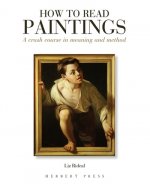
How to Read Paintings
16.03 € -24 % -
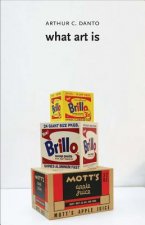
What Art Is
14.82 € -9 % -

Curatorial Conundrum
25.31 € -26 % -

Playing to the Gallery
12.90 € -30 % -

Art Is a Way of Knowing
12.80 € -47 % -

Painting beyond Itself - The Medium in the Post-Medium Condition
20.17 € -

Thinking About Art - A Thematic Guide to Art History
62.04 € -

Concerning the Spiritual in Art
7.86 € -24 % -

Mind in the Cave
18.25 € -27 % -
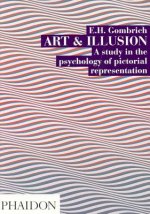
Art and Illusion
23.90 € -15 % -
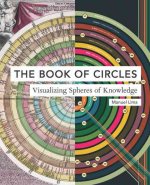
Book of Circles
30.26 € -22 % -

Art Theory: A Very Short Introduction
9.98 € -24 %
Collection points Bratislava a 12730 dalších
Copyright ©2008-26 najlacnejsie-knihy.sk All rights reservedPrivacyCookies

 25464 collection points
 Delivery 2.99 €
 02/210 210 99 (8-15.30h)