
Code: 01423799
Recent Advances on Model Hosts
by Eleftherios Mylonakis, Frederick M. Ausubel, Michael Gilmore
Most studies of bacterial or fungal infectious diseases focus separately on the pathogenic microbe, the host response, or the characterization of therapeutic compounds. Compartmentalization of pathogenesis-related research into an ... more


- Language:
 English
- Binding: Hardback
- Number of pages: 136
Publisher: Springer-Verlag New York Inc., 2011
- More about this

199.75 €
RRP: 221.26 €
You save 21.52 €

In stock at our supplier
Shipping in 10 - 13 days
You might also like
-

Die drei ??? Kids, Bücherhelden 2. Klasse, Doppelband 1, Zaubertrick und Monsterschreck
10.23 € -15 % -

FENDER STRATOCASTER - CLASSIC RED FINISH CADEAU
58.44 € -

Under the Wire
13.85 € -24 % -

The Frozen Mask: A Collection of Poems on Living with Parkinson's Disease
8.23 € -7 % -

Blackwell Guide to Plato's Republic
117.59 € -10 % -

Nordroute
17.87 € -11 % -

Playgrounds: reinventar la plaza
45.38 € -

Koerper(sub)Versionen
66.48 € -9 % -

52 kleine & große Eskapaden auf der Schwäbischen Alb
16.56 € -12 % -

Huevo de Dragón (Dragon Egg Spanish Edition)
5.92 € -20 % -

Managerial Skills and Practices for Global Leadership
42.77 € -

New Monk
30.72 € -1 % -

The Little Ships
34.64 € -10 % -

Micah's Remnant: God's Endtime Army
14.35 € -7 % -

Advances in Information Security Management & Small Systems Security, 1
153.25 € -7 % -

From Traveling Show to Vaudeville
44.98 € -

Wilderness Mentality: Stop Your Stinkin' Thinkin'
8.23 € -7 % -

Gens du Nord
28.41 € -

Manual. Administración y auditoría de los servicios de mensajería electrónica (UF1274). Certificados
15.96 € -

Kandahar Provincial Handbook: A Guide to the People and the Province
28.71 € -

Annette, une épopée
8.93 € -

SELVA OSCURA ; LA JUVENTUD PERDIDA, LA
59.55 € -

Calgary Birds: An Introduction to Familiar Species
6.62 € -25 % -

Oeuvres Illustrees. Impressions de Voyages. Suisse. 1, Partie 1
15.96 € -9 % -

Vivere. Un respiro, una foglia che cade, un'esistenza serena
20.08 € -

Cartes d'hivern
16.36 € -

Souvenirs d'Un Voyage En Egypte
21.48 € -2 % -

Dick Whittington (Traditional Chinese): 04 Hanyu Pinyin Paperback Color
36.04 € -7 %
Give this book as a present today
- Order book and choose Gift Order.
- We will send you book gift voucher at once. You can give it out to anyone.
- Book will be send to donee, nothing more to care about.
More about Recent Advances on Model Hosts
You get 487 loyalty points
 Book synopsis

Most studies of bacterial or fungal infectious diseases focus separately on the pathogenic microbe, the host response, or the characterization of therapeutic compounds. Compartmentalization of pathogenesis-related research into an analysis of the pathogen , the host, or the antimicrobial compound has largely been dictated by the lack of model systems in which all of these approaches can be used simultaneously, as well as by the traditional view that microbiology, immunology, and chemical biology and pharmacology are separate disciplines. An increasing number of workers from different fields have turned to insects, fish, worms and other model hosts as facile, ethically expedient, relatively simple, and inexpensive hosts to model a variety of human infectious diseases and to study host responses and innate immunity. Because many of these hosts are genetically tractable, they can be used in conjunction with an appropriate pathogen to facilitate the discovery of novel features of the host innate immune response.This book provides a series of reports from the 1st International Conference on Model Hosts. This first of its kind meeting focused on invertebrate, vertebrate and amoeboid systems used for the study of host-pathogen interactions, virulence and immunity, as well as on the relevance of these pathogenesis systems and mammalian models. Importantly, a common, fundamental set of molecular mechanisms is employed by a significant number of microbial pathogens against a widely divergent array of metazoan hosts. Moreover, the evolutionarily conserved immune responses of these model hosts have contributed important insights to our understanding of the innate immune response of mammals.§This book provides a series of reports from the 1st International Conference on Model Hosts. This first of its kind meeting focused on invertebrate, vertebrate and amoeboid systems used for the study of host-pathogen interactions, virulence and immunity, as well as on the relevance of these pathogenesis systems and mammalian models. Importantly, a common, fundamental set of molecular mechanisms is employed by a significant number of microbial pathogens against a widely divergent array of metazoan hosts. Moreover, the evolutionarily conserved immune responses of these model hosts have contributed important insights to our understanding of the innate immune response of mammals.Most studies of bacterial or fungal infectious diseases focus separately on the pathogenic microbe, the host response, or the characterization of therapeutic compounds. Compartmentalization of pathogenesis-related research into an analysis of the pathogen , the host, or the antimicrobial compound has largely been dictated by the lack of model systems in which all of these approaches can be used simultaneously, as well as by the traditional view that microbiology, immunology, and chemical biology and pharmacology are separate disciplines. An increasing number of workers from different fields have turned to insects, fish, worms and other model hosts as facile, ethically expedient, relatively simple, and inexpensive hosts to model a variety of human infectious diseases and to study host responses and innate immunity. Because many of these hosts are genetically tractable, they can be used in conjunction with an appropriate pathogen to facilitate the discovery of novel features of the host innate immune response.§This book provides a series of reports from the 1st International Conference on Model Hosts. This first of its kind meeting focused on invertebrate, vertebrate and amoeboid systems used for the study of host-pathogen interactions, virulence and immunity, as well as on the relevance of these pathogenesis systems and mammalian models. Importantly, a common, fundamental set of molecular mechanisms is employed by a significant number of microbial pathogens against a widely divergent array of metazoan hosts. Moreover, the evolutionarily conserved immune responses of these model hosts have contributed important insights to our understanding of the innate immune response of mammals.
Book details
Book category Books in English Mathematics & science Biology, life sciences Life sciences: general issues
199.75 €
- Full title: Recent Advances on Model Hosts
- Author: Eleftherios Mylonakis, Frederick M. Ausubel, Michael Gilmore
- Language: English
- Binding: Hardback
- Number of pages: 136
- EAN: 9781441956378
- ISBN: 1441956379
- ID: 01423799
- Publisher: Springer-Verlag New York Inc.
- Weight: 482 g
- Dimensions: 254 × 178 × 11 mm
- Date of publishing: 09. November 2011
Trending among others
-
The Molecule of More
19.57 € -2 % -

The Story of the Human Body
15.86 € -25 % -

Speculations on the Evolution of Human Intelligence
8.02 € -25 % -

The Storytelling Animal
14.55 € -24 % -

Story Genius
13.65 € -25 % -

Creative Evolution
13.25 € -27 % -
Neuroanatomy and Neuroscience at a Glance
57.94 € -
On the Origin of Species
10.94 € -28 % -

Astrobiology: A Very Short Introduction
10.13 € -25 % -

Moral Animal
15.86 € -25 % -
Cosmic Serpent
11.84 € -24 % -

Evolution: A Very Short Introduction
10.13 € -25 % -

Science and the Garden - The Scientific Basis of Hoticultural Practice 3e
65.97 € -5 % -

Computational Modeling of Cognition and Behavior
63.16 € -

The Selfish Gene
16.66 € -17 % -

Oxygen
14.15 € -20 % -

Wonderful Life
13.85 € -24 % -

Incognito
11.64 € -34 % -

Undoing Project
11.44 € -14 % -

Biocentrism
13.05 € -27 % -

Crack In Creation
14.35 € -25 % -

Life on a Young Planet
15.05 € -25 % -

Neonatal Intensive Care for Extremely Preterm Infants
156.06 € -9 % -
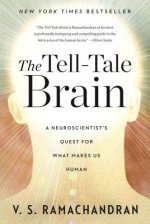
Tell-tale Brain
13.65 € -24 % -

Undoing Project
13.75 € -20 % -

Cosmic Hologram
14.75 € -19 % -
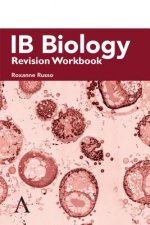
IB Biology Revision Workbook
24.19 € -

Conscious Mind
21.98 € -25 % -

Power of Habit
13.75 € -15 % -

Brain
12.54 € -27 % -

Life Ascending
11.84 € -33 % -

Power, Sex, Suicide
14.25 € -21 % -
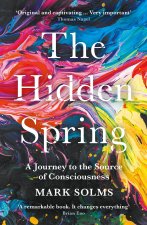
Hidden Spring
14.75 € -27 % -
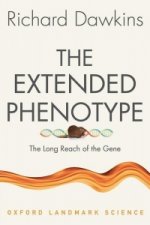
The Extended Phenotype
15.56 € -19 % -

Brain Rules (Updated and Expanded)
11.44 € -29 % -

Feeling Of What Happens
13.85 € -24 % -

Psychopath Inside
14.25 € -25 % -

Sapiens
31.63 € -16 % -
Human Brain Coloring Book
17.97 € -24 % -

Hidden History of the Human Race
15.46 € -9 % -

Your Brain Is a Time Machine
13.65 € -24 % -

Double Helix
11.74 € -25 % -

Seven Daughters Of Eve
11.24 € -28 % -

Why Evolution is True
13.85 € -24 % -
Symbiotic Planet
14.35 € -25 % -

Endless Forms Most Beautiful
13.85 € -24 % -

Ancestor's Tale
16.86 € -26 % -

Inferior
10.94 € -28 % -

Cartoon Guide to Genetics
17.87 € -25 %
Collection points Bratislava a 13618 dalších
Copyright ©2008-26 najlacnejsie-knihy.sk All rights reservedPrivacyCookies

 27240 collection points
 Delivery 2.99 €
 02/210 210 99 (8-15.30h)
