Code: 43321420
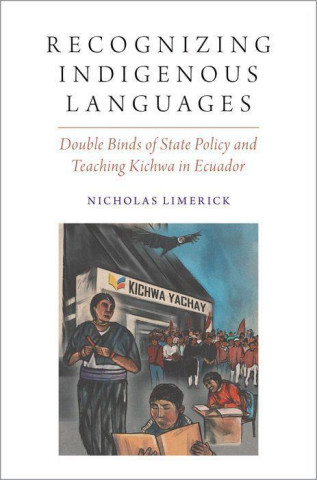
Recognizing Indigenous Languages
by Limerick, Nicholas (, Associate Professor of Anthropology and Education at Teachers College, Columbia University)
What follows when state institutions name historically oppressed languages as official? What happens when bilingual education activists gain the right to coordinate schooling from upper-level state offices? The intercultural bilin ... more


- Language:
 English
 - Binding: Paperback
- Number of pages: 272
Publisher: OXFORD UNIV PR, 2023
- More about this


You might also like
-

Ward No. 6 and Other Stories, 1892-1895
10.59 € -25 % -

Islam for Kids
10.59 € -25 % -
What Am I Doing Here?
13.92 € -24 % -
Grotesque and Performance in the Art of Aubrey Beardsley
52.47 € -2 % -

Proceedings General Court Martial, Held by Order of Field Marshal the Duke of Wellington, the Commander-In-Chief, for the Trial of Lieut. William Augu
16.64 € -25 % -

Garvanza
19.57 € -21 % -

Artificial Cognitive Architecture with Self-Learning and Self-Optimization Capabilities
102.73 € -7 % -

Wordsworth's Literary Criticism
199.32 € -

The Adventures of Tom Malley: The Making of a Man
9.78 € -6 % -

John's Story: The Last Eyewitness
19.17 € -18 % -

Eternal Quest and Other Verse
17.45 € -25 % -

Global Organizing Designs
59.03 € -

MUJER EN LOS PAISES MUSULMANES, LA
25.52 € -

Pointe polie en cristal de roche - Moyen modèle
19.97 €
Give this book as a present today
- Order book and choose Gift Order.
- We will send you book gift voucher at once. You can give it out to anyone.
- Book will be send to donee, nothing more to care about.
More about Recognizing Indigenous Languages
You get 102 loyalty points
 Book synopsis
What follows when state institutions name historically oppressed languages as official? What happens when bilingual education activists gain the right to coordinate schooling from upper-level state offices? The intercultural bilingual school system in Ecuador has been one of the most prominent referents of Indigenous education in the Americas. Since its establishment in 1988, members of Ecuador's pueblos and nationalities have coordinated a second national school system that includes the teaching of Indigenous languages. Based on more than two years of ethnographic research in Ecuador's Ministry of Education, at international and national conferences, in workshops, in schools, and with families, Recognizing Indigenous Languages considers how state agents carry out linguistic and educational politics and policies in eras of greater inclusivity and multiculturalism. This book shows how institutional advances for bilingual education and Indigenous languages have been premised on affirming the equality-and the equivalency-of the linguistic and cultural practices of members of Indigenous pueblos and nationalities with other Ecuadorians. Major responsibilities like serving as national state agents, crafting a standardized variety of the Kichwa language family, translating legal documents to Kichwa, and teaching Indigenous languages in schools have provided vast authority, representation, and visibility for those languages and their speakers. However, the everyday work of directing a school system and making Kichwa a language of the state includes double binds that work against the very goals of autonomous schooling and getting people to speak and write Kichwa.
Book details
Book category Books in German Sozialwissenschaften, Recht, Wirtschaft Soziologie Soziologische Theorien
41.98 €
- Full title: Recognizing Indigenous Languages
- Author: Limerick, Nicholas (, Associate Professor of Anthropology and Education at Teachers College, Columbia University)
- Language: English
- Binding: Paperback
- Number of pages: 272
- EAN: 9780197559185
- ISBN: 0197559182
- ID: 43321420
- Publisher: OXFORD UNIV PR
- Weight: 394 g
- Date of publishing: 01. September 2023
Trending among others
-

Integrating Primitive Reflexes Through Play and Exercise
16.14 € -25 % -

Integrating Primitive Reflexes Through Play and Exercise
16.14 € -25 % -
Propaganda - Original Edition
11.09 € -2 % -

Science and Sanity: An Introduction to Non-Aristotelian Systems and General Semantics Sixth Edition
46.21 € -2 % -
Abstract Painter's Guide: The Foundation for Abstract Painting
25.73 € -25 % -

Principles of Electric Vehicle Technology
51.56 € -6 % -

Hasta donde termina el mar
13.51 € -

Tarot de Marseille
32.29 € -
Objetivo DELE B2 con licencia digital
39.65 € -
Open to Work
20.58 € -27 % -
ALBERTO PONIS
101.52 € -

Teaching History
19.57 € -25 % -
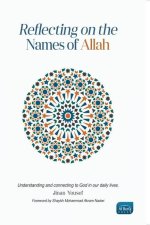
Reflecting on the Names of Allah
32.59 € -

The Conjugate Method: Enhanced Through the Research of Westside Barbell
31.08 € -7 % -

Objetivo DELE C1
42.08 € -

Portugués Já! - Iniciaçao
16.04 € -5 % -
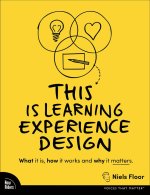
This is Learning Experience Design
28.55 € -24 % -
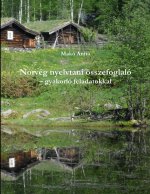
Norvég nyelvtan
25.52 € -1 % -

Generative Coaching Volume 1
21.69 € -24 % -

Manga Style 01: Peter Straubel
23.71 € -
Especial DELE C1 Curso completo - manual
38.44 € -

PORTUGUES A VALER 1 PACK
73.47 € -5 % -

Sapiens Reinvented
21.59 € -25 % -

BLACK CAT LESEN & ÜBEN Niveau Drei B1: JUGEND OHNE GOTT + AUDIO CD
9.28 € -66 % -
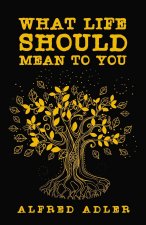
What Life Should Mean To You
16.14 € -25 % -

Patchwork japonés con aplicaciones de flores
27.75 € -

Cuentos Maravillosos Rumanos
34.20 € -
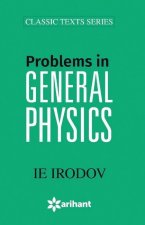
Problems in General Physics
48.03 € -1 % -

Interlingua ? Instrumento moderne de communication international (English version)
11.50 € -19 % -

Persuasión (Pocket)
13.11 € -21 % -

ANN ES ANN N 03
15.43 € -

El verdadero origen del caballo criollo
19.77 € -10 % -
El tiburón de internet
22.29 € -
¿Cómo somos realmente? Experimentos psicológicos
18.76 € -10 % -

The night beyond the tricornered window n.1
12.40 € -

Removing Labels, Grades K-12
24.11 € -10 % -
Mini
56.41 € -4 % -

Lesen und Uben
9.28 € -64 % -
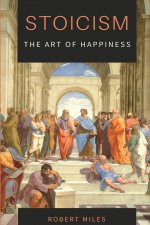
Stoicism-The Art of Happiness
13.31 € -25 % -
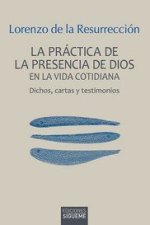
PRACTICA DE LA PRESENCIA DE DIOS EN LA VIDA COTIDIANA, LA
18.96 € -
Crafting a Curriculum of Coherence
36.12 € -

Pädagogisches Grundwissen
23.61 € -6 % -

History of Russia: An Enthralling Overview of Major Events in Russian History
12.91 € -7 % -

Theory and Practice of STEAM Education in Japan
189.43 € -

EL TESTIMONIO DE KAROL WOJTYLA
19.67 € -

The Golden Age Of Islam
21.69 € -24 % -

The Lymphatic Edge
9.98 € -24 % -

100 case studies Lymphology
18.66 € -25 % -

La Experiencia de la Indagación
21.69 € -24 %
Collection points Bratislava a 12948 dalších
Copyright ©2008-26 najlacnejsie-knihy.sk All rights reservedPrivacyCookies

 25900 collection points
 Delivery 2.99 €
 02/210 210 99 (8-15.30h)