
Code: 01649973
Renormalization Group Theory
by Ulrich Köbler, Andreas Hoser
Spin wave theory of magnetism and BCS theory of superconductivity are typical theories of the time before renormalization group (RG) theory. The two theories consider atomistic interactions only and ignore the energy degrees of fr ... more


- Language:
 English
 - Binding: Hardback
- Number of pages: 394
Publisher: Springer, Berlin, 2009
- More about this

202.83 €
Availability:
50/50 We think title might be available. Upon your order we will do our best to get it within 6 weeks.
We search the world
You might also like
-

Doors of Perception
10.58 € -23 % -

Manual of Hand-Made Bobbin Lace Work
36.10 € -9 % -

New International Bible Commentary
35.39 € -24 % -

Polostan
17.34 € -15 % -

Frostblood: the epic New York Times bestseller
10.08 € -29 % -

Flexible Body
16.03 € -24 % -

Makedonie
4.83 € -16 % -

Esperanto pro děti 2 Esperanto por infanoj 2
4.83 € -6 % -

La magia de un clásico Disney: Blancanieves (Mis Clásicos Disney)
13 € -9 % -

Corfu Complete Topographic Map Atlas 1
14.01 € -6 % -

Klinická kardiologie
20.77 € -16 % -

Svět nagualu
3.42 € -34 % -

Data Mesh
44.37 € -11 % -

Czarne łabędzie
10.98 € -7 % -

Pittiplatsch Adventskalender
17.74 € -11 % -

Across the Savage Sea
12.50 € -9 % -

Titanic's Last Secret
14.01 € -7 % -

Symbolism
65.75 € -

Topology, Geometry and Gauge fields
92.48 € -7 % -

Wildnis
8.26 € -9 % -

Differential Geometric Methods in Mathematical Physics
36.10 € -7 % -

An Essay on Criticism
7.25 € -6 % -

Siberian Husky heute
16.94 € -16 % -

The Liberal Virus: Permanent War and the Americanization of the World
61.01 € -

Nobody Laughs at a Lion!
6.65 € -24 % -

Symmetries and Symmetry Breaking in Field Theory
159.66 € -

Demon Slave - Tome 7
10.58 € -

You Didn't Get This From Me: A Novel of Media and Politics
12.30 € -7 % -

Hamletmachine and other Texts for the Stage
14.01 € -19 % -

Kazan
13 € -1 % -

Kulturmarketing
68.98 € -14 % -

Towards the Mathematics of Quantum Field Theory
174.39 € -7 % -

Effective team and performance management. Groupwork, reflection, learning
16.13 € -14 % -

Causalité et finalité
25.21 € -

Montchevrel En 1902
14.72 € -

Mathematical Theory of Entropy
151.39 € -

Blickpunkt Biologie - Allgemeine Ausgabe 2025
35.39 € -

Contributions to Complex Analysis and Analytic Geometry
52.94 € -7 % -

Indigenous Peoples and Protected Areas in South and Southeast Asia
24 € -4 % -

Moral Judgement from Childhood to Adolescence (International Library of the Philosophy of Education Volume 5)
74.63 € -

Communities of Practice and Vintage Innovation
51.53 € -7 % -

Dam Projects and the Growth of American Archaeology
243.18 €
Give this book as a present today
- Order book and choose Gift Order.
- We will send you book gift voucher at once. You can give it out to anyone.
- Book will be send to donee, nothing more to care about.
Availability alert
Enter your e-mail address and once book will be available,
we will send you a message. It's that simple.
More about Renormalization Group Theory
You get 492 loyalty points
 Book synopsis
Spin wave theory of magnetism and BCS theory of superconductivity are typical theories of the time before renormalization group (RG) theory. The two theories consider atomistic interactions only and ignore the energy degrees of freedom of the continuous (infinite) solid. Since the pioneering work of Kenneth G. Wilson (Nobel Prize of physics in 1982) we know that the continuous solid is characterized by a particular symmetry: invariance with respect to transformations of the length scale. Associated with this symmetry are particular field particles with characteristic excitation spectra. In diamagnetic solids these are the well known Debye bosons. This book reviews experimental work on solid state physics of the last five decades and shows in a phenomenological way that the dynamics of ordered magnets and conventional superconductors is controlled by the field particles of the infinite solid and not by magnons and Cooper pairs, respectively. In the case of ordered magnets the relevant field particles are called GSW bosons after Goldstone, Salam and Weinberg and in the case of superconductors the relevant field particles are called SC bosons. One can imagine these bosons as magnetic density waves or charge density waves, respectively. Crossover from atomistic exchange interactions to the excitations of the infinite solid occurs because the GSW bosons have generally lower excitation energies than the atomistic magnons. According to the principle of relevance the dynamics is governed by the excitations with the lowest energy. The non relevant atomistic interactions with higher energy are practically unimportant for the dynamics.
Book details
Book category Books in English Mathematics & science Physics Electricity, electromagnetism & magnetism
202.83 €
- Full title: Renormalization Group Theory
- Subtitle: Impact on Experimental Magnetism
- Author: Ulrich Köbler, Andreas Hoser
- Language: English
- Binding: Hardback
- Number of pages: 394
- EAN: 9783642024863
- ISBN: 3642024866
- ID: 01649973
- Publisher: Springer, Berlin
- Weight: 856 g
- Dimensions: 235 × 155 × 28 mm
- Date of publishing: 03. December 2009
Trending among others
-
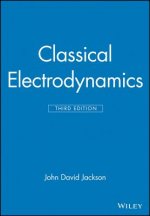
Classical Electrodynamics
155.02 € -

Magnetism: A Very Short Introduction
9.98 € -24 % -

Classical Electromagnetic Radiation
34.89 € -

Introduction to Electrodynamics
67.57 € -5 % -

Introduction to Electrodynamics
73.02 € -

Classical Electrodynamics
71.60 € -4 % -

Electromagnetism: Volume 2, Lectures on Theoretical Physics
36.30 € -

Von der Relativitätstheorie zu den Maxwell-Gleichungen
26.52 € -6 % -

Electromagnetic Compatibility
60.41 € -9 % -

Electricity and Magnetism
83.20 € -

Modern Electrodynamics
85.83 € -

Magnetic Current
11.89 € -

Magnetic Current
10.78 € -

Electronics in Easy Steps
12.90 € -24 % -

Dynamical Theory of the Electromagnetic Field
7.86 € -

Electromagnetism: Volume 2, Lectures on Theoretical Physics
86.33 € -

Experiments With Alternate Currents of High Potential and High Frequency
12.70 € -24 % -

Treatise on Electricity and Magnetism, Vol. 2
25.21 € -14 % -

Basic Electricity
18.25 € -24 % -

Magnetism and Magnetic Materials
75.54 € -
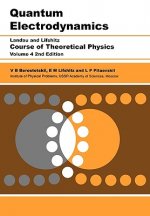
Quantum Electrodynamics
58.59 € -

Treatise on Electricity and Magnetism
57.58 € -

Battery Energy Storage Systems for Photovoltaic Sources
70.90 € -14 % -

Electricity and Magnetism for Mathematicians
51.33 € -
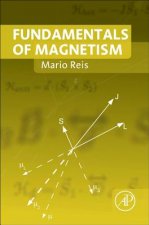
Fundamentals of Magnetism
109.63 € -

Molecular Quantum Electrodynamics
14.72 € -25 % -
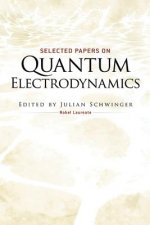
Selected Papers on Quantum Electrodynamics
13.51 € -44 % -

Electromagnetism
41.34 € -

Electromagnetic Theory
64.04 € -

Are Electromagnetic Fields Making Me Ill?
27.12 € -24 % -

Basic Electricity Pb
18.04 € -9 % -

Solar Photovoltaic Power Systems
47.30 € -9 % -

Magnetism in the Solid State
50.42 € -9 % -

Electromagnetic Theory
71.71 € -

Spintronics
110.44 € -9 % -

Introduction To Electricity And Magnetism: Solutions To Problems
29.14 € -
Electrodynamics
38.32 € -

Electricity Demystified, Second Edition
19.56 € -21 % -

Introduction To Electricity And Magnetism
88.45 € -

Electricity and Matter
10.28 € -2 % -

Fundamentals of the Theory of Metals
48.20 € -25 % -

Advanced Classical Electrodynamics: Green Functions, Regularizations, Multipole Decompositions
78.56 € -

Elektrodynamik
42.35 € -6 % -

Introduction to Modern Magnetohydrodynamics
87.24 € -
Electromagnetic Modeling and Simulation
137.67 € -2 % -

Fundamentals of Electricity and Magnetism
36.30 € -2 % -

Solved Problems in Classical Electromagnetism
18.04 € -25 % -

Electromagnetic Theory
64.04 € -

Magnetic Fusion Technology
256.29 € -7 %
Collection points Bratislava a 12825 dalších
Copyright ©2008-26 najlacnejsie-knihy.sk All rights reservedPrivacyCookies

 25654 collection points
 Delivery 2.99 €
 02/210 210 99 (8-15.30h)