
Code: 04544726
Second Chicago School?
by Gary Alan Fine, Joseph R. Gusfield
From 1945 to about 1960, the University of Chicago was home to a group of faculty and graduate students whose work has come to define what many call a second "Chicago School" of sociology. Like its predecessor earlier in the centu ... more


- Language:
 English
 - Binding: Paperback
- Number of pages: 436
Publisher: The University of Chicago Press, 1995
- More about this


You might also like
-

Practical Grammar 3
34.30 € -

No Way Forward
9.81 € -6 % -

Nursing Guide for Pediatric Neuroscience Patients
125.98 € -

Tucker's Tales: Adventures of a Boxer Dog
11.02 € -7 % -

Heshima
16.99 € -

Life is a Four-Letter Word
13.45 € -24 % -

Anton Ginzburg
77.10 €
Give this book as a present today
- Order book and choose Gift Order.
- We will send you book gift voucher at once. You can give it out to anyone.
- Book will be send to donee, nothing more to care about.
More about Second Chicago School?
You get 151 loyalty points
 Book synopsis
From 1945 to about 1960, the University of Chicago was home to a group of faculty and graduate students whose work has come to define what many call a second "Chicago School" of sociology. Like its predecessor earlier in the century, the postwar department was again the center for qualitative social research - on everything from mapping the nuances of human behaviour in small groups to seeking solutions to problems of race, crime and poverty. Howard Becker, Joseph Gusfield, Herbert Blumer, David Riesman, Erving Goffman and others created a large, enduring body of work. In this book, sociologists critically confront this legacy. The eight original chapters survey the issues that defined the department's agenda: they focus on deviance, race and ethnic relations, urban life and collective behaviour; the renewal of participant observation as a method and the refinement of symbolic interaction as a guiding theory; and the professional and institutional factors that shaped this generation, including the leadership of Louis Wirth and Everett C. Hughes; the role of women; and the competition for national influence Chicago sociology faced from survey research at Columbia and grand theory at Harvard. The contributors also discuss the internal conflicts that call into question the very idea of a unified "school".
Book details
Book category Books in English Society & social sciences Sociology & anthropology
62.33 €
- Full title: Second Chicago School?
- Subtitle: The Development of a Postwar American Sociology
- Author: Gary Alan Fine, Joseph R. Gusfield
- Language: English
- Binding: Paperback
- Number of pages: 436
- EAN: 9780226249391
- ISBN: 0226249395
- ID: 04544726
- Publisher: The University of Chicago Press
- Weight: 646 g
- Dimensions: 228 × 158 × 30 mm
- Date of publishing: 01. September 1995
Trending among others
-

Craving Mind
13.45 € -24 % -

Moral Animal
15.17 € -26 % -

Accursed Share, Volume I
21.65 € -25 % -

Introduction to Sociology
28.63 € -

Distinction
50.39 € -

Beneath the Moon
14.36 € -19 % -
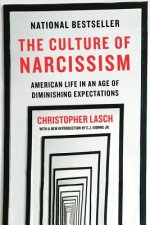
Culture of Narcissism
14.26 € -24 % -

Cold Intimacies - The Making of Emotional Capitalism
20.23 € -5 % -

Mothers and Others
32.78 € -

Feminisms
12.74 € -19 % -
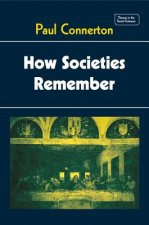
How Societies Remember
20.53 € -24 % -

Journey into the Whirlwind
14.76 € -25 % -

PlayStation Dreamworld
22.25 € -

Affirmative Action Around the World
17.80 € -20 % -

Korean Language
40.17 € -

Pastoral Clinic
31.06 € -9 % -

Liquid Times - Living in an Age of Uncertainty
12.94 € -10 % -

Desire and its Interpretation - The Seminar of Jacques Lacan, Book VI
25.59 € -4 % -

Collected Works of C.G. Jung, Volume 17: Development of Personality
23.77 € -25 % -

Drugs without the hot air
20.23 € -5 % -

Ritual Process
65.87 € -
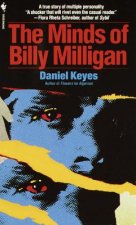
Minds of Billy Milligan
7.18 € -29 % -

Thinking Skills Coursebook
61.62 € -

White Fragility
11.93 € -13 % -
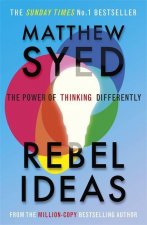
Rebel Ideas
13.04 € -27 % -

Serpent and the Rainbow
14.76 € -25 % -

Unexpected Legacy of Divorce
14.76 € -25 % -

You Can't Be Neutral on a Moving Train
14.06 € -25 % -

Race After Technology - Abolitionist Tools for the New Jim Code
17.70 € -10 % -

Europe and the People Without History
34.60 € -
Invitation to Sociology
14.06 € -25 % -

Lipstick Traces - A Secret History of the Twentieth Century, Twentieth Anniversary Edition
39.66 € -

Selected Writings of Eqbal Ahmad
50.39 € -

Keep the River on Your Right
12.74 € -25 % -

Passage of Darkness
48.57 € -

Uncontrollability of the World
20.23 € -9 % -

Flight of the Wild Gander
17.60 € -10 % -

Suicide
19.22 € -7 % -

Sociology of the Arts - Exploring Fine and Popular Forms, 2nd Edition
45.53 € -

Manuel Castells - The Theory of Network Society
29.24 € -

Foxfire Story
16.89 € -24 % -

Hacktivism and Cyberwars
66.88 € -

Liquid Life
24.18 € -

Ideological Origins of the American Revolution
32.78 € -
The Affluent Society
14.06 € -25 % -

Disposable People
34.40 € -10 % -

Nurtureshock
21.24 € -25 % -

Sociology For Dummies, 2nd Edition
18.31 € -24 % -

We Are Everywhere
28.02 € -26 %
Collection points Bratislava a 12837 dalších
Copyright ©2008-26 najlacnejsie-knihy.sk All rights reservedPrivacyCookies

 25678 collection points
 Delivery 2.99 €
 02/210 210 99 (8-15.30h)