Code: 04366456
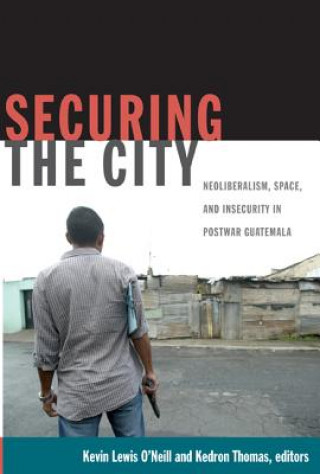
Securing the City
by Kevin O’Neill
Unprecedented crime rates have made Guatemala City one of the most dangerous cities in the world. Following a peace process that ended Central America's longest and bloodiest civil war and impelled the transition from a state-cen ... more


- Language:
 English
 - Binding: Paperback
- Number of pages: 232
Publisher: Duke University Press, 2011
- More about this


You might also like
-
Drunkard's Walk
14.15 € -29 % -

Disquiet Gods
13.95 € -24 % -

Mother of Death and Dawn (War of Lost Hearts 3)
20.32 € -16 % -

Canis: Dear Hatter, Volume 2
11.32 € -24 % -

Lonely Planet Chile & Rapa Nui (Easter Island)
25.99 € -

Foundations of Classical Oil Painting
22.85 € -9 % -

Clemmy Woreczek z klockami
16.07 € -33 % -

Origins of the Cold War
63.01 € -

The Most Serious Fart
13.44 € -24 % -

Wiper
20.12 € -25 % -

Bed Book
11.32 € -25 % -

Epistemic Relativism and Scepticism
53.30 € -4 % -

Biology of Chrysomelidae
323.49 € -

Internationalising the University
55.83 € -

Married By Force
27.30 € -

Radio-Onkologie Beim Rektum- Und Anal-Karzinom
53.10 € -7 % -

lienzos de nuestras almas
111.06 € -14 % -

Baseball's Natural
21.74 € -21 % -

Becoming Iron Men
21.64 € -25 % -

The Last of the Mohicans
23.66 € -7 % -

Jam with Buddy Holly
44.30 € -

Wahrscheinlichkeit als Erkenntnisform.
37.72 € -

Love and War in the Concrete Jungle
15.57 € -

Greek Tragedy
47.74 € -

Queer Community
199.78 € -

Historia Regum Britannie of Geoffrey of Monmouth IV
168.82 € -

Cashing the Prevention Check
17.49 € -25 % -

Palais Consulaire d'Alger. Ceremonie de la Pose de la Premiere Pierre, 29 Juin 1889
12.13 € -1 %
Give this book as a present today
- Order book and choose Gift Order.
- We will send you book gift voucher at once. You can give it out to anyone.
- Book will be send to donee, nothing more to care about.
More about Securing the City
You get 80 loyalty points
 Book synopsis
Unprecedented crime rates have made Guatemala City one of the most dangerous cities in the world. Following a peace process that ended Central America's longest and bloodiest civil war and impelled the transition from a state-centric economy to the global free market, Guatemala's neoliberal moment is now strikingly evident in the practices and politics of security. Postwar violence has not prompted public debates about the conditions that permit transnational gangs, drug cartels, and organized crime to thrive. Instead, the dominant reaction to crime has been the cultural promulgation of fear and the privatization of what would otherwise be the state's responsibility to secure the city. This collection of essays, the first comparative study of urban Guatemala, explores these neoliberal efforts at security. Contributing to the anthropology of space and urban studies, this volume brings together anthropologists and historians to examine how postwar violence and responses to it are reconfiguring urban space, transforming the relationship between city and country, and exacerbating structures of inequality and ethnic discrimination that have deep historical roots. Contributors: Peter Benson; Manuela Camus; Avery Dickins de Giron; Edward F. Fischer; Deborah Levenson; Thomas Offit; Kevin Lewis O'Neill; Kedron Thomas; Rodrigo Jose Veliz
Book details
Book category Books in English Society & social sciences Sociology & anthropology Anthropology
33.17 €
- Full title: Securing the City
- Author: Kevin O’Neill
- Language: English
- Binding: Paperback
- Number of pages: 232
- EAN: 9780822349587
- ISBN: 0822349582
- ID: 04366456
- Publisher: Duke University Press
- Weight: 338 g
- Dimensions: 233 × 157 × 14 mm
- Date of publishing: 09. March 2011
Trending among others
-

Revolt Against the Modern World
21.64 € -25 % -

Spirit Catches You and You Fall Down
14.25 € -24 % -

Think Like an Anthropologist
13.04 € -29 % -

Exercised
15.37 € -12 % -

Creative Spark
31.25 € -18 % -

Saving the Modern Soul
39.54 € -

Crisis of the Modern World
18.40 € -1 % -

Combatting Cult Mind Control
18.40 € -1 % -
Crowd
9.30 € -24 % -

Crisis of the Modern World
28.31 € -1 % -

Dance Ethnography and Global Perspectives
106.31 € -4 % -

Consider The Lobster
12.23 € -30 % -
Secret of Our Success
25.18 € -

Utopia Of Rules
18.70 € -9 % -

Designs for the Pluriverse
29.33 € -9 % -

Ruin of Kasch
12.94 € -30 % -

Protestant Ethic and Other Writings
16.18 € -25 % -

Social Life of Things
34.48 € -

Possibilities
16.78 € -25 % -

Diary in the Strict Sense of the Term
40.96 € -

The Fate of Africa
27.50 € -

Never in Anger
37.92 € -12 % -

Sixty Million Frenchmen Can't Be Wrong
20.52 € -9 % -

Anthropology of Images
36.41 € -2 % -

Without Roots
13.44 € -24 % -

Gift - Expanded Edition
21.33 € -

Technique and Application in Dental Anthropology
67.66 € -

Forms of Talk
31.15 € -6 % -

Devil and Commodity Fetishism in South America
41.16 € -

Structural Anthropology
41.67 € -

Animal to Edible
28.82 € -

Stranger and Friend
19.92 € -18 % -

Kama Muta
58.96 € -

Earth Beings
30.44 € -10 % -

Cognition in the Wild
60.99 € -

Why Humans Have Cultures
58.46 € -

Ritual
11.32 € -25 % -

How Forests Think
31.05 € -9 % -

Catching Fire
12.23 € -30 % -

Incomplete Nature
34.99 € -18 % -

Trickster Makes This World
13.95 € -24 % -

Gift
12.94 € -30 % -

Fragments of an Anarchist Anthropology
9.90 € -25 % -

Continuum Concept
14.05 € -25 % -

Purity and Danger
27.61 € -

Direct Action: An Ethnography
21.64 € -25 % -

Origin of Our Species
11.02 € -30 % -

Continuum Concept
16.18 € -7 % -

Kill All Normies - Online culture wars from 4chan and Tumblr to Trump and the alt-right
11.52 € -19 %
Collection points Bratislava a 12868 dalších
Copyright ©2008-26 najlacnejsie-knihy.sk All rights reservedPrivacyCookies

 25740 collection points
 Delivery 2.99 €
 02/210 210 99 (8-15.30h)