Code: 49085669
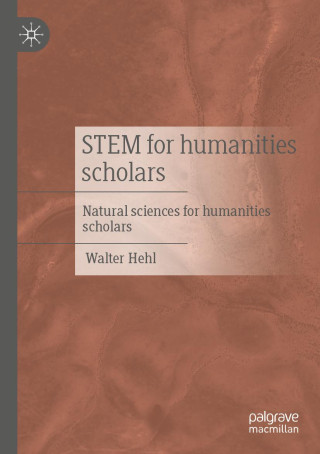
STEM for humanities scholars
by Walter Hehl
The beginnings of natural sciences and humanities in antiquity were shared, but by the end of the 19th century, the natural sciences had developed dominantly through their successes. In response to this dominance, the philosopher ... more


- Language:
 English
- Binding: Paperback
- Number of pages: 288
Publisher: Springer-Verlag GmbH, 2026
- More about this

105.98 €
RRP: 111.25 €
You save 5.27 €

In stock at our supplier
Shipping in 8 - 11 days
You might also like
-

Ready, Fire, Aim - Zero to GBP100 Million in No Time Flat
29.94 € -25 % -

Max Verstappen
13.81 € -16 % -

Random And Vector Measures
203.70 € -

Sterowanie sygnalizacja swietlna dla skrzyzowan z sygnalizacja swietlna
70.88 € -14 % -

Ray Milland
34.88 € -

Settler Dreaming
22.08 € -

Kendrick Lamar
33.87 € -7 % -

Black Panther
15.32 € -

Nietzsche, das >BarbarischeRasse
132.70 € -

Learning Cognitive-Behavior Therapy
76.23 € -

Eslabones Perdidos de La Historia de Tecpan
12.60 € -

Die Pfeilspitzen Aus Tall Seh Hamad/Dur-katlimmu Von Der Mittelassyrischen Bis Zur Parthisch-romischen Zeit in Ihrem Westasiatischen Und Eurasischen K
68.36 € -

Barack Obama, Do Cyborgs Dream Of Robotic Sheep? An American Poem
11.18 € -

Still Waters
46.08 € -

Reader in al-Jahiz
33.37 € -

Statistical Modeling and Applications on Real-Time Problems
100.03 € -

Africa
33.77 € -9 % -

Fifteen Digits
18.04 € -18 % -

Studenti universitari sull'istruzione basata sulle TIC
32.06 € -14 % -

Die Religion in Geschichte und Gegenwart
39.92 € -11 % -

GUIDE DE L'ECOTOURISME 2015 PETIT FUTE+OFFRE NUMERIQUE
19.35 €
Give this book as a present today
- Order book and choose Gift Order.
- We will send you book gift voucher at once. You can give it out to anyone.
- Book will be send to donee, nothing more to care about.
More about STEM for humanities scholars
You get 257 loyalty points
 Book synopsis

The beginnings of natural sciences and humanities in antiquity were shared, but by the end of the 19th century, the natural sciences had developed dominantly through their successes. In response to this dominance, the philosopher Wilhelm Dilthey coined the term Geisteswissenschaften (humanities) in 1883. On the other hand, it was clear in the natural sciences that entire areas of the mind were inaccessible to them, such as sensory experiences and consciousness.
This book attempts to show that this sharp divide has softened. Physics has become more intellectual, and the technology of the mind has developed: fundamentally, this is information technology. Physics for the inanimate and computer science (with a physical basis) for all living things and for the computer together explain the world. With mathematics as its foundation and tool, this results in STEM (MINT in German: Mathematik, Informatik, Naturwissenschaft, Technik).
An intellectual worldview without STEM is not possible with dignity. There are several STEM fields that are directly useful to the humanities. Examples include the principle of the laser and the concept of entropy. A third intellectual domain remains outside: art. But art and STEM are not opposites.
Book details
Book category Books in German Geisteswissenschaften, Kunst, Musik Philosophie Antike
105.98 €
- Full title: STEM for humanities scholars
- Author: Walter Hehl
- Language: English
- Binding: Paperback
- Number of pages: 288
- EAN: 9783658490317
- ISBN: 3658490314
- ID: 49085669
- Publisher: Springer-Verlag GmbH
- Weight: 421 g
- Date of publishing: 29. March 2026
Trending among others
-

The Philosophy of Redemption
15.12 € -25 % -

The God Delusion
14.11 € -17 % -

Against Interpretation
15.12 € -25 % -

Immortal Souls
28.23 € -9 % -

Dethronement of Truth
9.47 € -25 % -

The Fallacy Detective
28.13 € -17 % -

Truth and Truthfulness
16.13 € -26 % -

Die protestantische Ethik und der »Geist« des Kapitalismus
7.45 € -12 % -

The Daimon and the Soul of the West
12.60 € -19 % -

Zamr¿en svemir Prva knjiga
33.57 € -2 % -

Propos sur le bonheur
8.36 € -15 % -

Dark Secrets of Playboy
14.41 € -6 % -

Confessions of the Flesh
14.31 € -28 % -

Self-Portrait in the Studio
18.65 € -25 % -

Four Thousand Weeks: Time Management for Mortals
13.50 € -29 % -

The Philosophy Book
16.53 € -25 % -

On the Shortness of Life
6.65 € -

How to Live
9.47 € -25 % -

Critical Thinking: An Introduction to Reasoning Well
36.60 € -

World Classics Library: Plato
18.65 € -25 % -

Meditations by Marcus Aurelius
8.06 € -25 % -

Hospicing Modernity
16.53 € -25 % -

Truth
24.29 € -25 % -

Relativity: The Special and the General Theory
6.24 € -21 % -

El Discreto: The Complete Man (1646)
23.59 € -25 % -

Five Dialogues
13 € -25 % -

Marcus Aurelius - Meditations
15.12 € -2 % -

Then I Am Myself the World: What Consciousness Is and How to Expand It
22.18 € -25 % -

The Kybalion
7.35 € -25 % -

My Big TOE Awakening Discovery Inner Workings
43.05 € -24 % -

On Bullshit
10.07 € -25 % -

Animal Liberation Now
13.40 € -25 % -

Psychedelic Experience
13 € -24 % -

Master Critical Thinking for Teens
18.04 € -

This Is Vegan Propaganda
13.40 € -23 % -

The Boy, the Mole, the Fox and the Horse Fifth Anniversary Limited Edition
22.18 € -25 % -

The Gateway Experience
18.75 € -7 % -

Reclaiming Art in the Age of Artifice
14.41 € -25 % -

The Edge of Sentience
44.16 € -

Jenseits von Gut und Böse
7.15 € -11 % -

Pink
29.23 € -24 % -

Useful Not True
9.47 € -25 % -

Open Socrates
12.19 € -30 % -

Reality+ - Virtual Worlds and the Problems of Philosophy
11.28 € -14 % -

On the Genealogy of Morals (Collector's Edition) (Laminated Hardback with Jacket)
38.21 € -2 % -

Bernardo Kastrup and Consciousness as the Ground of Reality
13.30 € -2 % -

Procrastination
16.23 € -6 % -

Science and Sanity
38.21 € -2 % -

The Thinking Toolbox
28.13 € -17 %
Collection points Bratislava a 13537 dalších
Copyright ©2008-26 najlacnejsie-knihy.sk All rights reservedPrivacyCookies

 27078 collection points
 Delivery 2.99 €
 02/210 210 99 (8-15.30h)
