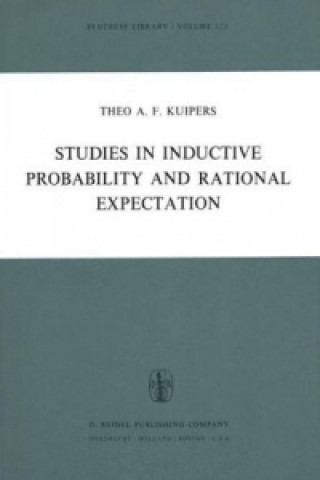
Code: 01970495
Studies in Inductive Probability and Rational Expectation
by Theo A.F. Kuipers
3 in philosophy, and therefore in metaphilosophy, cannot be based on rules that avoid spending time on pseudo-problems. Of course, this implies that, if one succeeds in demonstrating convincingly the pseudo-character of a problem ... more


- Language:
 English
 - Binding: Hardback
- Number of pages: 154
Publisher: Springer
- More about this

96.03 €
Availability:
50/50 We think title might be available. Upon your order we will do our best to get it within 6 weeks.
We search the world
You might also like
-

Hilafet Hareketleri
16.13 € -4 % -

Somewhere Cold
22.19 € -25 % -
Practical Astrology: Being a Simple Method of Instruction in the Science of Astrology
40.75 € -2 % -

Grundkurs Nähmaschine
8.57 € -15 % -

Ouverture démocratique en Afrique noire ?
28.84 € -

Bases of Empire
41.96 € -

Corel PHOTO-PAINT 2020 - Training Manual with many integrated Exercises
26.72 € -7 % -

Cinematic Emotion in Horror Films and Thrillers
248.78 € -

Kultur und Integration von Flüchtlingen in Uganda: Ein Fall von somalischen Flüchtlingen
49.73 € -11 % -

Essays on the Higher Education
22.79 € -2 % -

After the Great Divide: Modernism, Mass Culture, Postmodernism
27.43 € -

Hazlitts
38.12 € -1 % -
Le pouvoir d'agir des citoyens
18.35 € -

Medical Mercenaries and Transimperial Science – Between the Dutch East Indies and German–speaking Europe, 1873–1920s
136.19 € -

Apercus Fondamentaux de Philosophie Mathematique
24 € -

The Gospel According to Aaron
10.58 € -7 % -

Protokolle bei Lippen- und Gaumenspalten
79.79 € -12 % -

Last Circle of Ulysses Grant
21.08 € -1 % -

Anerkennung Oder Abwertung
51.74 € -6 % -
Cours de Physique Experimentale Et Mathematique. Tome 1
34.39 € -

First Principles
69.60 € -9 %
Give this book as a present today
- Order book and choose Gift Order.
- We will send you book gift voucher at once. You can give it out to anyone.
- Book will be send to donee, nothing more to care about.
Availability alert
Enter your e-mail address and once book will be available,
we will send you a message. It's that simple.
More about Studies in Inductive Probability and Rational Expectation
You get 233 loyalty points
 Book synopsis
3 in philosophy, and therefore in metaphilosophy, cannot be based on rules that avoid spending time on pseudo-problems. Of course, this implies that, if one succeeds in demonstrating convincingly the pseudo-character of a problem by giving its 'solution', the time spent on it need not be seen as wasted. We conclude this section with a brief statement of the criteria for concept explication as they have been formulated in several places by Carnap, Hempel and Stegmiiller. Hempel's account ([13J, Chapter 1) is still very adequate for a detailed introduction. The process of explication starts with the identification of one or more vague and, perhaps, ambiguous concepts, the so-called explicanda. Next, one tries to disentangle the ambiguities. This, however, need not be possible at once. Ultimately the explicanda are to be replaced (not necessarily one by one) by certain counterparts, the so-called explicata, which have to conform to four requirements. They have to be as precise as possible and as simple as possible. In addition, they have to be useful in the sense that they give rise to the formulation of theories and the solution of problems. The three requirements of preciseness, simplicity and usefulness. have of course to be pursued in all concept formation.
Book details
Book category Books in English Humanities Philosophy Philosophy: logic
96.03 €
- Full title: Studies in Inductive Probability and Rational Expectation
- Author: Theo A.F. Kuipers
- Language: English
- Binding: Hardback
- Number of pages: 154
- EAN: 9789027708823
- ISBN: 9027708827
- ID: 01970495
- Publisher: Springer
- Weight: 370 g
Trending among others
-

Rulebook for Arguments
20.37 € -9 % -
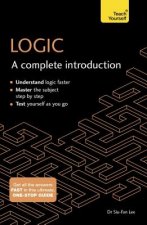
Logic: A Complete Introduction: Teach Yourself
16.23 € -19 % -

Critical Thinking Tests
15.93 € -25 % -
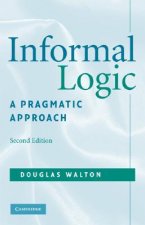
Informal Logic
40.04 € -

How to Win Every Argument
23.70 € -24 % -
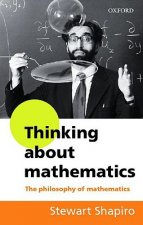
Thinking about Mathematics
50.94 € -

Argumentation Schemes
46.20 € -2 % -

Argument and Inference
44.58 € -
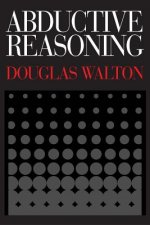
Abductive Reasoning
34.29 € -4 % -
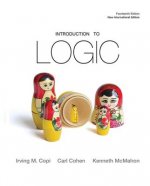
Introduction to Logic
60.12 € -
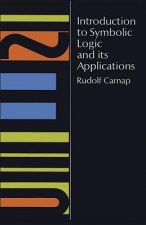
Introduction to Symbolic Logic and Its Applications
11.29 € -24 % -

Logically Fallacious
35.30 € -25 % -
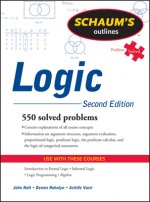
Schaum's Outline of Logic, Second Edition
26.62 € -18 % -
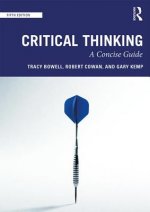
Critical Thinking
55.58 € -
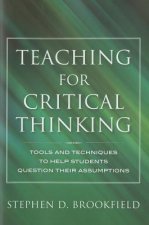
Teaching for Critical Thinking - Tools and Techniques to Help Students Question Their Assumptions
40.85 € -1 % -

Logical Journey
38.23 € -
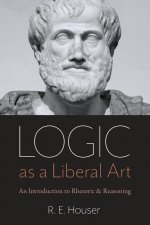
Logic as a Liberal Art
36.91 € -

Asking the Right Questions, Global Edition
72.33 € -14 % -
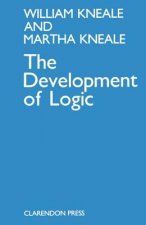
Development of Logic
87.46 € -
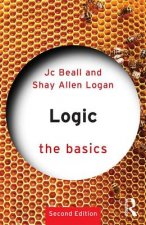
Logic: The Basics
35.10 € -
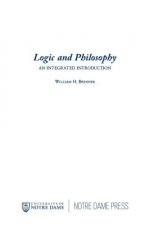
Logic and Philosophy
21.38 € -19 % -
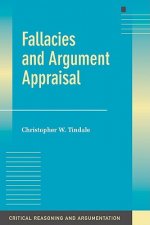
Fallacies and Argument Appraisal
36.31 € -

Logic and Philosophy
37.52 € -32 % -
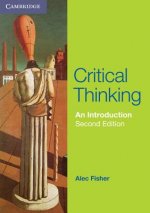
Critical Thinking
48.62 € -
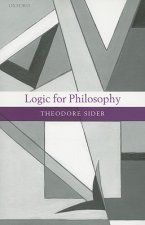
Logic for Philosophy
37.92 € -

Paradoxes
36.31 € -

Logic and Transcendence
25.01 € -

Bad Arguments - 100 of the Most Important Fallacies in Western Philosophy
18.25 € -7 % -

Logic
8.57 € -15 % -
Introducing Logic
10.89 € -10 % -
Concise Introduction to Logic
126.70 € -
Logic
38.63 € -18 % -

Introduction to Symbolic Logic
21.58 € -25 % -

Critical Thinking Toolkit
25.92 € -
Encyclopaedia Logic
34.09 € -10 % -
Philosophy of Logic
30.96 € -2 % -
Introduction to Critical Thinking and Creativity - Think More, Think Better
77.87 € -10 % -

Crimes Against Logic: Exposing the Bogus Arguments of Politicians, Priests, Journalists, and Other Serial Offenders
19.16 € -18 % -

Teach Yourself To Think
11.79 € -24 % -
Logic and Contemporary Rhetoric
95.13 € -

Companion to Philosophical Logic (Blackwell Comp anions to Philosophy)
47.41 € -10 % -

System of Logic
52.25 € -

Thinking and Being
52.65 € -

Logic
63.65 € -

Improvement of the Mind
21.98 € -1 % -

Modal Logic for Open Minds
31.67 € -
Philosophy of Logics
34.39 € -
Handbook of Philosophical Logic
51.54 € -7 % -
Critical Thinking
11.79 € -24 %
Collection points Bratislava a 13350 dalších
Copyright ©2008-26 najlacnejsie-knihy.sk All rights reservedPrivacyCookies

 26704 collection points
 Delivery 2.99 €
 02/210 210 99 (8-15.30h)