
Code: 02019278
Phantom Table
by Ann Banfield
Virginia Woolf identified the influence on her work of 'the Cambridge Apostles', the philosophical society which counted G. E. Moore, Bertrand Russell and much of male Bloomsbury among its members, as one more 'capable of descript ... more


- Language:
 English
 - Binding: Paperback
- Number of pages: 452
Publisher: Cambridge University Press, 2007
- More about this


You might also like
-

Rodinný plánovací kalendář 2026 - prázdný
7.37 € -10 % -

Amanda, m. Audio-CD
21.13 € -

Post-War British Theatre Criticism (Routledge Revivals)
195.22 € -
Continuum Modeling in Mechanobiology
151.02 € -9 % -

My Kind of Love
18.30 € -7 %
Give this book as a present today
- Order book and choose Gift Order.
- We will send you book gift voucher at once. You can give it out to anyone.
- Book will be send to donee, nothing more to care about.
More about Phantom Table
You get 173 loyalty points
 Book synopsis
Virginia Woolf identified the influence on her work of 'the Cambridge Apostles', the philosophical society which counted G. E. Moore, Bertrand Russell and much of male Bloomsbury among its members, as one more 'capable of description' than 'the influence of my mother'. In this major study of Woolf's relationship to Bloomsbury and the aesthetic and philosophical developments of her time, Ann Banfield subjects that influence to a full treatment. The theory of knowledge Moore and Russell formulated, Banfield argues, profoundly affected Woolf's conception of reality, as it did Roger Fry's theory of Post-Impressionism, one source for Woolf's transformations of philosophical principles into aesthetic ones. The Phantom Table is a magisterial account of Woolf's engagement with this remarkable trinity of thinkers: Moore, Russell, Fry. It revises the epistemology of modernism, reconceiving the relation between realism and formalism to account for Woolf's dual reality of sense impressions and logical forms.
Book details
Book category Books in English Literature & literary studies Literature: history & criticism Literary studies: general
71.41 €
- Full title: Phantom Table
- Subtitle: Woolf, Fry, Russell and the Epistemology of Modernism
- Author: Ann Banfield
- Language: English
- Binding: Paperback
- Number of pages: 452
- EAN: 9780521034036
- ISBN: 0521034035
- ID: 02019278
- Publisher: Cambridge University Press
- Weight: 678 g
- Dimensions: 229 × 162 × 28 mm
- Date of publishing: 15. February 2007
Trending among others
-
How to Read a Book
14.56 € -7 % -

The Picture of Dorian Gray
7.17 € -29 % -

Weird and the Eerie
13.34 € -

Saga of Tanya the Evil, Vol. 3
12.23 € -14 % -

Moveable Feast
8.59 € -30 % -

Count of Monte Cristo
10.21 € -29 % -
Odyssey
10.21 € -23 % -

Captain is Out to Lunch
13.75 € -30 % -
Rumi: The Big Red Book
12.84 € -25 % -
Iliad
15.67 € -24 % -

Germinal
7.17 € -25 % -
Iliad
10.81 € -24 % -
Plainwater
14.05 € -25 % -
Birth of Tragedy
10 € -24 % -

Devils
9.30 € -24 % -
Dead Souls
10.61 € -25 % -

Woman in Her Garden
14.05 € -19 % -

Rage To Live
21.94 € -20 % -
Gravity's Rainbow Companion
40.15 € -

Tom Jones
7.17 € -25 % -

Ivanhoe
8.59 € -24 % -

Means to Freedom
28.31 € -2 % -

Means to Freedom
28.31 € -2 % -

Long Day's Journey Into Night
10.41 € -30 % -

Happy Hooker
13.95 € -17 % -
Greek Epic Fragments
31.25 € -

David Copperfield
10.61 € -25 % -
J. R. R. Tolkien Companion and Guide
131.60 € -16 % -

North and South
17.19 € -
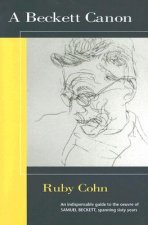
Beckett Canon
32.26 € -5 % -

Gormenghast (Adaptation)
16.58 € -7 % -
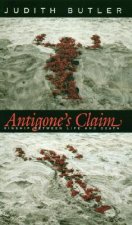
Antigone's Claim
31.96 € -

Little Dorrit
9.30 € -24 % -
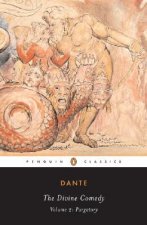
Divine Comedy
11.93 € -29 % -

Countess of Pembroke's Arcadia (The Old Arcadia)
12.03 € -24 % -
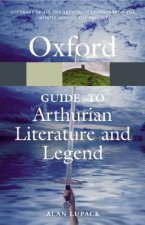
Oxford Guide to Arthurian Literature and Legend
16.18 € -25 % -

Marginalia
43.69 € -
Dubliners
8.99 € -29 % -

Zofloya or The Moor
10.41 € -24 % -

Karamazov Brothers
9.80 € -31 % -
Metamorphoses
7.17 € -25 % -
Art of Rhetoric
4.54 € -24 % -

SEOUL University Korean 1B Workbook (QR), m. 1 Audio
34.08 € -
Edda
7.88 € -24 % -
If Not, Winter: Fragments Of Sappho
18.10 € -25 % -

Simple Passion
10.11 € -28 % -
SEOUL University Korean 1B Student's Book (QR), m. 1 Audio
50.06 € -
Complete Short Stories of Ambrose Bierce
21.64 € -25 % -

Persuasion
5.05 € -26 %
Collection points Bratislava a 12841 dalších
Copyright ©2008-26 najlacnejsie-knihy.sk All rights reservedPrivacyCookies

 25686 collection points
 Delivery 2.99 €
 02/210 210 99 (8-15.30h)