Code: 15664605
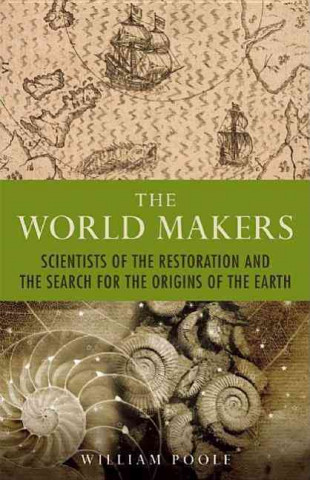
World Makers
by William Poole
When educated men in the seventeenth century thought about the Earth on which they stood, they might ask themselves the following questions. When was the world created? Why? How? Out of what? Where did people come from? Do we all ... more


- Language:
 English
 - Binding: Paperback
- Number of pages: 256
Publisher: Peter Lang Ltd, 2017
- More about this

27.44 €
RRP: 28.84 €
You save 1.40 €

In stock at our supplier
Shipping in 5 - 8 days
You might also like
-

Before We Say Goodbye
11.75 € -18 % -
History of the World Map by Map
35.28 € -24 % -

Artificial Intelligence: A Modern Approach, Global Edition
80.03 € -14 % -
Mars And Venus On A Date
15.88 € -25 % -

An African History of Africa
14.07 € -7 % -

History of the World in 500 Maps
36.59 € -25 % -

Kuća za pisanje
13.87 € -8 % -

Mensch ärgere Dich nicht Kids
8.03 € -5 % -

Bookshop
12.36 € -

Raven by Edgar Allan Poe
7.63 € -1 % -

Castle Combo
21.61 € -

Fairy Coloring Book For Adults
10.55 € -25 % -

Fall
6.63 € -23 % -
Leonardo Da Vinci
35.28 € -9 % -
Sevilla Víkend
5.12 € -21 % -
Eternal City
51.68 € -
Art of Pascal Campion
30.76 € -24 % -

Lonely Planet Kids the Big World of Fun Facts 1
15.07 € -26 % -

Дом ярости
32.77 € -12 % -

Seventeen French
3.91 € -

Law of the International Civil Service: Volume II
445.04 € -
The Mapping Of The World
13.77 € -2 % -
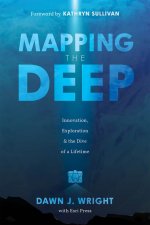
Mapping the Deep
27.54 € -
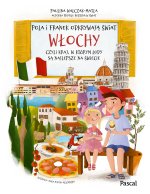
Pola i Franek odkrywają świat. Włochy, czyli kraj, w którym lody są najlepsze na świecie
11.05 € -13 % -

The Oxford Handbook of South African History
249.16 € -

Konzeption Und Entwicklung Einer Problemloesungsorientierten Interaktionskomponente Zur Abbildung Betriebswirtschaftlicher Fallstudien in Hypermediale
55.60 € -

DE GERBERT À SILVESTRE SUR LES CHEMINS DE CATALOGNE AU PASSAGE À L'AN MIL
18.19 € -

The Bridge - Comment les Roeblings ont relié New York à Brooklyn
26.13 € -

The Bass Rock
13.67 € -26 % -

Abrégé de l'histoire générale des voyages - Tome 9
24.83 € -7 % -

The Body Plan Plus - FOOD DIARY - Tania Carter: Code B35 - You are what you eat: Calorie Smart & Food Organised - Clever Food Diary - For Weight Loss
9.74 € -6 % -

Undying Glory
11.96 € -24 % -

The Empire at Its Zenith
11.45 € -6 % -

Innenausbau von Schiffen (1957)
53.08 € -11 % -

50 RO - Les bienfaits du jeûne intermittent
6.93 € -

Mediastinal Tumors
102.35 € -7 % -
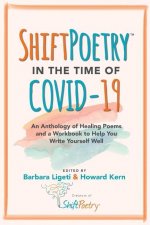
Shift Poetry in the Time of COVID-19
14.77 € -24 % -
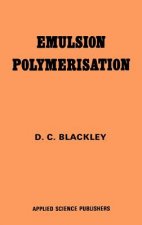
Emulsion Polymerization
261.23 € -
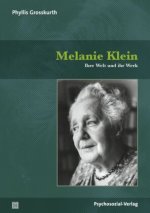
Melanie Klein
59.22 € -

Etude Sur La Bestialite Au Point de Vue Historique, Medical Et Juridique
30.36 € -

Strategic Culture Matters
20.30 € -5 % -

Reporting the Holocaust in the British, Swedish and Finnish Press, 1945-50
55.70 € -
Catalogue of 250 Coloured Etchings; Descriptive of the Manners, Customs, Character, Dress, and Religious Ceremonies of the Hindoos Descriptive of the
15.37 € -2 % -

Still a House Divided
37.40 € -

Symbole Des Lebenslaufes
76.31 € -5 % -

Under Indifferent Skies
28.15 € -2 % -
Manuel de méthodologie de recherche en sciences sociales
17.69 € -11 % -

De Comoedia Togata (1899)
22.72 € -2 % -
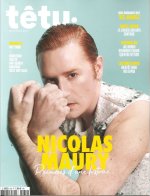
Têtu n°234 : Nicolas Maury : Prémices d'une histoire - Printemps 2023
10.35 €
Give this book as a present today
- Order book and choose Gift Order.
- We will send you book gift voucher at once. You can give it out to anyone.
- Book will be send to donee, nothing more to care about.
More about World Makers
You get 67 loyalty points
 Book synopsis
When educated men in the seventeenth century thought about the Earth on which they stood, they might ask themselves the following questions. When was the world created? Why? How? Out of what? Where did people come from? Do we all share the same origin? How were other living things generated? Can species vary at all? What are fossils? The common answers to these questions were rooted in the Bible. The world was made around the year 4000 BC by the direct command of God; people all come from Adam and Eve; species do not vary and fossils are inorganic in origin. Most people assumed that the teachings of theology and of natural philosophy (what we would later term «science») were both continuous and harmonious. But there were radical new answers to these questions of origin too. This is the story of how the emerging discipline of experimental philosophy reacted to the opening chapters of the book of Genesis to interpret the physical origin, present status, and final destination of the Earth. The Royal Society of London, created in 1660 «for the improving of natural knowledge», was where these bold new answers to old questions were formulated, discussed, contested, and modified, by men such as Isaac Newton, Robert Hooke, Edmond Halley, and Thomas Burnet.
Book details
Book category Books in English Reference, information & interdisciplinary subjects Interdisciplinary studies General studies
27.44 €
- Full title: World Makers
- Subtitle: Scientists of the Restoration and the Search for the Origins of the Earth
- Author: William Poole
- Language: English
- Binding: Paperback
- Number of pages: 256
- EAN: 9781906165031
- ISBN: 1906165033
- ID: 15664605
- Publisher: Peter Lang Ltd
- Weight: 392 g
- Dimensions: 158 × 234 × 17 mm
- Date of publishing: 09. January 2017
Trending among others
-

American Studies in Europe, Volume 1
118.95 € -
Fundamentals of General Knowledge for Competitive Exams
36.19 € -2 % -
RASIA
5.12 € -30 % -
Objective General Knowledge Indian Polity and Economy
23.62 € -17 % -
Rapid General Knowledge 2020 for Competitive Exams
15.68 € -1 % -
GURGAON DIARIES
22.82 € -1 % -
CRISIS WITHIN
19.20 € -2 % -

General Knowledge Geography
23.62 € -17 % -
General Knowledge Compendium for IAS Prelims General Studies Paper 1 & State Psc Exams
21.01 € -2 % -
General Awareness 2019 for Rrb Junior Engineer, Ntpc, Alp & Group D Exams
25.43 € -2 % -
Contemplating Comedy
12.16 € -14 % -
10000+ Objective MCQS with Explanatory Notes for General Studies Upsc/ State Pcs/ Ssc/ Banking/ Railways/ Defence
60.32 € -

What is a Mathematical Concept?
137.75 € -

PURDUE JOURNAL OF SERVICE LEAR
7.83 € -5 %
Collection points Bratislava a 13392 dalších
Copyright ©2008-26 najlacnejsie-knihy.sk All rights reservedPrivacyCookies

 26788 collection points
 Delivery 2.99 €
 02/210 210 99 (8-15.30h)