Code: 08141754
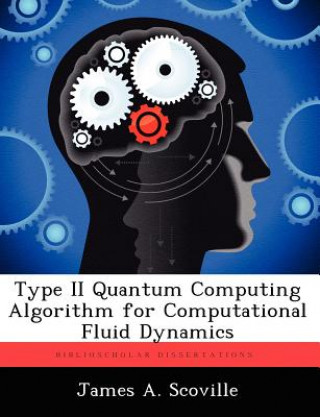
Type II Quantum Computing Algorithm for Computational Fluid Dynamics
by James A Scoville
An algorithm is presented to simulate fluid dynamics on a three qubit type II quantum computer: a lattice of small quantum computers that communicate classical information. The algorithm presented is called a three qubit factorize ... more


- Language:
 English
 - Binding: Paperback
- Number of pages: 94
Publisher: Biblioscholar, 2012
- More about this

15.61 €
RRP: 15.98 €
You save 0.37 €

In stock at our supplier
Shipping in 14 - 21 days
You might also like
-

Bludný kruh
1 € -16 % -

Zákon o státním podniku
30.43 € -20 % -

Notes A6 kieszonkowy z gumką Romantyzm linia czarny
6.74 € -8 % -

La nińa fantasma/ The Myling
16.92 € -

Kill Switch - The Rise of the Modern Senate and the Crippling of American Democracy
20.95 € -21 % -

Dieta Low Carb 2023
15.11 € -6 % -
Iridium
16.12 € -
Introduction a la psychopathologie phenomenologie tii
30.83 € -
Neurología de la maldad: Mentes predadoras y perversas
22.77 € -

Type Two Diabetes: Type 2 Diabetes Diagnosis, Symptoms, Treatment, Causes, Effects, Prognosis, Research, History, Myths, and More! Facts
12.49 € -7 % -

Fraulein von Scuderi
17.83 € -14 % -

Roman Catholic Saints and Early Victorian Literature
67.72 € -

Two Worlds are Ours
41.21 € -
Proces de la Mode
12.08 € -1 % -

Daphne's Story
17.93 € -20 % -

Written in the Beads: & other stories
10.47 € -7 % -

Do Your Best And Trust God For The Rest
12.69 € -25 % -

Guía de proveedores no fabricantes 33H8
9.26 € -

Triumphs of Providence
19.94 € -

International institutions and the power of the EU
35.57 € -14 % -
TOSKANA Im Land der Zypressen (Tischkalender 2026 DIN A5 quer), CALVENDO Monatskalender
18.63 € -11 %
Give this book as a present today
- Order book and choose Gift Order.
- We will send you book gift voucher at once. You can give it out to anyone.
- Book will be send to donee, nothing more to care about.
More about Type II Quantum Computing Algorithm for Computational Fluid Dynamics
You get 38 loyalty points
 Book synopsis
An algorithm is presented to simulate fluid dynamics on a three qubit type II quantum computer: a lattice of small quantum computers that communicate classical information. The algorithm presented is called a three qubit factorized quantum lattice gas algorithm. It is modeled after classical lattice gas algorithms which move virtual particles along an imaginary lattice and change the particles' momentums using collision rules when they meet at a lattice node. Instead of moving particles, the quantum algorithm presented here moves probabilities, which interact via a unitary collision operator. Probabilities are determined using ensemble measurement and are moved with classical communications channels. The lattice node spacing is defined to be a microscopic scale length. A mesoscopic governing equation for the lattice is derived for the most general three qubit collision operator which preserves particle number. In the continuum limit of the lattice, a governing macroscopic partial differential equation--the diffusion equation--is derived for a particular collision operator using a Chapman- Enskog expansion. A numerical simulation of the algorithm is carried out on a conventional desktop computer and compared to the analytic solution of the diffusion equation. The simulation agrees very well with the known solution.
Book details
Book category Books in English Society & social sciences Education
15.61 €
- Full title: Type II Quantum Computing Algorithm for Computational Fluid Dynamics
- Author: James A Scoville
- Language: English
- Binding: Paperback
- Number of pages: 94
- EAN: 9781249584636
- ISBN: 9781249584636
- ID: 08141754
- Publisher: Biblioscholar
- Weight: 181 g
- Dimensions: 246 × 189 × 5 mm
- Date of publishing: 03. October 2012
Trending among others
-
Cambridge IGCSE (R) & O Level Complete Biology: Student Book Fourth Edition
44.54 € -5 % -

iPrimary Building Blocks: Spelling, Punctuation, Grammar and Handwriting Year 6
18.23 € -
Imagine If...
12.29 € -31 % -

Deutsch Ferienhefte - 2. Klasse - Volksschule
10.47 € -10 % -
Oxford International Primary Maths Second Edition: Student Book 5
31.53 € -
KS3 Maths 10-Minute Weekly Workouts - Year 7
8.96 € -15 % -
geog.2 Workbook
13.09 € -

Mathematik Ferienhefte - Volksschule - 2. Klasse
9.87 € -10 % -
Cambridge IGCSE (R) & O Level Complete Physics: Student Book Fourth Edition
46.85 € -
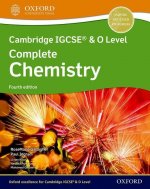
Cambridge IGCSE (R) & O Level Complete Chemistry: Student Book Fourth Edition
46.85 € -
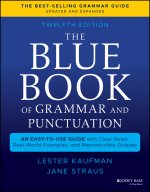
Blue Book of Grammar and Punctuation: An Easy- to-Use Guide with Clear Rules, Real-World Examples , and Reproducible Quizzes, Twelfth Edition
14.81 € -24 % -
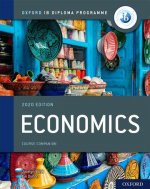
Oxford IB Diploma Programme: IB Economics Course Book
71.65 € -4 % -
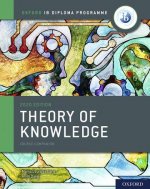
Oxford IB Diploma Programme: IB Theory of Knowledge Course Book
68.42 € -

Oet Pharmacy Prep: Speaking Sub-Test
21.86 € -1 % -
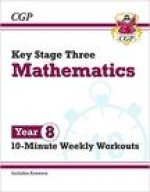
KS3 Maths 10-Minute Weekly Workouts - Year 8
8.96 € -15 % -
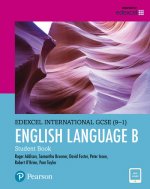
Pearson Edexcel International GCSE (9-1) English Language B Student Book
58.75 € -

Richard NongardOs Big Book of Hypnosis Scripts
27.30 € -2 % -
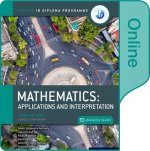
Oxford IB Diploma Programme: Oxford IB Diploma Programme: IB Mathematics: applications and interpretation Standard Level Enhanced Online Course Book
94.42 € -

Oxford IB Diploma Programme: IB Course Preparation Economics Student Book
48.97 € -1 % -
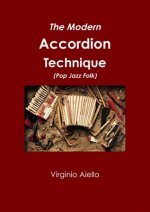
Modern Accordion Technique (Pop Jazz Folk)
18.63 € -2 % -
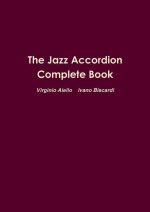
The Jazz Accordion Complete Book
28.81 € -1 % -

iPrimary Building Blocks: Spelling, Punctuation, Grammar and Handwriting Year 1
16.62 € -
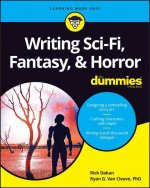
Writing Sci-Fi, Fantasy, & Horror For Dummies
18.23 € -24 % -
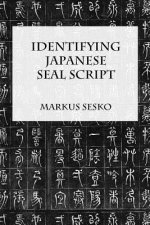
Identifying Japanese Seal Script
34.46 € -9 % -

Abenaki Dictionary
16.52 € -2 % -

Slanguage Dictionary: Caribbean and Latin American Slang Words and Phrases
17.02 € -2 % -
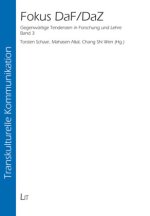
Fokus DaF/DaZ
69.83 € -4 % -
Teaching Young Singers
9.36 € -1 % -

English for Medical Purposes: Spelling and Vocabulary
14.60 € -2 % -

Educational Achievement in Japan
60.46 € -
Powerful Teaching: Unleash the Science of Learning
23.98 € -28 % -
Einkorn
18.23 € -24 % -

Business Partner B2 Workbook
18.74 € -3 % -
Oxford International Primary Maths Second Edition: Practice Book 2
18.13 € -

MOWIE PO POLSKU DWICZENIA POZIOM B1 I B2
16.52 € -

Maria Montessori's Erdkinder
40.30 € -4 % -

Business Partner B1 Workbook
18.74 € -1 % -

OET Preparation
9.26 € -

Deep Healing and Transformation
41.61 € -2 % -

Read Write Inc. Phonics: Red Ditty Book Bag Books (Mixed Pack of 10)
64.29 € -
Oxford International Primary Maths Second Edition: Practice Book 1
18.13 € -
Growth Mindset Classroom-ready Resource Book
11.98 € -28 % -
Speed and Accuracy: Multiplication
6.04 € -28 % -

Freedom Writers Diary Teacher's Guide
17.53 € -24 % -
Oxford International Primary Maths Second Edition: Practice Book 5
18.13 € -
Education
10.77 € -18 % -
They Don't Teach This at School
21.15 € -25 % -
Oxford International Primary Maths Second Edition: Student Book 2
31.53 € -
Euclidean Geometry
27.71 € -25 %
Collection points Bratislava a 12772 dalších
Copyright ©2008-26 najlacnejsie-knihy.sk All rights reservedPrivacyCookies

 25548 collection points
 Delivery 2.99 €
 02/210 210 99 (8-15.30h)