Code: 04946265
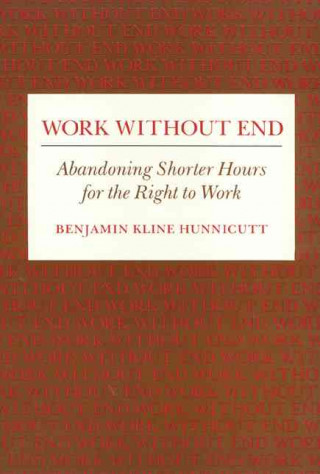
Work without End
by Benjamin Kline Hunnicutt
For more than a century preceding the Great Depression, work hours were steadily reduced. Intellectuals, labor leaders, politicians, and workers saw this reduction in work as authentic progress and the resulting increase in leisur ... more


- Language:
 English
 - Binding: Hardback
- Number of pages: 416
Publisher: Temple University Press,U.S., 1988
- More about this

72.10 €
Availability:
50/50 We think title might be available. Upon your order we will do our best to get it within 6 weeks.
We search the world
You might also like
-

World Without End
31.04 € -11 % -

Work
12.94 € -30 % -

Asterix: Asterix and The Cauldron
9.70 € -25 % -

Kriegswaffen in ihren geschichtlichen Entwicklungen
90.61 € -

Fun in the Tub: Creating Bath Bombs, Solid Bubble Bath, Bubble Frosting and Bubble Scoops
21.73 € -7 % -

Long Ride to Forever
17.49 € -2 % -

Untersuchungen zur kommerziellen Lexikographie der deutschen Gegenwartssprache. Band 1
198.42 € -1 % -

Court and Country Politics in the Plays of Beaumont and Fletcher
57.54 € -

Shamanism for Teenagers, Young Adults and The Yo - Shamanic practice made easy for the newest generations
14.35 € -9 % -

N10 ARTE PRERROMANICO LA ORFEBRERIA
15.77 € -9 % -

Evolution
12.73 € -24 % -

Eine Kritik juridischer Vernunft
32.05 € -

Summary of the Law of Nations, Founded on the Treaties and Customs of the Modern Nations of Europe; With a List of the Principal Treaties, Concluded S
24.97 € -24 % -

December Wars
23.76 € -17 %
Give this book as a present today
- Order book and choose Gift Order.
- We will send you book gift voucher at once. You can give it out to anyone.
- Book will be send to donee, nothing more to care about.
Availability alert
Enter your e-mail address and once book will be available,
we will send you a message. It's that simple.
More about Work without End
You get 174 loyalty points
 Book synopsis
For more than a century preceding the Great Depression, work hours were steadily reduced. Intellectuals, labor leaders, politicians, and workers saw this reduction in work as authentic progress and the resulting increase in leisure time as a cultural advance. Benjamin Hunnicutt examines the period from 1920 to 1940 during which the shorter hour movement ended and the drive for economic expansion through increased work took over. He traces the political, intellectual, and social dialogues that changed the American concept of progress from dreams of more leisure in which to pursue the higher things in life to an obsession with the importance of work and wage-earning.During the 1920s with the development of advertising, the "gospel of consumption" began to replace the goal of leisure time with a list of things to buy. Business, which increasingly viewed shorter hours as a threat to economic growth, persuaded the worker that more work brought more tangible rewards. The Great Depression shook the newly proclaimed gospel as well as everyone's faith in progress.Although work-sharing became a temporary solution to the shortage of jobs and massive unemployment, when faced with legislation that would limit the work week to thirty hours, Roosevelt and his New Deal advisors adopted the gospel of consumption's tests for progress and created more work by government action. The New Deal campaigned for the right to work a full time job and won. Benjamin Kline Hunnicutt is Professor of Leisure Studies at the University of Iowa.
Book details
Book category Books in English Society & social sciences Sociology & anthropology Sociology
72.10 €
- Full title: Work without End
- Subtitle: Abandoning Shorter Hours for the Right to Work
- Author: Benjamin Kline Hunnicutt
- Language: English
- Binding: Hardback
- Number of pages: 416
- EAN: 9780877225201
- ID: 04946265
- Publisher: Temple University Press,U.S.
- Weight: 748 g
- Dimensions: 235 × 159 mm
- Date of publishing: 01. April 1988
Trending among others
-

Fair Play Deck
18.30 € -24 % -

Tragedy and Hope
31.65 € -

Eroticism
11.01 € -30 % -

Surrendered Wife
11.42 € -17 % -

Transparency Society
12.63 € -11 % -

History of Sexuality: 4
15.36 € -23 % -

Sex at Dawn
13.85 € -25 % -

Blueprint for Revolution
10.41 € -30 % -

Being Mortal
9.70 € -29 % -

Expulsion of the Other - Society, Perception and Communication Today
14.05 € -6 % -

Insatiable Wives
22.14 € -

Crazy Ape
9.29 € -25 % -

Disciplined Minds
30.94 € -

Drawings from a Dying Child (RLE: Jung)
58.85 € -

Four Futures
14.76 € -25 % -

Automation and the Future of Work
15.16 € -25 % -

Being Mortal
15.16 € -29 % -

The True Believer
15.26 € -10 % -

Small Is Beautiful
14.05 € -19 % -

Attachment
18.09 € -24 % -

Gifts of Imperfection: 10th Anniversary Edition
14.45 € -29 % -

On Death and Dying
14.86 € -24 % -

Chrysanthemum and the Sword
16.07 € -

Theory of the Leisure Class
11.22 € -24 % -

Social Construction of Reality
11.82 € -24 % -

Marriage, a History
14.86 € -24 % -

Trickster Makes This World
16.48 € -26 % -

That Good Night
13.74 € -26 % -

Tragedy and Hope
47.42 € -

Anatomy of Love
14.45 € -22 % -

On Suicide
13.95 € -24 % -

Bushido: The Soul Of Japan
14.45 € -26 % -

Liquid Love on the Frailty of Human Bonds
19.61 € -4 % -

Intimate Communion
12.03 € -24 % -

Regretting Motherhood
17.89 € -13 % -

From Here to Eternity
24.77 € -1 % -

World-Systems Analysis
17.49 € -25 % -

Becoming Partners
27.30 € -

Why People Die by Suicide
18.90 € -25 % -

Complex Adaptive Systems
51.06 € -

Single Mothers by Choice
12.03 € -25 % -

Introduction to Japanese Society
38.12 € -

Outline of a Theory of Practice
25.07 € -25 % -

Complexity of Cooperation
61.68 € -

All Joy and No Fun
13.95 € -24 % -

Family Therapy: Concepts and Methods
80.49 € -14 % -

NINETY PERCENT OF EVERYTHING
14.45 € -29 % -

Hit Makers
13.85 € -25 % -

Statistics in Corpus Linguistics
39.74 €
Collection points Bratislava a 13080 dalších
Copyright ©2008-26 najlacnejsie-knihy.sk All rights reservedPrivacyCookies

 26164 collection points
 Delivery 2.99 €
 02/210 210 99 (8-15.30h)