
Code: 06818504
After Justification
by Johann Friedrich Gugelmann
A central question for moral epistemology is how our§moral beliefs §are justified. In Hugo Tristram Engelhardt, Jr. s§view, modern secular §philosophy fails to provide a justification for moral§belief. Despite §this failure, which ... more


- Language:
 English
 - Binding: Paperback
- Number of pages: 148
Publisher: VDM Verlag, 2008
- More about this


You might also like
-

Fundamental Wisdom of the Middle Way
25.12 € -

The Great Paper Caper
15.37 € -25 % -

New Headway Pre-Intermediate Third edition Student's Book with czech wordlist
33.46 € -

Henry James: Novels 1903-1911: The Ambassadors, the Golden Bowl, the Outcry
28.54 € -26 % -

Dachy stropodachy tarasy
18.38 € -

Towards Holistic Agriculture
73.06 € -

Karlovarské rapsodie
6.93 € -6 % -

Glee: The Music - The Warblers
13.76 € -21 % -

Teaching Difficult History through Film
64.12 € -

Elementary School Arithmetic: For seven to eight year olds
13.96 € -7 % -

Systeme Pour l'Execution Des Travaux Publics En France, Notamment Grandes Lignes de Chemins de Fer
19.29 € -6 % -

Alice in Wonderland Remixed
10.24 € -2 % -
Real Jouissance of Uncountable Numbers
52.66 € -

Bir Sapsalin Günlügü 2; Pek Popüler Olmayan Bir Parti Kizindan Hikayeler
12.05 € -5 % -

Kalenderanomalien am deutschen Kapitalmarkt. Eine empirische Untersuchung der bedeutendsten Effekte
16.98 € -10 % -

Divine Mercy Exalted
17.18 € -2 % -

Vanishing Present
42.21 € -

Fear of Falling
12.35 € -17 % -

Predictable Corporate Sales
13.26 € -

Zelotes And Honestus Reconciled: Or An Equal Check To Pharisaism And Antinomianism Continued (1808)
36.17 € -2 % -

Determinants of Ethical Behaviour of Managers in Malaysia
59.29 € -4 % -

Introduction to Apparel Manufacturing
58.29 € -2 % -

BRYAN DIPIETRO TOXIC AVENGER PV BK
15.67 € -9 % -

Everybody's Lonesome A True Fairy Story
16.07 € -14 % -

Edward Elgar, Modernist
120.81 € -

Caravan of Dreams Theater
9.64 € -9 % -

Marriage Matters
8.63 € -10 % -

Surrealistische Welten (Tischaufsteller DIN A5 quer)
18.69 € -11 %
Give this book as a present today
- Order book and choose Gift Order.
- We will send you book gift voucher at once. You can give it out to anyone.
- Book will be send to donee, nothing more to care about.
More about After Justification
You get 144 loyalty points
 Book synopsis
A central question for moral epistemology is how our§moral beliefs §are justified. In Hugo Tristram Engelhardt, Jr. s§view, modern secular §philosophy fails to provide a justification for moral§belief. Despite §this failure, which he equates with the failure of§the Enlightenment §project, Engelhardt claims that we can peacefully§collaborate by §respecting one another's ability to agree or give§permission. In this §book, I respond to Engelhardt's claims by comparing§them with the §work of Alasdair MacIntyre, Harry G. Frankfurt,§Gilbert Harman, §David Lewis, and Jeffrey Stout. I argue that§justification is a process §of fitting our beliefs together to reach reflective§equilibrium. It relies §on shared conventions of thought and action that are§elements of §our culture. It doesn't rely on a special foundation§of unimpeachable §belief, but takes account of all our relevant§beliefs. Justification isn't §just a matter of what we think but of how we think.§When we say our §beliefs are justified, we mean that until proven§otherwise, we've §gathered our beliefs properly and we think we're§right. Justification §isn't perfect or infallible, but it's how we form the§best beliefs we §can. A central question for moral epistemology is how our§moral beliefs §are justified. In Hugo Tristram Engelhardt, Jr. s§view, modern secular §philosophy fails to provide a justification for moral§belief. Despite §this failure, which he equates with the failure of§the Enlightenment §project, Engelhardt claims that we can peacefully§collaborate by §respecting one another''s ability to agree or give§permission. In this §book, I respond to Engelhardt''s claims by comparing§them with the §work of Alasdair MacIntyre, Harry G. Frankfurt,§Gilbert Harman, §David Lewis, and Jeffrey Stout. I argue that§justification is a process §of fitting our beliefs together to reach reflective§equilibrium. It relies §on shared conventions of thought and action that are§elements of §our culture. It doesn''t rely on a special foundation§of unimpeachable §belief, but takes account of all our relevant§beliefs. Justification isn''t §just a matter of what we think but of how we think.§When we say our §beliefs are justified, we mean that until proven§otherwise, we''ve §gathered our beliefs properly and we think we''re§right. Justification §isn''t perfect or infallible, but it''s how we form the§best beliefs we §can.
Book details
Book category Books in English Humanities Religion & beliefs Religion: general
59.29 €
- Full title: After Justification
- Subtitle: Moral Epistemology in H. T. Engelhardt, Jr.'s Foundations of Bioethics
- Author: Johann Friedrich Gugelmann
- Language: English
- Binding: Paperback
- Number of pages: 148
- EAN: 9783639094381
- ISBN: 3639094387
- ID: 06818504
- Publisher: VDM Verlag
- Weight: 209 g
- Dimensions: 229 × 152 × 8 mm
- Date of publishing: 13. November 2008
Trending among others
-

The Righteous Mind
16.47 € -22 % -

A Secular Age
18.79 € -25 % -
Sacred and the Profane
13.36 € -24 % -

Knowing God
13.76 € -25 % -

The Courage to Be
14.46 € -22 % -
Return of the God Hypothesis
22.91 € -27 % -

Art of Worldly Wisdom
8.43 € -2 % -

Good Morning, Holy Spirit
14.66 € -25 % -

Courage of Hopelessness
14.06 € -19 % -
Beginning Luciferian Magick
16.37 € -10 % -

Grief Observed
12.45 € -29 % -

American Cosmic
21.60 € -24 % -
Goddesses
20.80 € -22 % -

Religion for Atheists
16.37 € -11 % -
Systematic Theology
32.86 € -

Knights of the Cloister
39.59 € -

Sexual Satanism or How to Seduce Women by Magic
8.53 € -18 % -

Aquinas and the Market
57.79 € -

Guide to Christ. Or, the Way of Directing Souls That Are Under the Work of Conversion. by Solomon Stoddard, Pastor of the Church in Northampton. with
18.99 € -2 % -

Education and the Significance of Life
11.55 € -18 % -

Moors
14.66 € -20 % -

The Theology of Battlestar Galactica
33.56 € -
Dangerous Mystic
21.80 € -26 % -

Greening of the Rebirth of Nature Science and God
15.67 € -9 % -
Compelling Reason
11.75 € -24 % -

Metaphysics of Evolution
5.82 € -

Israelites in History and Tradition
33.86 € -25 % -

Stoic Six Pack: Meditations of Marcus Aurelius the Golden Sayings Fragments and Discourses of Epictetus Letters from a Stoic and the Enchiridion
31.45 € -

Al-Adab al-Mufrad with Full Commentary
35.67 € -14 % -

The Screwtape Letters
11.75 € -24 % -

A History of Christianity
21.10 € -24 % -

The Perennial Philosophy
13.36 € -28 % -
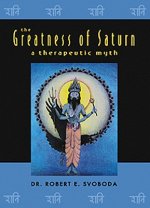
The Greatness of Saturn
11.25 € -24 % -

Mary Magdalene
11.75 € -2 % -
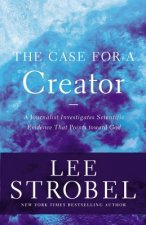
Case for a Creator
13.16 € -20 % -

The Happiness Hypothesis: Finding Modern Truth in Ancient Wisdom
15.27 € -22 % -

Apotheosis - The Ultimate Beginner's Guide to Luciferianism & the Left-Hand Path
23.31 € -1 % -
Can Science Explain Everything?
9.64 € -25 % -

Story of Christianity Volume 1
20.39 € -26 % -

Waking Up
12.05 € -18 % -

Language of God
10.64 € -25 % -

Comfortable with Uncertainty
13.26 € -25 % -

Nature of the Psyche
17.58 € -17 % -

End of Faith
10.04 € -29 % -

Reign of Quantity and the Signs of the Times
21.80 € -2 % -

Corpus Hermeticum
22.10 € -
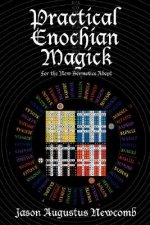
Practical Enochian Magick
24.92 € -10 % -

Right Side of History
20.19 € -24 % -

Cosmic Chemistry
20.19 € -24 %
Collection points Bratislava a 13152 dalších
Copyright ©2008-26 najlacnejsie-knihy.sk All rights reservedPrivacyCookies

 26308 collection points
 Delivery 2.99 €
 02/210 210 99 (8-15.30h)