
Code: 01398049
Current Issues in Parsing Technology
by M. Tomita
1 Why Parsing Technologies?.- 1.1 The gap between theory and application.- 1.2 About this book.- 2 The Computational Implementation of Principle-Based Parsers.- 2.1 Introduction.- 2.2 The principle ordering problem.- 2.3 Examples ... more


- Language:
 English
- Binding: Hardback
- Number of pages: 297
Publisher: Springer, 1990
- More about this


You might also like
-

Star Wars: Dark Disciple
11.69 € -25 % -

Die Schule der magischen Tiere ermittelt 7: Das Biber-Rätsel
8.49 € -15 % -

Love, Pamela
21.99 € -25 % -

Essential Oils for Dental Health
15.59 € -15 % -

Until the Shadows Lengthen
22.99 € -6 % -

Art and History of Calligraphy
20.99 € -25 % -

Kleine Knüpfmomente: Makramee-Knüpf-Set - Federleichter Traumfänger
10.69 € -10 % -

Cats in Space Coloring Book
8.19 € -7 % -

Blacksad - Tome 3 - Âme rouge
43.18 € -

Solutions Manual for Actuarial Mathematics for Life Contingent Risks
57.18 € -

Planimetrie
8.69 € -

House of Susan Lulham
10.69 € -24 % -

Jazzy Duets
19.29 € -

400 samolepek Halloween
3.49 € -33 % -

Boîte oracle Messages de mes ancêtres
12.59 € -

Daggerheart (Hardcover)
41.48 € -17 % -

Blood Fire Death
42.08 € -

L'Atelier de la Grâce
52.28 € -

At the Park on the Edge of the Country
12.89 € -24 % -

El libro de la selva
13.79 € -9 % -

Die blaue Hand
17.69 € -11 % -

Kai Falke
12.69 € -1 % -

Tocqueville
16.59 € -

Dark Ark Volume 2
12.69 € -30 % -

Neither Black Nor White Yet Both
86.17 € -

Milk of Hathor; The Breastfeeding Comics
15.89 € -2 % -

Beatles, Popular Music and Society
56.88 € -

Love & Light
9.89 € -7 % -

Les Merveilles Des Fleuves Et Des Ruisseaux 3e Edition Illustree de 66 Vignettes Sur Bois
27.28 € -

Portraits and Miniatures
20.19 € -

Sana Tu Mente / Heal Your Mind
15.09 € -9 % -

Complete Guide to Blender Graphics
236.94 € -

Mezi vilami
10.19 € -16 % -

Study of Chemical Composition
84.77 € -

Ocenka mnogoletnego stoka jugo-zapadnoj chasti afrikanskogo kontinenta
56.28 € -14 % -

El Cartel de los Sapos 2
14.99 € -25 % -

Doch meine Seele habt ihr nicht
10.49 € -

The Bed I Made
14.29 € -6 % -

Art of Living in London. a Poem. the Second Edition.
12.09 € -24 % -

Gammazita
19.59 € -2 % -

Bulletin, Issue 94
48.78 € -2 % -

Sexo Cool
18.79 € -

Infidelidad Consentida
8.19 € -7 % -

Bioanalytical Chemistry
46.38 € -

Emma Jane of Lavender Lane
10.39 € -6 % -

Contemporary American Print Makers
25.68 € -25 % -

Everything Easy Large-Print Word Search Book, Volume 6
12.19 € -25 % -

Mystische Gezeiten
10.79 € -30 % -

New Practical Speller
30.58 € -1 % -

Lénine. Conscience et volonté révolutionnaires
12.29 € -

Colorado's Historic Schools
25.28 € -

Contrarium
26.88 € -25 % -

Japanese Women Fiction Writers
268.53 € -

Building Up of the Numbers
26.58 € -

Indian Eclipse, 1898
15.99 € -14 % -

Beautiful Designs and Patterns Adult Coloring Book
12.29 € -2 % -

Charles Dickens' Children Stories
11.39 € -1 % -

Der Prinz und der kleine Planet
8.99 € -10 % -

Administration, politische Institutionen, Militar
16.89 € -10 % -

Mira a tu alrededor
17.69 € -7 % -

Derrick Sterling A Story of the Mines
17.69 € -14 % -

101 BIBLE HEROES - UK version
11.69 € -6 % -

Mountains
10.09 € -9 % -

Let's speak Biotechnology 1re et Tle STL (2014) - Pochette élève
27.08 € -

Little Susy's Little Servants
25.09 € -1 % -

My 80s Memoir
11.49 € -25 % -

Der Übergang von der reformpädagogischen Grundschule in die weiterführende Regelschule
80.87 € -4 % -

Souveranitat und Legitimitat von Herrschaftsgewalt
207.55 € -

Quimica
101.97 € -14 % -

Lotto Decoding: Action Plan - Lotto Max
6.69 € -3 % -

The Ultimate Twilight Zone Word Search Puzzle Book
23.29 € -1 % -

John Paul Jones' Memoir of the American Revolution
14.99 € -2 % -

Tournaments of Value
40.78 € -

Tueur En Pantoufles(le)
8.49 € -

Personal and the Political (RLE Social Theory)
70.98 € -

G. H. Mead und A. Boal. Möglichkeiten zur Veränderung von Wirklichkeit
14.29 € -10 % -

Factory Daughters
35.58 € -9 %
Give this book as a present today
- Order book and choose Gift Order.
- We will send you book gift voucher at once. You can give it out to anyone.
- Book will be send to donee, nothing more to care about.
More about Current Issues in Parsing Technology
You get 546 loyalty points
 Book synopsis

1 Why Parsing Technologies?.- 1.1 The gap between theory and application.- 1.2 About this book.- 2 The Computational Implementation of Principle-Based Parsers.- 2.1 Introduction.- 2.2 The principle ordering problem.- 2.3 Examples of parsing using the Po-Parser.- 2.4 Concluding remarks.- 3 Parsing with Lexicalized Tree Adjoining Grammar.- 3.1 Introduction.- 3.2 Lexicalization of CFGs.- 3.3 Lexicalized TAGs.- 3.4 Parsing lexicalized TAGs.- 3.5 Concluding remarks.- 4 Parsing with Discontinuous Phrase Structure Grammar.- 4.1 Introduction.- 4.2 Trees with discontinuities.- 4.3 Disco-Trees in grammar rules.- 4.4 Implementing DPSG: An enhanced chart parser.- 4.5 Concluding remarks.- 5 Parsing with Categorial Grammar in Predictive Normal Form.- 5.1 Introduction.- 5.2 Overview of predictive normal form.- 5.3 Source grammar (G).- 5.4 Predictive normal form (G).- 5.5 Ambiguity in G.- 5.6 Equivalence of G and G.- 5.7 Concluding remarks.- 6 PREMO: Parsing by conspicuous lexical consumption.- 6.1 Introduction.- 6.2 The preference machine.- 6.3 Global data.- 6.4 Preference semantics.- 6.5 PREMO example.- 6.6 Comparison to other work.- 6.7 Concluding remarks.- 7 Parsing, Word Associations, and Typical Predicate-Argument Relations.- 7.1 Mutual information.- 7.2 Phrasal verbs.- 7.3 Preprocessing the corpus with a part of speech tagger.- 7.4 Preprocessing with a syntactic parser.- 7.5 Significance levels.- 7.6 Just a powerful tool.- 7.7 Practical applications.- 7.8 Alternatives to collocation for recognition applications.- 7.9 Concluding remarks.- 8 Parsing Spoken Language Using Combinatory Grammars.- 8.1 Introduction.- 8.2 Structure and intonation.- 8.3 Combinatory grammars.- 8.4 Parsing with CCG.- 8.5 Intonational structure.- 8.6 A hypothesis.- 8.7 Conclusion.- 9 A Dependency-Based Parser for Topic and Focus.- 9.1 Introduction.- 9.2 Dependency-based output structures.- 9.3 The semantic impact of topic-focus articulation.- 9.4 Parsing procedure for topic and focus.- 9.5 Parsing sentences in a text.- 9.6 Concluding remarks.- 10 A Probabilistic Parsing Method for Sentence Disambiguation.- 10.1 Introduction.- 10.2 Probabilistic context-free grammar.- 10.3 Experiments.- 10.4 Concluding remarks.- 11 Towards a Uniform Formal Framework for Parsing.- 11.1 Introduction.- 11.2 Context-free parsing.- 11.3 Horn clauses.- 11.4 Other linguistic formalisms.- 11.5 Concluding remarks.- 12 A Method for Disjunctive Constraint Satisfaction.- 12.1 Introduction.- 12.2 Turning disjunctions into contexted constraints.- 12.3 Normalizing the contexted constraints.- 12.4 Extracting the disjunctive residue.- 12.5 Producing the models.- 12.6 Comparison with other techniques.- 12.7 Concluding remarks.- 13 Polynomial Parsing of Extensions of Context-Free Grammars.- 13.1 Introduction.- 13.2 Linear indexed grammars.- 13.3 Combinatory categorial grammars.- 13.4 Tree Adjoining Grammars.- 13.5 Importance of linearity.- 13.6 Concluding remarks.- 14 Overview of Parallel Parsing Strategies.- 14.1 Introduction.- 14.2 From one to many traditional serial parsers.- 14.3 Translating grammar rules into process configurations.- 14.4 From sentence words to processes.- 14.5 Connectionist parsing algorithms.- 14.6 Concluding remarks.- 15 Chart Parsing for Loosely Coupled Parallel Systems.- 15.1 Introduction.- 15.2 Parsing for loosely coupled systems.- 15.3 Parallelism and the chart.- 15.4 Distributing the chart.- 15.5 Communication vs. computation - Results for the Hypercube(TM).- 15.6 Towards wider comparability - The abstract parallel agenda.- 15.7 Termination and Synchronization.- 15.8 Testingthe portable system - Results of network experiment.- 15.9 Alternative patterns of edge distribution.- 15.10 Concluding remarks.- 16 Parsing with Connectionist Networks.- 16.1 Introduction.- 16.2 Incremental parsing.- 16.3 Connectionist network formalism.- 16.4 Parsing network architecture.- 16.5 Parsing network performance.- 16.6 Extensions.- 16.7 Concluding remarks.- 17 A Broad-Coverage Natural
Book details
Book category Books in English Computing & information technology Computer science Artificial intelligence
223.14 €
- Full title: Current Issues in Parsing Technology
- Author: M. Tomita
- Language: English
- Binding: Hardback
- Number of pages: 297
- EAN: 9780792391319
- ISBN: 0792391314
- ID: 01398049
- Publisher: Springer
- Weight: 1390 g
- Dimensions: 235 × 155 × 22 mm
- Date of publishing: 27. December 1990
Trending among others
-
Book of Why
13.09 € -26 % -

Pattern Recognition and Machine Learning
80.87 € -9 % -
Reinforcement Learning
115.67 € -3 % -

Artificial Intelligence Basics
32.38 € -25 % -

Designing Human-Centric AI Experiences
46.48 € -25 % -

More Everything Forever
19.99 € -15 % -
Probabilistic Machine Learning
144.36 € -12 % -

Deep Learning
96.77 € -3 % -

Foundations of Machine Learning
98.87 € -

Natural Language Processing in Action
60.48 € -5 % -
Machine Learning Design Patterns
47.18 € -25 % -
On Intelligence
14.99 € -25 % -
Practical MLOps
63.98 € -25 % -

Building Machine Learning Powered Applications
46.18 € -26 % -

Eye Tracking Methodology
66.78 € -9 % -
Programming Machine Learning
41.98 € -18 % -

Artificial Intelligence
69.38 € -9 % -
Neural Networks and Deep Learning
61.88 € -

AI for Robotics
21.99 € -25 % -

Deep Learning and the Game of Go
54.28 € -

Artificial Intelligence and Government
159.16 € -9 % -

Designing Voice User Interfaces
28.98 € -25 % -

Edge Intelligence in Cyber-Physical Systems
232.84 € -

Mastering AI Governance
28.38 € -14 % -

Beyond Artificial Intelligence - From Human Consciousness to Artificial Consciousness
163.56 € -10 % -

Advances in Financial Machine Learning
28.68 € -45 % -
Dive into Deep Learning
35.08 € -

Deep Learning
79.67 € -9 % -

Why Greatness Cannot Be Planned
24.09 € -25 % -
Real-Time C++
49.88 € -9 % -

Sciences of the Artificial
52.48 € -11 % -

Linear Algebra and Optimization for Machine Learning
54.88 € -9 % -

Google Gemini - Einstieg und Praxis - Texte, Bilder, Videos mit KI generieren
17.79 € -10 % -
Understanding Machine Learning
73.47 € -
Words and Rules
17.09 € -25 % -
Python Machine Learning -
43.38 € -1 % -

Learning LEGO MINDSTORMS EV3
47.98 € -1 % -
Introduction to Information Theory, Symbols, Signals and Noise
19.49 € -24 % -

Lambda Calculus. Its Syntax and Semantics
26.88 € -9 % -

Tiny ML
35.98 € -25 % -

High-Dimensional Probability
79.57 € -

Dancing with Qubits
87.97 € -7 % -

Hands-On Unsupervised Learning Using Python
56.98 € -25 % -
Superminds
11.69 € -25 % -

Neuronal Dynamics
74.47 € -
Practical Time Series Analysis
56.98 € -25 % -

Artificial Intelligence and Games
59.88 € -9 % -
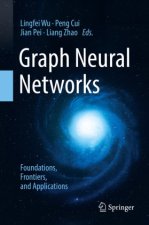
Graph Neural Networks: Foundations, Frontiers, and Applications
79.57 € -
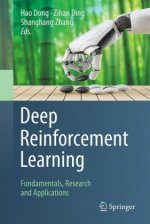
Deep Reinforcement Learning
203.35 € -7 %
Collection points Bratislava a 12685 dalších
Copyright ©2008-26 najlacnejsie-knihy.sk All rights reservedPrivacyCookies

 25374 collection points
 Delivery 2.99 €
 02/210 210 99 (8-15.30h)
