
Code: 06621723
Fanconi Anemia
by Arleen D. Auerbach, Günter Obe, Traute M. Schroeder-Kurth
Sixty years ago, G. Fanconi published a paper entitled: "Familiiire infantile pemiziosaartige Aniimie (pemizioses Blutbild und Konstitu tion)", in which he reported that this type of severe aplastic anemia represents a hereditary ... more


- Language:
 English
 - Binding: Paperback
- Number of pages: 264
Publisher: Springer-Verlag Berlin and Heidelberg GmbH & Co. KG, 2011
- More about this

109.45 €

Low in stock at our supplier
Shipping in 13 - 18 days
Potřebujete více kusů?Máte-li zájem o více kusů, prověřte, prosím, nejprve dostupnost titulu na naši zákaznické podpoře.
Add to wishlist
You might also like
-

Corazon tan blanco
12.95 € -1 % -

Prozac Nation
22.06 € -1 % -

The Infinite Glade
21.66 € -25 % -

Nádherné příběhy Čtyřlístku
18.82 € -22 % -

Śladami pierwotnych wierzeń
10.82 € -20 % -

Caesarovy legie
15.89 € -23 % -

Tajemství trojitého ohřívače
9.51 € -22 % -

Закат и падение Римской империи. Книга 1
7.48 € -37 % -

Stampo Baby Baumaschinen
12.85 € -15 % -

Her Majesty's Royal Coven
12.24 € -30 % -

Mexico Set
13.96 € -24 % -

Beautiful Day in the Neighborhood
14.77 € -25 % -

A Doorway to Joe
109.96 € -14 % -

Niki Lauda. Do piekła i z powrotem. Autobiografia legendy Formuły 1
13.36 € -10 % -

The Record of Hon. C. L. Vallandigham on Abolition, the Union and the Civil War
27.43 € -2 % -

47 Ronin
14.47 € -26 % -
Molecular Characterizations of Fanconi Anemia Type A (FANCA) gene
60.85 € -4 % -

Great Crusade
25.10 € -25 % -

Aquatic Mammals; Their Adaptations to Life in the Water
23.79 € -2 % -

Feeling and Value, Willing and Action
55.89 € -

Exercices résolus de calcul intégral
36.85 € -

Annales Des Ponts Et Chaussées
25.71 € -24 % -

Caribbean Transnationalism
59.53 € -

Soil Acidity and its management practices in Different Land use Types
50.01 € -3 % -

Original Contributions to the American Pioneer.
16.09 € -24 % -

Les cancers
23.48 € -

L'EXPERTISE INTERNATIONALE AU SEIN DU CATHOLICISME FRANÇAIS
27.03 € -

Anthropological Abstracts 9/2010
40.49 € -4 % -

Building Your Own Electronics Lab
38.87 € -25 % -

Contemplative Struggle
11.53 € -7 % -

Really Woolly Bedtime Prayers
9.31 € -25 % -

Fostering Innovation in U.S. Law Enforcement
42.82 € -

Silos, Silage, and Cattle Feeding
28.34 € -1 % -

Linda
21.76 € -7 % -

Amore E Caos
18.32 € -24 %
Give this book as a present today
- Order book and choose Gift Order.
- We will send you book gift voucher at once. You can give it out to anyone.
- Book will be send to donee, nothing more to care about.
More about Fanconi Anemia
You get 265 loyalty points
 Book synopsis
Sixty years ago, G. Fanconi published a paper entitled: "Familiiire infantile pemiziosaartige Aniimie (pemizioses Blutbild und Konstitu tion)", in which he reported that this type of severe aplastic anemia represents a hereditary disease distinct from other pancytopenias of childhood (Fanconi 1927). Later this syndrome was named Fan coni anemia (FA; van Leeuwen 1933). A more recent study of the genetics of FA confirmed that the syndrome is inherited in an au tosomal recessive manner (Schroeder et al. 1976). Prenatal diagno sis in FA families showed that about 25% of fetuses are affected (Auerbach et al. 1985, 1986). In 1964, Schroeder et al. discovered high frequencies of chro mosomal aberrations in cultured peripheral blood lymphocytes from patients with FA. Schuler et al. (1969) reported that cells from FA patients are particularly sensitive to the chromosome-breaking activity or clastogenic effect of a polyfunctional alkylating agent. Since that time, studies of baseline and induced frequencies of chromosomal aberrations have been used for the identification of patients with FA. There is now a large body of data concerning the possible mechanism(s) underlying the hypersensitivity of FA cells to DNA cross-linking agents, the biochemical basis for which is still unknown. Complementation analysis, using cells from different FA pa tients, has demonstrated genetic heterogeneity in the syndrome.
Book details
Book category Books in English Medicine Clinical & internal medicine Diseases & disorders
109.45 €
- Full title: Fanconi Anemia
- Subtitle: Clinical, Cytogenetic and Experimental Aspects
- Author: Arleen D. Auerbach, Günter Obe, Traute M. Schroeder-Kurth
- Language: English
- Binding: Paperback
- Number of pages: 264
- EAN: 9783642741814
- ISBN: 9783642741814
- ID: 06621723
- Publisher: Springer-Verlag Berlin and Heidelberg GmbH & Co. KG
- Weight: 502 g
- Dimensions: 244 × 170 × 16 mm
- Date of publishing: 10. December 2011
Trending among others
-

Radical Remission
14.07 € -25 % -

Healing Add
14.88 € -24 % -
Cellular and Molecular Immunology
98.82 € -1 % -

Cancer Is Not a Disease - It's a Healing Mechanism
19.94 € -25 % -

CT Anatomy for Radiotherapy
95.58 € -

Cancer-Fighting Kitchen, Second Edition
23.38 € -25 % -

Everyday Mindfulness for OCD
12.75 € -24 % -
Roitt's Essential Immunology 13e
73.71 € -

Cardiac Pacing, Defibrillation and Resynchronization - A Clinical Approach, 4th Edition
91.13 € -9 % -

Great Influenza
14.07 € -25 % -

Target Volume Delineation for Conformal and Intensity-Modulated Radiation Therapy
175.88 € -10 % -
Illustrated Anatomical Segmentectomy for Lung Cancer
125.76 € -9 % -
Breath Sounds
140.54 € -

Cancer & Its Homeopathic Treatment with Illustrative Cases
5.15 € -

Antibody Engineering Protocols
109.45 € -

How to Starve Cancer
24.09 € -14 % -
Musculoskeletal Imaging
102.77 € -4 % -
Bethesda Handbook of Clinical Oncology
78.57 € -9 % -

Peanut Allergy Epidemic
14.07 € -44 % -

Healing Lyme Disease Coinfections
16.90 € -24 % -

Cancer and the New Biology of Water
18.22 € -25 % -
LYMPH & LONGEVITY
18.12 € -25 % -
Breast Ultrasound
103.38 € -
Medical Microbiology
97.91 € -6 % -

Breast Ultrasound
69.56 € -

Healing Songs
36.24 € -

One Renegade Cell
14.07 € -25 % -

When Antibiotics Fail
32.70 € -25 % -

In the Crucible of Chronic Lyme Disease
25.10 € -25 % -

Natural Treatments for Lyme Coinfections
16.90 € -24 % -

Spillover
11.53 € -19 % -

Autoimmune Solution
11.84 € -25 % -
Graphic Guide to Infectious Disease
47.89 € -

Cancer as a Metabolic Disease - On the Origin, Management, and Prevention of Cancer
148.44 € -4 % -
Manual of Clinical Oncology
69.25 € -10 % -

Target Volume Delineation for Conformal and Intensity-Modulated Radiation Therapy
242.31 € -9 % -

Netter's Infectious Diseases
102.77 € -4 % -
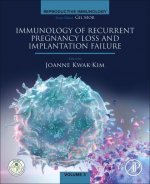
Immunology of Recurrent Pregnancy Loss and Implantation Failure
145.71 € -

Key to Self-Liberation
92.64 € -
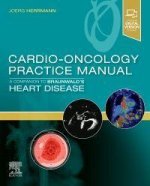
Cardio-Oncology Practice Manual: A Companion to Braunwald's Heart Disease
138.72 € -4 % -

New Paradigms in Lyme Disease Treatment
28.55 € -25 % -
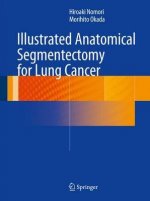
Illustrated Anatomical Segmentectomy for Lung Cancer
182.87 € -

Homoeopathy In Epidemic Diseases
16.09 € -24 % -
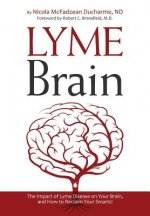
Lyme Brain
35.43 € -25 % -

Stereotactic Radiosurgery and Stereotactic Body Radiation Therapy (SBRT)
292.13 € -
Radiobiology and Radiation Hormesis
130.52 € -
Immunology for Medical Students
48.90 € -

Khan's The Physics of Radiation Therapy
268.64 € -10 % -
Manual of Childhood Infections
88.49 €
Collection points Bratislava a 12742 dalších
Copyright ©2008-26 najlacnejsie-knihy.sk All rights reservedPrivacyCookies

 25488 collection points
 Delivery 2.99 €
 02/210 210 99 (8-15.30h)