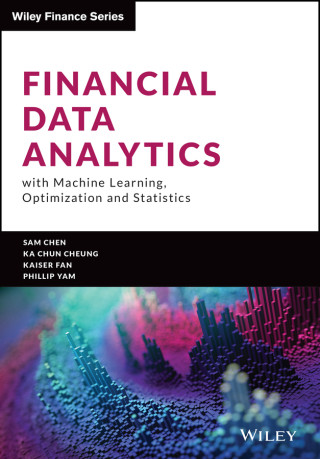
Code: 37111849
Financial Data Analytics with Machine Learning, Op timization and Statistics
by Yongzhao Chen, Ka Chun Cheung, Phillip Yam
An essential introduction to data analytics and Machine Learning techniques in the business sector In Financial Data Analytics with Machine Learning, Optimization and Statistics, a team consisting of a distinguished applied mathem ... more


- Language:
 English
 - Binding: Hardback
- Number of pages: 512
Publisher: John Wiley & Sons Inc, 2023
- More about this

67.07 €
RRP: 69.85 €
You save 2.79 €

Low in stock at our supplier
Shipping in 11 - 15 days
Potřebujete více kusů?Máte-li zájem o více kusů, prověřte, prosím, nejprve dostupnost titulu na naši zákaznické podpoře.
Add to wishlist
You might also like
-

The Flavor Bible : The Essential Guide to Culinary Creativity, Based on the Wisdom of America's Most Imaginative Chefs
32.57 € -23 % -

The Risk
7.86 € -48 % -

Nocticadia
11.69 € -13 % -

Tomie: Complete Deluxe Edition
25.91 € -22 % -

Wind and Truth
27.12 € -27 % -

Chainsaw Man, Vol. 2
9.67 € -25 % -

Ballad of Sword and Wine: Qiang Jin Jiu (Novel) Vol. 3
14.41 € -29 % -

Blood of Dragons
10.98 € -30 % -

Three Hundred Years of Longing: Bu Jian Shang Xian San Bai Nian 1
14.41 € -29 % -

Jade War
10.98 € -30 % -

Legend Of Korra: Ruins Of The Empire Omnibus
18.25 € -24 % -

Outer Banks: Lights Out
9.98 € -24 % -

(20).own it! level 2 workbook +ebook
11.49 € -12 % -

Classroom of the Elite: Year 2 (Light Novel) Vol. 10
15.93 € -25 % -

The Encyclopedia of Ugly Fashion
20.26 € -29 % -

Old Style Lenormand
11.99 € -28 % -

The Rising of the Shield Hero, Volume 1
9.87 € -25 % -

Radical Acceptance
15.93 € -29 % -

Stylish Life: Skiing
33.38 € -20 % -

Calculus
35.29 € -25 % -

General Relativity for the Gifted Amateur
56.37 € -

Then Came You
8.26 € -26 % -

The Little Prince
6.14 € -4 % -

Classroom of the Elite (Light Novel) Vol. 7.5
10.38 € -30 % -

Girls' Last Tour, Vol. 4
15.32 € -12 % -

KOREA
19.56 € -18 % -

Perfume
11.99 € -25 % -

Dr. STONE, Vol. 8
7.86 € -25 % -

WKW: The Cinema of Wong Kar Wai
45.68 € -24 % -

The Selection 1-5 Box Set
44.37 € -29 % -

Indestructibles: Baby, See the Colors!
5.13 € -24 % -

The Road to Unfreedom
12.19 € -30 % -

The Culture Code
13.71 € -16 % -

Arabs
22.18 € -17 % -

Under Saturn's Shadow
17.04 € -24 % -

Knitting Fresh Brioche
18.15 € -25 % -

Financial Controller
25.91 € -17 % -

Four Chapters on Freedom
31.66 € -

Wives and Daughters
5.44 € -15 % -

Advanced Mathematical Techniques: for Scientists and Engineers, second edition
35.29 € -7 % -

Origami Paper 500 sheets Rainbow Colors 6" (15 cm)
12.30 € -22 % -

Crystals and Numerology
12.70 € -25 % -

HTML & CSS: Design and Build Websites
20.36 € -31 % -

Financial Planning & Analysis and Performance Management
50.52 € -24 % -

Beaded Flowers, Bouquets, & Garlands
9.67 € -25 % -

Practical Ayurveda
16.33 € -27 % -

Roman Soldier Vs Dacian Warrior
17.14 € -24 % -

First Love
6.34 € -7 % -

Mom, I Want to Hear Your Story
19.05 € -24 % -

Mastering Microsoft Power BI - Second Edition
46.19 € -2 % -

David Busch's Sony Alpha A6700/Ilce-6700 Guide to Digital Photography
35.70 € -20 % -

Thirty Years War
26.82 € -7 % -

Emotional Intelligence Habits
26.22 € -25 % -

Krav Maga Combatives
19.56 € -24 % -

Grammar 1 Workbook 1
4.33 € -14 % -

A Mind at Home with Itself: How Asking Four Questions Can Free Your Mind, Open Your Heart, and Turn Your World Around
14.62 € -28 % -
Python for Algorithmic Trading
55.97 € -25 % -

Tattoo Machine Builder: The Bulldog Frame
14.72 € -31 % -

Common Sense, The Rights Of Man And Other Essential Writings
7.15 € -25 % -
Business Data Science: Combining Machine Learning and Economics to Optimize, Automate, and Accelerate Business Decisions
31.56 € -24 % -

Eastern Heroes Bruce Lee Way of the dragon bumper issue
32.77 € -1 % -

The Sadhana of Mahamudra
21.88 € -25 % -

Chief Data Officer's Playbook
37.81 € -
Artificial Intelligence in Finance
62.83 € -25 % -

EU Administrative Law
121.03 € -

Abductive Reasoning
34.49 € -4 % -

Official Cambridge Guide to IELTS Student's Book with Answers with DVD-ROM
75.24 € -

Christmas Carol
9.67 € -25 % -

Holy Bible
21.68 € -30 % -

Forbes Greatest Business Stories of All Time Inspiring Tales of Entrepreneurs Who Changed the Way We Live & Do Business (Paper)
20.26 € -24 % -

Peppa Pig: On a Boat - Ladybird Readers Level 1
6.14 € -30 % -

Microsoft Excel Data Analysis and Business Modeling (Office 2021 and Microsoft 365)
42.25 € -24 % -

Wisdom of Mike Mentzer
25 € -25 % -

Jolly Stories
27.73 € -20 % -

Urban Planning for Dummies
19.86 € -25 % -

Topsy and Tim: Have Their Eyes Tested
6.55 € -25 % -
Stochastic Calculus for Finance II
60.41 € -9 % -

Four to Score
9.27 € -25 % -

The National Gallery. Paintings, People, Portraits
155.02 € -14 % -
Data Strategy
34.38 € -

Civilizing Process 2e
42.56 € -5 % -

Electronic Devices and Circuit Theory
129.20 € -
Machine Learning and Data Science Blueprints for Finance
55.97 € -25 % -

Excel Sales Forecasting For Dummies, 2e
22.99 € -25 % -
Excel Data Analysis For Dummies, 5th Edition
29.85 € -25 % -
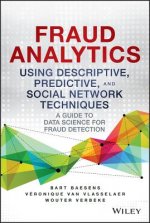
Fraud Analytics Using Descriptive, Predictive, and Social Network Techniques - A Guide to Data Science for Fraud Detection
36.71 € -25 % -

Controlling Concept, The: Cornerstone Of Performance Management
98.43 € -
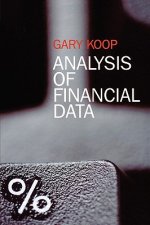
Analysis of Financial Data
65.75 € -
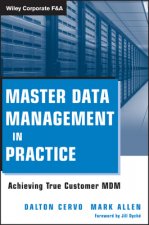
Master Data Management in Practice
52.54 € -25 % -
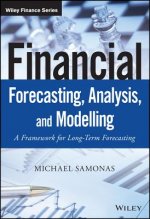
Financial Forecasting, Analysis, and Modelling
77.66 € -10 % -

Coping With Institutional Order Flow
167.22 €
Give this book as a present today
- Order book and choose Gift Order.
- We will send you book gift voucher at once. You can give it out to anyone.
- Book will be send to donee, nothing more to care about.
More about Financial Data Analytics with Machine Learning, Op timization and Statistics
You get 163 loyalty points
 Book synopsis
An essential introduction to data analytics and Machine Learning techniques in the business sector
In Financial Data Analytics with Machine Learning, Optimization and Statistics, a team consisting of a distinguished applied mathematician and statistician, experienced actuarial professionals and working data analysts delivers an expertly balanced combination of traditional financial statistics, effective machine learning tools, and mathematics. The book focuses on contemporary techniques used for data analytics in the financial sector and the insurance industry with an emphasis on mathematical understanding and statistical principles and connects them with common and practical financial problems. Each chapter is equipped with derivations and proofs--especially of key results--and includes several realistic examples which stem from common financial contexts. The computer algorithms in the book are implemented using Python and R, two of the most widely used programming languages for applied science and in academia and industry, so that readers can implement the relevant models and use the programs themselves.
The book begins with a brief introduction to basic sampling theory and the fundamentals of simulation techniques, followed by a comparison between R and Python. It then discusses statistical diagnosis for financial security data and introduces some common tools in financial forensics such as Benford's Law, Zipf's Law, and anomaly detection. The statistical estimation and Expectation-Maximization (EM) & Majorization-Minimization (MM) algorithms are also covered. The book next focuses on univariate and multivariate dynamic volatility and correlation forecasting, and emphasis is placed on the celebrated Kelly's formula, followed by a brief introduction to quantitative risk management and dependence modelling for extremal events. A practical topic on numerical finance for traditional option pricing and Greek computations immediately follows as well as other important topics in financial data-driven aspects, such as Principal Component Analysis (PCA) and recommender systems with their applications, as well as advanced regression learners such as kernel regression and logistic regression, with discussions on model assessment methods such as simple Receiver Operating Characteristic (ROC) curves and Area Under Curve (AUC) for typical classification problems.
The book then moves on to other commonly used machine learning tools like linear classifiers such as perceptrons and their generalization, the multilayered counterpart (MLP), Support Vector Machines (SVM), as well as Classification and Regression Trees (CART) and Random Forests. Subsequent chapters focus on linear Bayesian learning, including well-received credibility theory in actuarial science and functional kernel regression, and non-linear Bayesian learning, such as the Naïve Bayes classifier and the Comonotone-Independence Bayesian Classifier (CIBer) recently independently developed by the authors and used successfully in InsurTech.
After an in-depth discussion on cluster analyses such as K-means clustering and its inversion, the K-nearest neighbor (KNN) method, the book concludes by introducing some useful deep neural networks for FinTech, like the potential use of the Long-Short Term Memory model (LSTM) for stock price prediction.
This book can help readers become well-equipped with the following skills:
* To evaluate financial and insurance data quality, and use the distilled knowledge obtained from the data after applying data analytic tools to make timely financial decisions
* To apply effective data dimension reduction tools to enhance supervised learning
* To describe and select suitable data analytic tools as introduced above for a given dataset depending upon classification or regression prediction purpose
The book covers the competencies tested by several professional examinatio
Book details
Book category Books in English Mathematics & science Mathematics
67.07 €
- Full title: Financial Data Analytics with Machine Learning, Op timization and Statistics
- Author: Yongzhao Chen, Ka Chun Cheung, Phillip Yam
- Language: English
- Binding: Hardback
- Number of pages: 512
- EAN: 9781119863373
- ISBN: 1119863376
- ID: 37111849
- Publisher: John Wiley & Sons Inc
- Weight: 1055 g
- Dimensions: 244 × 170 mm
- Date of publishing: 12. October 2023
Trending among others
-

Cambridge International AS & A Level Mathematics Pure Mathematics 1 Student's Book
30.65 € -9 % -

Introduction to Tensor Calculus, Relativity and Cosmology
12.70 € -24 % -

Schaum's Outline of Geometry, Sixth Edition
17.54 € -24 % -
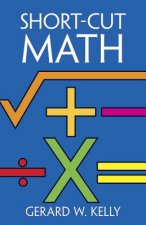
Short-cut Mathematics
7.15 € -24 % -

Introducing Mathematics
9.67 € -25 % -
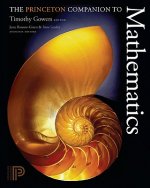
Princeton Companion to Mathematics
101.66 € -15 % -

Basic Mathematics
50.52 € -9 % -

Trachtenberg Speed System of Basic Mathematics
12.80 € -25 % -

Calculus For The Practical Man
33.78 € -10 % -

Mathematics Applications and Interpretation for the IB Diploma Standard Level
114.07 € -

Mathematics for the Non-mathematician
25 € -25 % -

Colossal Book of Mathematics
35.39 € -24 % -

Love and Math
15.02 € -23 % -

Solving Mathematical Problems
44.37 € -

Stanford Mathematics Problem Book
8.16 € -25 % -

Riemann Zeta-Function: Theory A
21.58 € -25 % -

Proof and the Art of Mathematics
39.63 € -

Challenging Mathematical Problems with Elementary Solutions, Vol. II
11.29 € -24 % -

Challenging Mathematical Problems with Elementary Solutions, Vol. I
11.29 € -24 % -
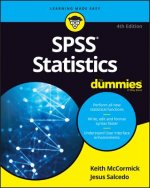
SPSS Statistics For Dummies, 4th Edition
28.53 € -24 % -

Mathematics for the IB Diploma Standard Level with CD-ROM
79.27 € -

Change Is the Only Constant
21.68 € -24 % -

Basic Set Theory
18.15 € -25 % -

Prime Number Conspiracy
18.45 € -26 % -

Fractals
8.56 € -15 % -

Matrices and Transformations
7.86 € -24 % -

Mathematical Universe - An Alphabetical Journey Through the Great Proofs, Problems & Personalities (Paper)
18.85 € -25 % -

Topological Vector Spaces and Distributions
21.58 € -25 % -

Werke
88.35 € -

Berkeley Problems in Mathematics
65.35 € -9 % -

Exploring the Beauty of Fascinating Numbers
38.72 € -25 % -
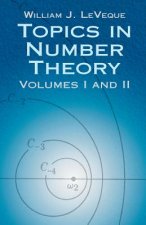
Topics in Number Theory Vol 1 and 2
18.15 € -25 % -

Inside Mathematics: Algebra to Calculus
14.72 € -25 % -
No Bullshit Guide to Math and Physics
23.69 € -25 % -

First Step To Mathematical Olympiad Problems, A
36.10 € -

Math Art
19.56 € -25 % -

General Topology
18.15 € -25 % -

Sciencia
18.65 € -27 % -
Introduction to Combinatorial Analysis
13.30 € -25 % -

Elementary Mathmatics from an Advan
11.29 € -24 % -

Mathematics Analysis and Approaches for the IB Diploma Higher Level
106.40 € -

Pearson Edexcel International A Level Mathematics Pure 2 Mathematics Student Book
39.43 € -

Microsoft Power BI For Dummies
26.42 € -25 % -

Mathematics
45.68 € -24 % -

Principia
19.86 € -18 % -
Mathematical Logic
18.15 € -25 % -

Euclidean Geometry and Transformations
14.72 € -25 % -

Second Step To Mathematical Olympiad Problems, A
39.02 € -

Method of Coordinates
7.15 € -25 %
Collection points Bratislava a 13253 dalších
Copyright ©2008-26 najlacnejsie-knihy.sk All rights reservedPrivacyCookies

 26510 collection points
 Delivery 2.99 €
 02/210 210 99 (8-15.30h)