Code: 04532379
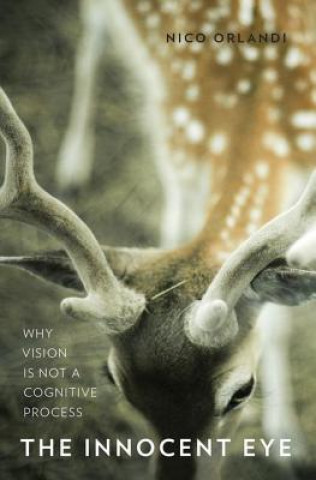
Innocent Eye
by Nico Orlandi
Why does the world look to us as it does? Generally speaking, this question has received two types of answers in the cognitive sciences in the past fifty or so years. According to the first, the world looks to us the way it does b ... more


- Language:
 English
 - Binding: Hardback
- Number of pages: 272
Publisher: Oxford University Press Inc, 2014
- More about this


You might also like
-
22 Bahnen
12.63 € -10 % -

Gangsta-Oma
17.79 € -5 % -

Little Weirds
12.23 € -30 % -

ABC Workbook Ages 3-5
5.15 € -14 % -
Life-Changing Magic of Not Giving A F*Ck
18.91 € -25 % -

Your SIBO Solution
17.49 € -2 % -

Fringe Science
14.76 € -25 % -

Corporate and Investment Banking
78.99 € -

Love, theoretically
15.26 € -16 % -

Best of John Williams
17.19 € -9 % -

Klej Happy Color wikol premium butelka 100g
4.44 € -

Rhodesian Ridgeback
22.35 € -11 % -

Child Sex Scandal and Modern Irish Literature
30.54 € -9 % -

Ship Design
262.80 € -

Ksiuty z Melpomena
5.55 € -12 % -

Methods of Ethics
55.53 € -10 % -

Politische Theologie Carl Schmitts
40.15 € -11 % -

Paris Letter
12.74 € -25 % -

Great NASCAR Champions
27.50 € -9 % -
Josef Koudelka
18.30 € -

Savage of the Night
14.05 € -7 % -

Die große Hörspiel-Edition
35.39 € -12 % -

Eine Analyse des Gesundheitsstatus von Kindern und Jugendlichen mittels epidemiologischer Studien
42.78 € -11 % -

Malblock mit Glitzersteinchen
6.77 € -

Conscript
20.02 € -

Implementation of Legally Binding Measures to Strengthen the Biological and Toxin Weapons Convention
216.47 € -

111 Schätze der Natur im Schwarzwald, die man gesehen haben muss
14.46 € -15 % -

Umsetzung von TPM in einem Maschinenbauunternehmen
59.98 € -3 % -

Importance of Assent
102.97 € -7 % -

Chameleon's Clever Trick Akwapim Twi version
5.45 € -

"Getting by"
47.03 € -

Vertikale als Bildstruktur
16.18 € -10 % -

Consuming Behaviours
216.06 € -

Dialoghi segreti di paesi. Visite e canti nell'Appennino tosco-emiliano 1974-2020
45.81 € -9 % -

No Milk Today
28.52 € -

Delicious History of the Holiday
81.62 € -

Managing Identity
109.44 € -

Das Princip Der Infinitesmal-Methode: Und Seine Geschichte (1883)
23.76 € -2 % -

Houston Chef's Table
18.10 € -9 % -

Nice Girls Finish Fat
14.66 € -18 % -

Maine de Biran, 1766-1824. Essai de biographie historique et psychologique
42.37 € -

Non-Stop, 1 DVD
13.14 € -
Words That Inspired the Dreams
13.95 € -17 % -
Miners, Unions and Politics, 1910-1947
216.06 € -

Art for an Undivided Earth
160.12 € -

Reeya Rai and the Fiery Cross of Goa
19.31 € -25 % -

Worte meines Herzens
17.89 € -4 % -

Bonner Rechtswissenschaftliche Abhandlungen. Neue Folge.
113.29 € -

Oberammergau and its Passion Play 1910
25.58 € -14 %
Give this book as a present today
- Order book and choose Gift Order.
- We will send you book gift voucher at once. You can give it out to anyone.
- Book will be send to donee, nothing more to care about.
More about Innocent Eye
You get 177 loyalty points
 Book synopsis
Why does the world look to us as it does? Generally speaking, this question has received two types of answers in the cognitive sciences in the past fifty or so years. According to the first, the world looks to us the way it does because we construct it to look as it does. According to the second, the world looks as it does primarily because of how the world is. In The Innocent Eye, Nico Orlandi defends a position that aligns with this second, world-centered tradition, but that also respects some of the insights of constructivism. Orlandi develops an embedded understanding of visual processing according to which, while visual percepts are representational states, the states and structures that precede the production of percepts are not representations. If we study the environmental contingencies in which vision occurs, and we properly distinguish functional states and features of the visual apparatus from representational states and features, we obtain an empirically more plausible, world-centered account. Orlandi shows that this account accords well with models of vision in perceptual psychology - such as Natural Scene Statistics and Bayesian approaches to perception - and outlines some of the ways in which it differs from recent 'enactive' approaches to vision. The main difference is that, although the embedded account recognizes the importance of movement for perception, it does not appeal to action to uncover the richness of visual stimulation. The upshot is that constructive models of vision ascribe mental representations too liberally, ultimately misunderstanding the notion. Orlandi offers a proposal for what mental representations are that, following insights from Brentano, James and a number of contemporary cognitive scientists, appeals to the notions of de-coupleability and absence to distinguish representations from mere tracking states.
Book details
Book category Books in English Reference, information & interdisciplinary subjects Interdisciplinary studies Cognitive science
73.23 €
- Full title: Innocent Eye
- Subtitle: Why Vision Is Not a Cognitive Process
- Author: Nico Orlandi
- Language: English
- Binding: Hardback
- Number of pages: 272
- EAN: 9780199375035
- ISBN: 0199375038
- ID: 04532379
- Publisher: Oxford University Press Inc
- Weight: 490 g
- Dimensions: 243 × 157 × 23 mm
- Date of publishing: 21. August 2014
Trending among others
-

Embodied Mind
31.45 € -9 % -
Predictive Mind
56.74 € -
Distracted Mind
21.54 € -19 % -

Cambridge Handbook of Artificial Intelligence
38.33 € -

Mindware
115.81 € -
Mind-Body Problem
14.05 € -25 % -
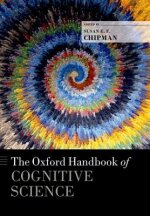
Oxford Handbook of Cognitive Science
182.88 € -
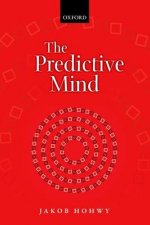
Predictive Mind
179.44 € -
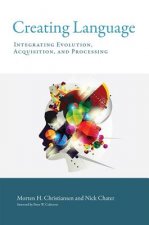
Creating Language
47.64 € -

Body Image and the Asian Experience
165.48 € -
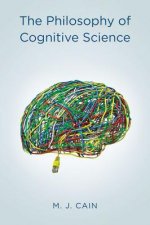
Philosophy of Cognitive Science
27.61 € -4 % -
Anthropology of the Brain
28.82 € -

Companion to Cognitive Anthropology
48.85 € -10 % -
Cognitive Sciences
133.92 € -10 % -

Mark of the Mental
47.33 € -4 % -

Sensorimotor Life
92.35 € -

Collective Intelligence
128.26 € -

Enaction
41.77 € -
Philosophy of Cognitive Science
65.54 € -4 % -
Cambridge Handbook of Artificial Intelligence
117.74 € -
Big Data in Cognitive Science
81.12 € -
Brain Sell
18.60 € -9 % -

Learning Inside Out: A Guide To What Goes On Inside The Brain As You Learn
65.74 € -

Big Data in Cognitive Science
230.02 € -

From Symptom to Synapse
83.75 € -

Management and Operations in Human Services Organizations
180.35 € -
Affective Performance and Cognitive Science
55.63 € -

States and Processes for Mental Health
165.48 € -
Scientific Study of Personal Wisdom
154.36 € -7 % -
Perceptual and Emotional Embodiment
80.81 € -
Visual Attention and Consciousness
95.08 € -

Foundations of Art Therapy
152.43 € -4 % -

Neuropsychopharmacology
186.12 € -9 % -

Social Turn in Moral Psychology
35.90 € -9 % -
Visual Attention and Consciousness
223.04 € -

Cognitive Science and Artificial Intelligence
60.68 € -
Neurotic Turn
14.46 € -9 % -

Mathematical Principles of Human Conceptual Behavior
224.66 € -
Science of Dream Interpretation
109.95 € -
Calculus for Cognitive Scientists
154.36 € -7 % -

Back to Basics: Ethics for Analysts
80.21 € -

Computational Models Of Cognitive Processes - Proceedings Of The 13th Neural Computation And Psychology Workshop
115.01 € -
Mind Embodied
98.82 € -9 % -

Designing and Managing Complex Systems
165.48 € -

Clinical Systems and Programming in Human Services Organizations
165.48 € -

Infinite Awareness
35.50 € -3 % -

Adverse Childhood Experiences and Their Life-Long Impact
153.04 € -10 % -

Human Sexuality
109.95 € -

Pragmatic Guide to Low Intensity Psychological Therapy
142.01 € -10 %
Collection points Bratislava a 12868 dalších
Copyright ©2008-26 najlacnejsie-knihy.sk All rights reservedPrivacyCookies

 25740 collection points
 Delivery 2.99 €
 02/210 210 99 (8-15.30h)