Code: 02802543
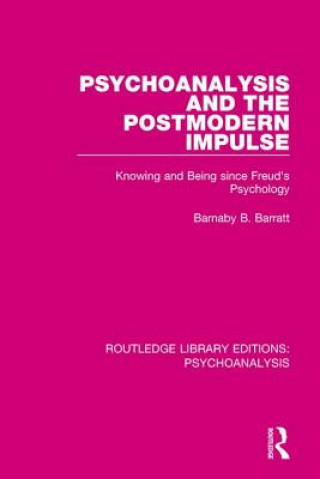
Psychoanalysis and the Postmodern Impulse
by Barnaby B. Barratt
According to the author, psychoanalytic theory and practice – which discloses ‘the interminable falsity of the human subject’s belief in the mastery of its own mental life’ – is in part responsible for the coming of the postmodern ... more


- Language:
 English
 - Binding: Hardback
- Number of pages: 264
Publisher: Taylor & Francis Ltd, 2015
- More about this


You might also like
-

Królestwo ciała i ognia. Krew i popiół. Tom 2. Jennifer L. Armentrout
13.84 € -14 % -

Carmilla
13.94 € -

LAS SEÑORITAS DEL CIRCO SECRETO
22.83 € -9 % -

University Governance in Human Capital Formation
35.67 € -14 % -

Astronomy and Astrology in the Medieval Islamic World
263.39 € -

Schizophrenia: A Review of the Syndrome V2
39.11 € -1 % -

Marie Stuart: Tragedie
13.84 € -2 % -

Robert Southey: Poetical Works 1793-1810 Vol 1
263.39 € -

Radicologie de la Langue Francaise, Ou Unique Methode d'Avoir En Peu de Temps l'Intelligence
15.66 € -2 % -

Geschaeftsfuehrung Und Vertretung Im Gesellschaftsrecht Deutschlands, Frankreichs Und Englands
93.69 € -4 % -

Conserviren des Holzes
31.22 € -11 % -

Német ugródeszka
16.97 € -10 % -

heiligen Wassern
32.03 € -11 % -

Modelling and Simulation of Power Electronic Converter Dominated Power Systems in PowerFactory
113.19 € -7 % -

Memoria operativa, inferencia y gramatica en la comprension lectora
52.55 € -14 % -

Ofimática
30.01 € -

Der Mäuserich
17.48 € -

Darwinland
18.28 € -

Pharr
19.60 € -21 % -

Foundation Stones to Happiness and Success
19.19 € -

Stressbewältigung im Jugendalter
34.96 € -6 %
Give this book as a present today
- Order book and choose Gift Order.
- We will send you book gift voucher at once. You can give it out to anyone.
- Book will be send to donee, nothing more to care about.
More about Psychoanalysis and the Postmodern Impulse
You get 565 loyalty points
 Book synopsis
According to the author, psychoanalytic theory and practice – which discloses ‘the interminable falsity of the human subject’s belief in the mastery of its own mental life’ – is in part responsible for the coming of the postmodern era. In this title, originally published in 1993, Barratt examines the role of psychoanalysis in what he sees as the crisis of modernism, shows why the modernist position – what he calls the ‘modern episteme’ – is failing, and proposes that psychoanalysis should redefine itself as a postmodern method.
In Barratt’s innovative account of psychoanalysis, which focuses on the significance of the free-associative process, Freud’s discovery of the repressed unconscious leads to a claim that is basic to postmodern ideas: ‘that all thinking and speaking, the production and reproduction of psychic reality, is inherently dynamic, polysemous, and contradictorious .’ He argues that subsequent attempts to ‘normalize and systematize’ psychoanalysis are reactionary and antipsychoanalytic efforts to salvage the modern episteme that psychoanalysis itself calls into question.
Book details
Book category Books in English Society & social sciences Psychology Psychological theory & schools of thought
233.37 €
- Full title: Psychoanalysis and the Postmodern Impulse
- Subtitle: Knowing and Being since Freud's Psychology
- Author: Barnaby B. Barratt
- Language: English
- Binding: Hardback
- Number of pages: 264
- EAN: 9781138951495
- ISBN: 9781138951495
- ID: 02802543
- Publisher: Taylor & Francis Ltd
- Weight: 680 g
- Dimensions: 234 × 156 mm
- Date of publishing: 03. November 2015
Trending among others
-
Make It Stick
35.37 € -

The Red Book
198.20 € -27 % -
The Red Book – A Reader`s Edition
44.16 € -6 % -

Memories, Dreams, Reflections
15.76 € -15 % -
Synchronicity – An Acausal Connecting Principle
9.39 € -29 % -
The Undiscovered Self
9.90 € -25 % -

Ego and Archetype
18.79 € -25 % -
Civilization and Its Discontents
11.82 € -17 % -

Emotional Intelligence
10.20 € -8 % -

The Empathy Game
19.19 € -23 % -

Choice Factory
22.02 € -

Animus
30.11 € -2 % -

Problem of the Puer Aeternus
20.10 € -25 % -
Beyond the Pleasure Principle
13.94 € -24 % -

Touched With Fire
12.12 € -29 % -
Archetypes and the Collective Unconscious
57.20 € -5 % -
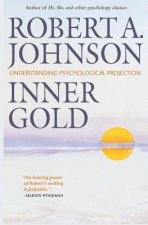
Inner Gold
19.30 € -2 % -
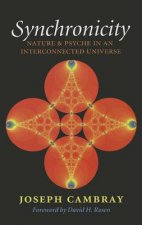
Synchronicity: Nature and Psyche in an Interconnected Universe
14.75 € -25 % -
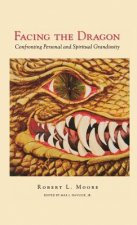
Facing the Dragon
39.11 € -1 % -
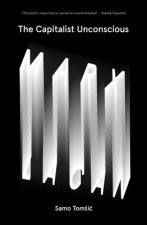
The Capitalist Unconscious
27.38 € -18 % -

Behave
15.76 € -9 % -

Moonwalking with Einstein
10.20 € -33 % -

Ecrits
28.59 € -24 % -

How To Read Lacan
11.82 € -24 % -
The Interpretation of Dreams
6.16 € -30 % -

Neurosis and Human Growth
17.78 € -20 % -

Psychoanalytic Diagnosis
51.03 € -

A General Introduction to Psychoanalysis
6.16 € -30 % -
Inhibitions, Symptoms, and Anxiety
12.42 € -21 % -

Power of Gentleness
20.61 € -11 % -
Dreams
14.04 € -21 % -

The Myth of Mental Illness
14.04 € -25 % -

Man's Search for Meaning, Gift Edition
20 € -28 % -

Seminar of Jacques Lacan
17.37 € -22 % -

Jung on Active Imagination
18.18 € -25 % -

T A Today
21.52 € -4 % -

Art of C. G. Jung
75.39 € -14 % -

Operationalized Psychodynamic Diagnosis OPD-3
75.29 € -9 % -
Discovery Of The Unconscious
72.06 € -

Civilization and Its Discontents
15.96 € -25 % -

Psychology of Interpersonal Relations
19.30 € -

Strategy of Desire
15.35 € -
Counseling And Psychotherapy
45.37 € -10 % -

The Sublime Object of Ideology
17.78 € -17 % -
Projection and Re-collection in Jungian Psychology
23.03 € -25 % -

Understanding Human Nature
13.53 € -

Two Essays on Analytical Psychology
14.04 € -

Sybil
13.94 € -24 % -

Why We Buy
14.85 € -29 %
Collection points Bratislava a 13312 dalších
Copyright ©2008-26 najlacnejsie-knihy.sk All rights reservedPrivacyCookies

 26628 collection points
 Delivery 2.99 €
 02/210 210 99 (8-15.30h)