Code: 32936470
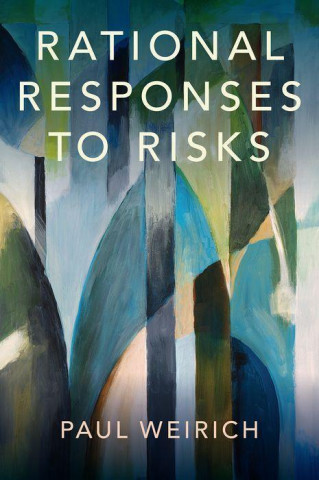
Rational Responses to Risks
by Paul Weirich
Good decisions account for risks. For example, the risk of an accident while driving in the rain makes a reasonable driver decide to slow down. While risk is a large topic in theoretical disciplines such as economics and psycholog ... more


- Language:
 English
 - Binding: Hardback
- Number of pages: 282
Publisher: Oxford University Press Inc, 2020
- More about this


You might also like
-

Threshing Day (Limited Deluxe Edition)
18.66 € -30 % -

Threshing Day (Wing and Claw Collection)
18.56 € -25 % -

Murdoku
14.94 € -21 % -

The Mirror of Infinite Endings
14.64 € -25 % -

The Long-Lived King: An Original The Owl House Graphic Novel
19.66 € -29 % -

The Art of Gravity Falls
37.63 € -28 % -

White Nights
4.51 € -14 % -

Berserk Deluxe Volume 1
38.93 € -27 % -

Court of Thorns and Roses 6
15.65 € -30 % -

21 Days of Fear
16.65 € -27 % -

Lord of Mysteries, Vol. 4: The Faceless, Part I
16.95 € -15 % -

The Mirror of Infinite Endings
19.26 € -37 % -

Jojo's Bizarre Adventure: Part 7--Steel Ball Run, Vol. 9
19.16 € -22 % -

Berserk Deluxe Volume 3
55.39 € -

Berserk Deluxe Volume 2
36.52 € -31 % -

Fourth Wing
23.88 € -27 % -

Witch Hat Atelier: Grimoire Edition 1
34.22 € -32 % -

Trust Fall
11.13 € -26 % -

Iron Flame
24.88 € -22 % -
Protocols
14.74 € -29 % -

Penguin Readers Level 4: The Adventures of Sherlock Holmes (ELT Graded Reader)
10.43 € -6 %
Give this book as a present today
- Order book and choose Gift Order.
- We will send you book gift voucher at once. You can give it out to anyone.
- Book will be send to donee, nothing more to care about.
More about Rational Responses to Risks
You get 264 loyalty points
 Book synopsis
Good decisions account for risks. For example, the risk of an accident while driving in the rain makes a reasonable driver decide to slow down. While risk is a large topic in theoretical disciplines such as economics and psychology, as well as in practical disciplines such as medicine and finance, philosophy has a unique contribution to make in developing a normative theory of risk that states what risk is, and to what extent our responses to it are rational. Weirich here develops a philosophical theory of the rationality of responses to risk. He first distinguishes two types of risk: first, a chance of a bad event, and second, an act's risk in relation to its possible outcomes. He argues that this distinction has normative significance in the sense that one's attitudes towards these types of risks - and how one acts on them - are governed by different general principles of rationality. Consequently, a comprehensive account of risk must not only characterize rational responses to risk but also explain why these responses are rational. Weirich explains how, for a rational ideal agent, the expected utilities of the acts available in a decision problem explain the agent's preferences among the acts. As a result, maximizing expected utility is just following preferences among the acts. His view takes an act's expected utility, not just as a feature of a representation of preferences among acts, but also as a factor in the explanation of preferences among acts. The book's precise formulation of general standards of rationality for attitudes and for acts, and its rigorous argumentation for these standards, make it philosophical; but while mainly of interest to philosophers, its broader arguments will contribute to the conceptual foundations of studies of risk in all disciplines that study it.
Book details
Book category Books in English Humanities Philosophy Philosophy: epistemology & theory of knowledge
108.19 €
- Full title: Rational Responses to Risks
- Author: Paul Weirich
- Language: English
- Binding: Hardback
- Number of pages: 282
- EAN: 9780190089412
- ISBN: 0190089415
- ID: 32936470
- Publisher: Oxford University Press Inc
- Weight: 538 g
- Dimensions: 243 × 163 × 24 mm
- Date of publishing: 04. September 2020
Collection points Bratislava a 13329 dalších
Copyright ©2008-26 najlacnejsie-knihy.sk All rights reservedPrivacyCookies

 26662 collection points
 Delivery 2.99 €
 02/210 210 99 (8-15.30h)