Code: 06811851
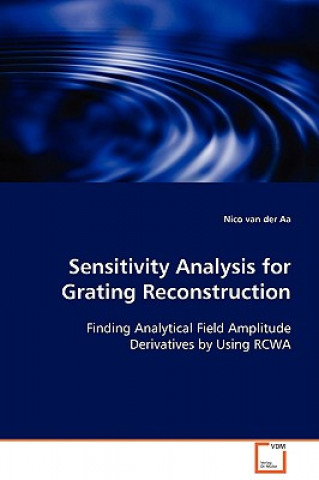
Sensitivity Analysis for Grating Reconstruction
by Nico van der Aa
Periodic structures, called diffraction gratings, play an important role in optical lithography. When the incident field and the shape of a grating is known, the diffracted field can be computed by using the rigorous coupled-wave ... more


- Language:
 English
 - Binding: Paperback
- Number of pages: 148
Publisher: VDM Verlag, 2008
- More about this


You might also like
-
Creative Form Drawing: Workbook 1
27.03 € -9 % -

Willful Subjects
29.15 € -10 % -

Selected Stories of Patricia Highsmith
16.14 € -24 % -

Scary Smart
18.56 € -16 % -

Gto: The Early Years Vol.12
12.50 € -9 % -

The General Zapped an Angel: Stories
16.14 € -17 % -

Butterly
10.28 € -2 % -

Modern Control Theory
325.82 € -

An Unavoidable Evil: Siege Warfare in the Age of Napoleon
26.33 € -25 % -

Frank Gehry
55.89 € -

Siege Warfare
58.82 € -

ESCANDALO LEMOINE B.AT.3
13.21 € -
Matrix Perturbation Theory
172.24 € -

Almost Human
20.68 € -17 % -

Los mejores chistes cortos
28.24 € -

Hearing Children Read
38.03 € -

Top Gun
16.54 € -

Le livre noir de la psychanalyse
15.83 € -

Bass Play-Along
25.22 € -

Encyclopedia of Criminology and Deviant Behaviour
860.73 € -

When the Victim Fights Back
9.98 € -7 % -
![MP Loose Leaf Computer Accounting with QuickBooks Online [With Access Code]](https://media.libris.to/jacket/23385326t.jpg "MP Loose Leaf Computer Accounting with QuickBooks Online [With Access Code]")
MP Loose Leaf Computer Accounting with QuickBooks Online [With Access Code]
156.50 € -

Great British Cars - Motoring In The Golden Age
7.66 € -66 % -

Price of Ignorance
9.27 € -24 % -
Four Elements of Success
16.14 € -17 % -

The Fort LP: A Novel of the Revolutionary War
20.68 € -17 % -

Conflicts in Interpretation
45.50 € -5 % -

Epic of The Cid
20.37 € -10 % -

Climate Change in the Himalayas
87.38 € -7 % -

Thy Son Liveth; Messages from a Soldier to His Mother
37.33 € -9 % -

30e anniversaire des lois de bioéthique du 29 juillet 1994
29.76 € -

New York Times Twentieth Century in Review
160.84 € -

Warum fand die erste Bekenntnissynode der Bekennenden Kirche in Barmen statt?
14.42 € -10 % -

Antimicrobial activity of citrus fruit juices
49.84 € -4 % -

Case Study: North Korea
27.44 € -

Byways Around San Francisco Bay
11.70 € -14 % -

Lycanthropes & Leeches
19.57 € -24 % -

Social Media and Living Well
126.73 € -

Suenos Sencillos: Memorias Musicales = Simple Dreams
14.82 € -9 % -
Computer Aided Systems Theory -- EUROCAST 2013
51.55 € -7 % -

Treaty Series
39.65 € -

Life & Love & the Like
12.40 € -

TALKS IN MY STUDIO: THE ART OF SEEING, F
29.15 € -1 % -

Salam - Shalom
9.68 € -9 % -

Selected Letters
11.49 € -10 % -

Solving America's Sexual Crises
19.16 € -17 % -

Politics of the Real World
34.10 € -

MEDICAL & SURGICAL HIST OF THE
41.66 € -2 % -

Biblioteczka wiedzy. Atlas niebezpiecznych zwierząt
4.93 € -22 % -

Alexandre Herculano
31.17 € -14 % -

Hula - a Novel
15.33 € -18 % -

Surviving the Rough Spots
15.53 € -

Ideal EFL Textbook for Critical Thinking
59.83 € -3 % -

Short-Term Occupations in Paleolithic Archaeology
133.49 € -7 % -

Soils: Basic Concepts and Future Challenges
64.07 € -

Bunch of Roses
11.29 € -1 %
Give this book as a present today
- Order book and choose Gift Order.
- We will send you book gift voucher at once. You can give it out to anyone.
- Book will be send to donee, nothing more to care about.
More about Sensitivity Analysis for Grating Reconstruction
You get 145 loyalty points
 Book synopsis
Periodic structures, called diffraction gratings, play an important role in optical lithography. When the incident field and the shape of a grating is known, the diffracted field can be computed by using the rigorous coupled-wave analysis (RCWA) or the C method. These so-called forward models solve Maxwell's equations for time-harmonic fields by transforming them into algebraic eigensystems.§§The reconstruction of a grating shape starts with an initial guess of its shape. The diffracted field is computed with the forward model and compared to actual measurements. The difference between them determines how the shape parameters should be adjusted. This will be repeated iteratively until an optimal solution has been found.§§The focus of this work lies in finding the first-order derivatives of the diffracted field with respect to the physical parameters. This can be done by finite differences, but straightforward differentiation of the relations within RCWA gives a more accurate and faster way to find these derivatives. Periodic structures, called diffraction gratings, §play an important role in optical lithography. When §the incident field and the shape of a grating is §known, the diffracted field can be computed by using §the rigorous coupled-wave analysis (RCWA) or the C §method. These so-called forward models solve §Maxwell''s equations for time-harmonic fields by §transforming them into algebraic eigensystems.§The reconstruction of a grating shape starts with an §initial guess of its shape. The diffracted field is §computed with the forward model and compared to §actual measurements. The difference between them §determines how the shape parameters should be §adjusted. This will be repeated iteratively until an §optimal solution has been found.§The focus of this work lies in finding the first-§order derivatives of the diffracted field with §respect to the physical parameters. This can be done §by finite differences, but straightforward §differentiation of the relations within RCWA gives a §more accurate and faster way to find these §derivatives.
Book details
Book category Books in English Mathematics & science Mathematics
59.83 €
- Full title: Sensitivity Analysis for Grating Reconstruction
- Subtitle: Finding Analytical Field Amplitude Derivatives by Using RCWA
- Author: Nico van der Aa
- Language: English
- Binding: Paperback
- Number of pages: 148
- EAN: 9783639019452
- ISBN: 3639019458
- ID: 06811851
- Publisher: VDM Verlag
- Weight: 209 g
- Dimensions: 229 × 152 × 8 mm
- Date of publishing: 03. December 2008
Trending among others
-

Basic Mathematics
50.44 € -9 % -
Challenging Mathematical Problems with Elementary Solutions, Vol. II
11.29 € -24 % -
Challenging Mathematical Problems with Elementary Solutions, Vol. I
11.29 € -24 % -

Basic Set Theory
18.15 € -25 % -

Calculus For The Practical Man
33.79 € -10 % -
No Bullshit Guide to Math and Physics
23.70 € -25 % -
First Step To Mathematical Olympiad Problems, A
36.11 € -

Solving Mathematical Problems
34.30 € -

Mathematics Analysis and Approaches for the IB Diploma Higher Level
108.87 € -

Maths Progress Second Edition Depth Book 2
14.72 € -

Colossal Book of Mathematics
35.41 € -24 % -

Trachtenberg Speed System of Basic Mathematics
12.81 € -25 % -

Pearson Edexcel International A Level Mathematics Pure 2 Mathematics Student Book
39.44 € -

Mathematics for the Non-mathematician
25.02 € -25 % -

Stanford Mathematics Problem Book
8.16 € -25 % -
Introduction to Combinatorial Analysis
13.31 € -25 % -
SPSS Statistics For Dummies, 4th Edition
28.55 € -24 % -
Elementary Mathmatics from an Advan
11.29 € -24 % -
Fashion, Faith, and Fantasy in the New Physics of the Universe
15.43 € -25 % -

Principia
19.87 € -18 % -

Second Step To Mathematical Olympiad Problems, A
39.04 € -
Thinking Mathematically
52.97 € -14 % -
Introduction to Stochastic Processes
18.15 € -25 % -

Mathematics Applications and Interpretation for the IB Diploma Standard Level
114.12 € -

Mathematics Analysis and Approaches for the IB Diploma Standard Level
114.32 € -

Effective Data Storytelling - How to Drive Change with Data, Narrative and Visuals
29.15 € -26 % -

Pearson Edexcel AS and A level Mathematics Pure Mathematics Year 1/AS Textbook + e-book
40.05 € -

Statistics Essentials For Dummies
9.27 € -30 % -

Pearson Edexcel A level Mathematics Pure Mathematics Year 2 Textbook + e-book
42.07 € -

Pearson Edexcel AS and A level Mathematics Statistics and Mechanics Year 1/AS Practice Book
10.89 € -
Pearson Edexcel A level Mathematics Statistics & Mechanics Year 2 Textbook + e-book
21.69 € -
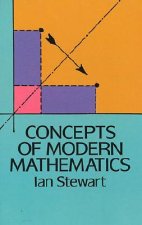
Concepts of Modern Mathematics
12.70 € -24 % -

Topological Vector Spaces and Distributions
21.58 € -25 % -
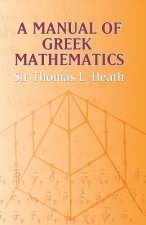
Manual of Greek Mathematics
21.58 € -25 % -
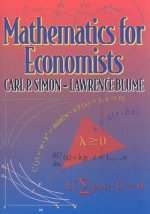
Mathematics for Economists
80.61 € -
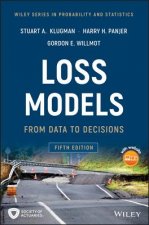
Loss Models - From Data to Decisions, 5th Edition
153.17 € -

Chebyshev and Fourier Spectral Meth
27.03 € -25 % -

180 Days of Math for First Grade
16.84 € -24 % -

Werke
88.38 € -

Understanding Infinity
14.72 € -25 % -

Vorlesungen UEber Geometrie, Von Alfred Clebsch. Bearbeitet Und Herausgegeben Von Dr. Ferdinand Lindemann, Mit Einem Vorworte Von Felix Klein.
39.95 € -1 % -

Control and Nonlinearity
153.07 € -

Mathematicians Don't Work With Numbers
31.98 € -24 % -

Towards Higher Mathematics: A Companion
48.53 € -

Math Art
21.79 € -16 % -

Love and Math
14.92 € -24 % -
Mathematics
45.70 € -24 % -

General Topology
18.15 € -25 % -
Mathematical Logic
18.15 € -25 %
Collection points Bratislava a 12986 dalších
Copyright ©2008-26 najlacnejsie-knihy.sk All rights reservedPrivacyCookies

 25976 collection points
 Delivery 2.99 €
 02/210 210 99 (8-15.30h)