Code: 10029810
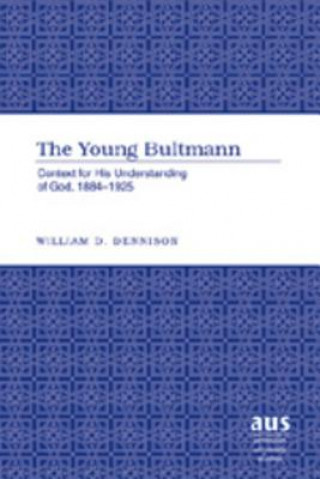
Young Bultmann
by William D. Dennison
During his early life (1884-1925), Rudolf Bultmann passionately attempted to unite scholar and laity through his understanding of God, which developed in the context of his home and its love for the common people of the church; th ... more


- Language:
 English
 - Binding: Hardback
- Number of pages: 245
Publisher: Peter Lang Publishing Inc, 2008
- More about this


You might also like
-

Español en marcha 3 - Nueva edición, m. 1 Buch, m. 1 Beilage
33.84 € -9 % -

InvestiGators: Off the Hook
10.87 € -24 % -

Emil Grunbar und seine Bande
7.31 € -

Michelangelo
7.92 € -25 % -

Lit-Rock: Literary Capital in Popular Music
41.05 € -

New Grappler Baki - Tome 15 - Perfect Edition
16.86 € -
Diving in the Inner Ocean
13.20 € -25 % -

Wprowadzenie do psychologii
26.72 € -

Civil War Stories
6.60 € -24 % -

Rzymskie Pasje
25.40 € -

Filosofía de andar por casa
14.73 € -

Integral Christianity: The Spirit's Call to Evolve
18.29 € -25 % -

Mental Measurements Year Book
207.03 € -

The Deep Yes: The Lost Art of True Receiving
14.12 € -6 % -
LES TROIS LIVRES DE PORISMES D'EUCLIDE
75 € -

Von Masken und Wahrheit 2
7.31 € -8 % -

Mauvais sorts dans le tregor
12.90 € -

Let's Explore Australia
7.31 € -24 % -

Modes of Religiosity
52.74 € -

INSCRUTABLE AMERICANS THE
21.54 € -

Theatre on Terror
25.20 € -25 % -

Spine Of God (Relssue)
14.52 € -
Graphic Unconscious in Early Modern French Writing
125.01 € -

Smart Guide to the Bible
16.96 € -24 % -

Trille dimri
10.15 € -1 % -

Imaginary Biographies
183.25 € -

Champagne Babes
26.82 € -

Church, Nation and Race
106.31 € -4 % -

Bemused
34.65 € -

Fabriken Ohne Menschen
53.35 € -4 % -

Ikc 5 Eighteen Upbuilding Discourses: Eighteen Upbuilding Discourses (H654/Mrc)
53.66 € -
Essentials of Statistics for the Social and Behavioral Sciences
51.72 € -10 % -

Avenir Du Secteur de L Automobile
35.06 € -11 % -

Der Denver-Clan. Season.04, 7 DVDs
23.16 € -

New Historicism & Cultural Materialism
37.19 € -
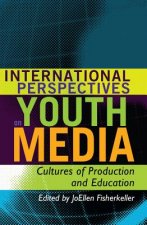
International Perspectives on Youth Media
58.84 € -

Gender-Marketing
25.20 € -11 % -

Descubre el Universo: Atlas del Espacio y Astronomía Práctica
20.11 € -14 % -

Hydraulik der Wasserheizung
37.09 € -6 % -

Embedded Mechatronic Systems
115.15 € -

Laser-Strophometry
103.46 € -7 % -

Aus den Tagen der Hansa
19.81 € -11 % -

On Target
22.15 € -1 % -

Konkurrenz der Paradigmata.
40.65 € -

badischen Gemeindegesetze sammt den dazu gehoerigen Verordnungen
39.43 € -11 % -

EIN PRALLES LEBEN AM RAND UND MITTENDRIN
22.45 € -11 % -
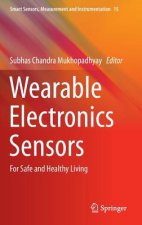
Wearable Electronics Sensors
103.46 € -7 % -

Studies on Greek Law, Oratory and Comedy
234.68 € -

Dinos Are Forever
6.39 € -25 % -

Futile Diplomacy, Volume 2
64.23 € -

Martin Pleyer der Kreuzfahrer wider Willen
19.50 € -1 % -

40 Formas de Aumentar tu Capital: Un libro para mejorar tu patrimonio
39.93 € -6 % -

LEYENDAS VIKINGAS CONTADAS PARA NIÑOS
19.81 € -

Congratulatory Verses to Edward Biddle, Gent., Occasioned by His Poem on the Birth of the Young Prince. with Some Remarks Critical, Hypercritical, Sat
11.88 € -25 % -

Getting the Holy Ghost
73.37 € -

Ohne Wut
14.93 € -1 %
Give this book as a present today
- Order book and choose Gift Order.
- We will send you book gift voucher at once. You can give it out to anyone.
- Book will be send to donee, nothing more to care about.
More about Young Bultmann
You get 205 loyalty points
 Book synopsis
During his early life (1884-1925), Rudolf Bultmann passionately attempted to unite scholar and laity through his understanding of God, which developed in the context of his home and its love for the common people of the church; the legacy of Schleiermacher; Marburg Lutheran neo-Kantianism; the eschatological perspective of the History of Religion School; dialectical theology; and Heidegger's philosophy of existence. Bultmann always insisted that God reflected the inner forces of life within each human being. Over the years, however, Bultmann came to hold that Lutheran neo-Kantianism provided the basic structure by which to analyze, critique, and strengthen his understanding of God. In light of this neo-Kantian structure, Bultmann insisted that God could not be the formulation of any scientific, ethical, or artistic construction. In other words God could not be the object or manifestation of human reason in any form since God transcended human reason. Hence in 1925, through the assistance of the dialectical theologians and Heidegger, Bultmann presented his purest formulation of a neo-Kantian understanding of God: God as the spontaneous moment of encountering the dialectical forces within our existential being.
Book details
Book category Books in English Humanities Philosophy History of Western philosophy
85.16 €
- Full title: Young Bultmann
- Author: William D. Dennison
- Language: English
- Binding: Hardback
- Number of pages: 245
- EAN: 9780820481135
- ISBN: 9780820481135
- ID: 10029810
- Publisher: Peter Lang Publishing Inc
- Weight: 572 g
- Dimensions: 158 × 235 × 23 mm
- Date of publishing: 05. February 2008
Trending among others
-

Meditations
8.43 € -27 % -

The Republic
10.66 € -20 % -

Why I Am so Clever
3.75 € -24 % -

Discourses and Selected Writings
14.22 € -4 % -

Nausea
11.68 € -14 % -

The Myth of Sisyphus
9.85 € -10 % -

Beyond Good and Evil
10.66 € -20 % -

Ride the Tiger
19 € -22 % -
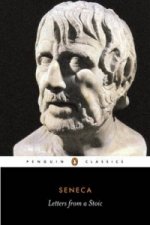
Letters from a Stoic
13.20 € -8 % -

Phenomenology of Spirit
17.68 € -24 % -

Either/Or
16.05 € -25 % -

The Sickness Unto Death
11.48 € -27 % -

The Nicomachean Ethics
10.46 € -30 % -

Leviathan
14.22 € -

On the Genealogy of Morals
9.75 € -34 % -

Think
13.41 € -27 % -

Simulacra and Simulation
21.13 € -

Fear and Trembling
11.98 € -24 % -

Gay Science
11.17 € -26 % -

The Spell of the Sensuous
13.91 € -26 % -

Intellectual Life
16.86 € -25 % -

Twilight of the Idols with The Antichrist and Ecce Homo
6.19 € -30 % -

Leviathan
6.60 € -25 % -

Human, All Too Human & Beyond Good and Evil
6.19 € -30 % -

Critique of Pure Reason
16.25 € -25 % -
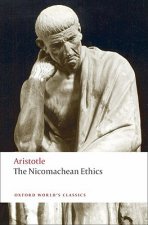
Nicomachean Ethics
11.37 € -12 % -

Human Condition
23.47 € -7 % -

Nicomachean Ethics
6.19 € -30 % -
Last Days of Socrates
11.88 € -24 % -
Twilight of Idols and Anti-Christ
9.65 € -27 % -

Joyous Science
12.09 € -25 % -

Beyond Good and Evil
15.74 € -24 % -

Enquiry concerning Human Understanding
10.46 € -30 % -

Concept of Anxiety
13.61 € -24 % -

On the Heights of Despair
31.80 € -

Basic Works of Aristotle
19 € -25 % -

Key Philosophical Writings
6.19 € -30 % -

Essays and Aphorisms
12.80 € -24 % -

Essays and Aphorisms
16.15 € -29 % -

Steps to an Ecology of Mind
28.35 € -4 % -

Fear and Trembling
8.53 € -

Meditations
8.12 € -30 % -

Aristotle's Nicomachean Ethics
21.44 € -

Freedom and Destiny
19.30 € -17 % -

Meditations
5.17 € -25 % -

Gorgias
7.21 € -25 % -

New History of Western Philosophy
23.47 € -24 % -
Letters on Ethics - To Lucilius
49.08 € -
Of Human Freedom
8.12 € -30 %
Collection points Bratislava a 13229 dalších
Copyright ©2008-26 najlacnejsie-knihy.sk All rights reservedPrivacyCookies

 26462 collection points
 Delivery 2.99 €
 02/210 210 99 (8-15.30h)