Code: 01399862
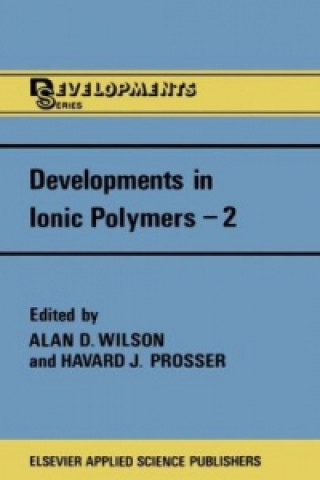
Developments in Ionic Polymers-2. Vol.2
by A. D. Wilson, rosser
Ionic polymers, like elephants, are easier to recognise than to define. Several methods of classification have been attempted but none is wholly satisfactory because of the extreme diversity of ionic polymers, which range from the ... more


- Language:
 English
 - Binding: Hardback
- Number of pages: 356
Publisher: Springer Netherlands
- More about this

90.82 €
Availability:
50/50 We think title might be available. Upon your order we will do our best to get it within 6 weeks.
We search the world
You might also like
-

CIA PSYOP Manual - Psychological Operations in Guerrilla Warfare
12.32 € -7 % -

Ante portas
11 € -33 % -

Fist of the North Star, Vol. 6
14.74 € -25 % -

Michael Storrings Autumn By the Sea 1000 Piece Puzzle
16.05 € -7 % -

Art of Living
12.82 € -27 % -
Where the River Meets the Soul
14.94 € -6 % -

Radical Markets
14.13 € -24 % -

Příchod kosmického Krista
3.32 € -19 % -

Petronela Jabĺčková Húska gagotačka a čarodejnícka sesternica
7.77 € -30 % -

Marmalade Boy: Collector's Edition 5
14.74 € -28 % -

Auta, jeřáby, bagry, traktory
7.87 € -20 % -

LA CHICA DEL VERANO EDICON ESPECIAL TAPA DURA
25.65 € -

Steklík
24.34 € -33 % -

Divine Feminine Tao Te Ching
14.34 € -17 % -

It's Great to Be a Guy!
9.99 € -24 % -

VERDAD O RETO
20.10 € -

Playing Games
13.83 € -35 % -

The Art of Nature, Time and Eternity
22.52 € -7 % -

Lulu und die kleine Ameise
16.96 € -16 % -

La nińa que no queria cepillarse el cabello / The Girl Who Wouldn't Brush Her Hair
14.74 € -

Wound Ballistics
138.40 € -

Workouts from Boxing's Greatest Champs
11.51 € -10 % -

Furniture of the Arts & Crafts Period: Stickley, Limbert, Mission Oak, Roycroft, Frank Lloyd Wright, and others with prices
15.14 € -26 % -

Dynamics and Thermodynamics of Systems with Long Range Interactions
102.84 € -7 % -

Cantora: Mercedes Sosa, the Voice of Latin America
23.63 € -

Emil und die Detektive. Einfach Deutsch Unterrichtsmodelle
33.63 € -

Thrive at the Top
11.31 € -24 % -

A. W. Pink's Studies in the Scriptures, Volume 10
37.47 € -25 % -

The Sugar Baby: Le Ragazze Di Zucchero
8.98 € -6 % -
Introduction Aux Methodes D'Apres L'Enseignement de Grigori Grabovoi (French Edition)
13.83 € -18 % -

MUL-PRECIOUS STONES IN OLD ENG
28.28 € -1 % -

Metal Detecting for GOLD! Guidebook for the Beginner: Gold Prospecting for the Begineer Metal Detectorist; Useful Tips, Expert Tricks and Student Secr
11.51 € -7 % -

Color Test Book
7.26 € -6 % -

Introduction To A History Of Ironmaking And Coal Mining In Pennsylvania (1878)
21.91 € -2 % -

Gilbert the Ghost
17.57 € -10 % -

Finding Freedom from the Shame of the Past
12.52 € -9 % -

Gross Facts about the American Colonies
7.26 € -24 % -
O Direito ? Saúde Comparado Jurisprudencial
39.59 € -6 % -

Misfits
8.68 € -25 % -

Patterns of meaning in lexicography and lexicology
126.89 € -

Data Visualization with Flash Builder
66.57 € -

Hinduism as a Missionary Religion
110.32 € -

Language of New Media Design
215.79 € -

ANNA KADABRA 4 - GAUERDIKO FESTA
18.07 € -
Fluorides
48.89 € -10 % -

Race Further with Reading: The Egyptian Cat Mystery
6.25 € -4 % -

Ecclesiastical Tracts Formerly Published
36.36 € -2 % -

Espionage and the Roots of the Cold War
78.69 € -

Je lis à mon rythme - Lecture CE1 Ed. 2019 - Les aventures de Tika et Tao
10.80 € -

Elliott's Reading Log
14.74 € -25 % -

Teachers' Manual to Accompany Graded Drawing and Construction Books ...
15.65 € -2 % -

Merry Christmas
10.70 € -6 % -

Three Sisters On Hope Street
11.81 € -25 % -

No Easy Answers
16.66 € -6 % -

Speed of Light
12.52 € -9 % -

Molecular Epidemiology of Infectious Diseases
107.49 € -

SCI ECON SOC TERM ES OBLIG+SPE
46.57 € -
HOGRE
19.49 € -

The Marcos Money: Nobody Misses a Thief's Money... Except the Thief
14.03 € -6 % -

Die Verarbeitung Des Holzes Auf Mechanischem Wege (1881)
28.28 € -1 % -

Wobbled Words: Stories Inspired By Real Life
14.03 € -7 % -

Sunflower
18.28 € -7 % -
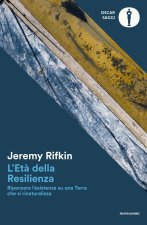
età della resilienza. Ripensare l'esistenza su una Terra che si rinaturalizza
18.38 € -

Lloyd George
55.96 € -

University Physics for the Physical & Life Sciences (Volumes 1 & 2) & Sapling Hw/Etext Access
400.78 € -
Análisis comparativo de las emisiones de escape: revisión de las normas BS4 y BS6 para motocicletas
39.19 € -14 % -

Tschinku im Gastland
15.04 € -9 % -

Forts dans la faiblesse
23.03 € -

Too Bad, She's a Girl
11.51 € -7 % -

Strange Addiction: The 12 Olympians
9.79 € -6 % -

Pillars of Computing
36.16 € -7 % -
Élimination du potassium et du fer dans la bauxite de qualité inférieure
40.91 € -14 % -

Fall to Domum, Castle, Book 1
19.29 € -2 % -

Weather
13.93 € -9 % -

Blackstone's Bride
10.70 € -12 % -

Frontiers
56.87 € -

Religion, Society and Politics in France since 1789
185.38 € -

Repentance; And Other Poems.
15.35 € -24 % -

Life and Times of General Washington, Volume 1
34.54 € -2 % -

Description of the Work of Divine Grace on the Souls of Saved Sinners
30.91 € -2 % -

Baseband Analog Circuits for Software Defined Radio
109.21 € -

Religious Voices in Public Places
168.61 € -

Mastering The Job Search Process In Recreation And Leisure Services
119.51 € -

Pratiques sociolinguistiques francophones de féminisation et de dégenrement
22.42 € -13 %
Give this book as a present today
- Order book and choose Gift Order.
- We will send you book gift voucher at once. You can give it out to anyone.
- Book will be send to donee, nothing more to care about.
Availability alert
Enter your e-mail address and once book will be available,
we will send you a message. It's that simple.
More about Developments in Ionic Polymers-2. Vol.2
You get 220 loyalty points
 Book synopsis
Ionic polymers, like elephants, are easier to recognise than to define. Several methods of classification have been attempted but none is wholly satisfactory because of the extreme diversity of ionic polymers, which range from the organic, water-soluble polyelectrolytes, through hydrogels and ionomer carboxylate rubbers, to the almost infusible inorganic silicate minerals. For this reason, a general classification is not only difficult, but has minimal utility. However, there are some characteristics of these materials that should be highlighted. The role of counterions is the significant one. These ions, either singly or as clusters, take part in the formation of ionic bonds which have a varying structural role. Often they act as crosslinks, but in the halato-polymers the ionic bonds form an integral part of the polymer backbone itself. Conversely, in polymers contain ing covalent crosslinks, such as the ion-exchange resins, the coun terions have virtually no structural role to play, since they dwell in cage-like structures without affecting the crosslinking, and are readily exchanged. They are, perhaps, best described as ion-containing polymers rather than structural ionic polymers. Another crucial factor is the role of water in ionic polymers. The presence of ionic bonds means that there is a tendency for these materials to interact with water. Where the ionic polymer contains a high proportion of ionic units, it acts as a hydrogel and may be highly soluble. Such interactions with water decrease sharply as the ionic content is reduced, though even then water can act as a plasticiser.
Book details
Book category Books in English Technology, engineering, agriculture Industrial chemistry & manufacturing technologies Industrial chemistry
90.82 €
- Full title: Developments in Ionic Polymers-2. Vol.2
- Author: A. D. Wilson, rosser
- Language: English
- Binding: Hardback
- Number of pages: 356
- EAN: 9780853344193
- ID: 01399862
- Publisher: Springer Netherlands
- Weight: 700 g
Trending among others
-

How To Brew
18.18 € -25 % -

French Patisserie
48.38 € -14 % -

Chemistry of Fragrances
44.85 € -

From Vines to Wines, 5th Edition
14.74 € -25 % -

Introduction to Drug Synthesis
66.47 € -

Teaching Community
41.01 € -17 % -
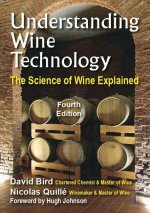
Understanding Wine Technology
57.07 € -15 % -

Nuclear Reactor Physics 3e
185.79 € -15 % -

Emperor Of Scent
11.81 € -25 % -

Extrusion Dies for Plastics and Rubber
178.72 € -12 % -

Perfluoroalkyl Substances in the Environment
234.28 € -

Handbook of Food Science and Technology 1
161.24 € -2 % -
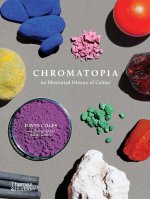
Chromatopia
23.23 € -13 % -

Art of Making Fermented Sausages
14.74 € -25 % -
Malt
22.52 € -
Designing Great Beers
18.18 € -25 % -
Art of Beef Cutting - A Meat Professional's Guide to Butchering and Merchandising
37.47 € -26 % -

Vineyards, Rocks, and Soils
48.49 € -4 % -
New Brewing Lager Beer
14.74 € -25 % -

Concepts in Wine Technology
32.02 € -24 % -

Polymer Extrusion
178.72 € -12 % -

Modern Gastronomy
102.94 € -
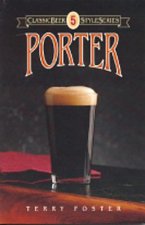
Porter
11.51 € -10 % -

Science of Bakery Products
37.78 € -

Hidden Persuaders in Cocoa and Chocolate
47.17 € -

Confectionery Science and Technology
100.62 € -9 % -

Wine Science
191.04 € -

Corporate Financial Distress, Restructuring, and Bankruptcy
69.80 € -25 % -

Chemical Process Technology 2e
64.55 € -

Extruder Principles and Operation
225.90 € -7 % -

3D Printing for Artists, Designers and Makers
40.71 € -6 % -

Natural Dyes
110.01 € -15 % -

Mold-Making Handbook
303.09 € -

Gut Microbiota
121.43 € -9 % -

Natural Colorants for Dyeing and Lake Pigments
45.66 € -14 % -
Harry's Cosmeticology, Two Volume Set
446.25 € -2 % -

Taste of Bread
143.86 € -7 % -
Plant Secondary Metabolites, Volume One
157.70 € -

Culinary Nutrition
101.83 € -5 % -

Understanding Extrusion
118.20 € -12 % -

Chemistry in Your Kitchen
28.99 € -

The 7 Wonders of Olive Oil: Stronger Bones, Cancer Prevention, Higher Brain Function, and Other Medical Miracles of the Green Nectar
19.99 € -9 % -
Molecular Cuisine
69.80 € -25 % -

Flavor of Meat and Meat Products
99.51 € -

Currants, Gooseberries, and Jostaberries
66.77 € -

Soapmaker's Companion
16.16 € -25 % -

Craft and Science of Coffee
136.89 € -

Natural Soap Book
11.31 € -25 % -

Microbiome, Immunity, Digestive Health and Nutrition
165.28 €
Collection points Bratislava a 12944 dalších
Copyright ©2008-26 najlacnejsie-knihy.sk All rights reservedPrivacyCookies

 25892 collection points
 Delivery 2.99 €
 02/210 210 99 (8-15.30h)