Kód: 04731656
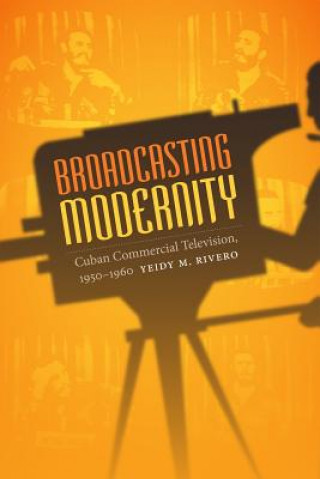
Broadcasting Modernity
Autor Yeidy M Rivero
The birth and development of commercial television in Cuba in the 1950s occurred alongside political and social turmoil. In this period of dramatic swings encompassing democracy, a coup, a dictatorship, and a revolution, televisio ... celý popis


- Jazyk:
 Angličtina
 - Väzba: Pevná
- Počet strán: 264
Nakladateľ: Duke University Press, 2015
- Viac informácií o knihe


Mohlo by sa vám tiež páčiť
-

Poor Things
9.71 € -29 % -

Pasta
27.54 € -24 % -

Nightbird, 2 Audio-CDs + 1 DVD (Limited Edition)
22.58 € -4 % -

Ne brini se
14.07 € -14 % -

Motorworld
13.16 € -29 % -

Can't Spell Treason Without Tea
16.09 € -24 % -

It's the Gruffalo! A Finger Puppet Book
9.71 € -25 % -

Divorcing Religion
12.75 € -

Problems of Genocide
39.79 € -5 % -

Life's Too Short
31.29 € -18 % -

Der Apostel Geschichten: Und Die Pastoralbriefe Und Der Brief An Philemon (1862)
41.82 € -2 % -

Die Geister von Graz
12.65 € -10 % -

Mi mundo y yo
99.65 € -

Under Ninja 2
8.40 € -10 % -

Der Wohlfahrtsstaat Und Seine Burger
67.55 € -7 % -

Cantus
5.46 € -14 % -

Urbanizacion y Marginalidad en la Ciudad de Sincelejo
42.83 € -14 % -

Wall of Men
37.36 € -1 % -

Autobiographisches
6.57 € -

Oclus?o: Conceitos Básicos e Importância
39.29 € -14 % -

Kurzgeschichten
11.74 € -10 %
Darčekový poukaz: Radosť zaručená
- Darujte poukaz v ľubovoľnej hodnote, a my sa postaráme o zvyšok.
- Poukaz sa vzťahuje na všetky produkty v našej ponuke.
- Elektronický poukaz si vytlačíte z e-mailu a môžete ho ihneď darovať.
- Platnosť poukazu je 12 mesiacov od dátumu vystavenia.
Viac informácií o knihe Broadcasting Modernity
Nákupom získate 275 bodov
 Anotácia knihy
The birth and development of commercial television in Cuba in the 1950s occurred alongside political and social turmoil. In this period of dramatic swings encompassing democracy, a coup, a dictatorship, and a revolution, television functioned as a beacon and promoter of Cuba's identity as a modern nation. In "Broadcasting Modernity," television historian Yeidy M. Rivero shows how television owners, regulatory entities, critics, and the state produced Cuban modernity for television. The Cuban television industry enabled different institutions to convey the nation's progress, democracy, economic abundance, high culture, education, morality, and decency. After nationalizing Cuban television, the state used it to advance Fidel Castro's project of creating a modern socialist country. As Cuba changed, television changed with it. Rivero not only demonstrates television's importance to Cuban cultural identity formation, she explains how the medium functions in society during times of radical political and social transformation.
Parametre knihy
Zaradenie knihy Knihy po anglicky Economics, finance, business & management Industry & industrial studies Media, information & communication industries
113.63 €
- Celý názov: Broadcasting Modernity
- Podnázov: Cuban Commercial Television, 1950-1960
- Autor: Yeidy M Rivero
- Jazyk: Angličtina
- Väzba: Pevná
- Počet strán: 264
- EAN: 9780822358596
- ISBN: 082235859X
- ID: 04731656
- Nakladateľ: Duke University Press
- Hmotnosť: 476 g
- Rozmery: 229 × 152 × 18 mm
- Dátum vydania: 31. March 2015
Obľúbené z iného súdka
-

Steve Jobs
14.98 € -25 % -

Talking As Fast As I Can
12.75 € -27 % -

Steve Jobs The Man Who Thought Different
13.97 € -19 % -

Blood, sweat, and pixels
12.24 € -28 % -

Mindset
16.09 € -25 % -

Glass Castle
9.81 € -34 % -

Project to Product
20.35 € -21 % -

Screenwriting for Teens
19.03 € -10 % -

AI Superpowers: China, Silicon Valley and the New World Order
13.97 € -17 % -

Jony Ive
13.16 € -29 % -

Grace: Thirty Years of Fashion at Vogue
59.04 € -9 % -

Black Like Me
11.64 € -26 % -

Best Story Wins
14.07 € -25 % -

Troubleshooting Analog Circuits
70.58 € -5 % -

Modern Monopolies
26.12 € -9 % -

Woodtli
16.60 € -

Management of Electronic and Digital Media, International Edition
119 € -

Steve Jobs
33.21 € -17 % -

Film Encyclopedia
25.41 € -29 % -

The Thinking Machine
15.99 € -29 % -

Nobody Leaves
10.12 € -29 % -

Sleight of Mouth
21.66 € -25 % -

Fender: The Inside Story
26.93 € -4 % -

Attention Merchants
9.31 € -30 % -

How Music Got Free
11.43 € -34 % -

How Google Works
12.95 € -25 % -

Diary of a Bookseller
11.54 € -29 % -

Behind the Cloud - The Untold Story of How Salesforce.com Went from Idea to Billion-Dollar Company-- and Revolutionized an Industry
21.36 € -25 % -

Cybersecurity and Cyberwar
11.94 € -24 % -

Easy Riders, Raging Bulls
16.90 € -30 % -

Softwar
24.50 € -17 % -

Reporter
13.97 € -24 % -

Selling Hitler
13.46 € -18 % -

Running Up That Hill
11.03 € -30 % -

New New Thing
12.75 € -25 % -

Diana Vreeland
21.97 € -26 % -

Cybersecurity Playbook - How Every Leader and Employee Can Contribute to a Culture of Security
18.22 € -25 % -

Music Industry Forms
19.64 € -21 % -

Before Mickey - The Animated Film 1898-1928
25.51 € -

Hit Refresh
10.12 € -34 % -

Back to the Boy
15.99 € -20 % -

Facing the Other Way
25.11 € -4 % -

Alibaba
12.75 € -25 % -

Disrupted
11.54 € -13 % -

The making of Mike Oldfield's Tubular Bells
25.51 € -9 % -

Shakespeare and Company
18.22 € -25 % -

Music Business For Dummies
21.77 € -24 % -

Conspiracy
13.97 € -19 % -

Dark Net
11.84 € -25 %
Osobný odber Bratislava a 12762 dalších
Copyright ©2008-26 najlacnejsie-knihy.sk Všetky práva vyhradenéSúkromieCookies

 24 miliónov titulov
 Vrátenie do mesiaca
 02/210 210 99 (8-15.30h)