
Code: 04477207
Comparative Method in Evolutionary Biology
by Harvey
From Darwin onward, it has been second nature for evolutionary biologists to think comparatively because comparisons establish the generality of evolutionary phenomena. Do large genomes slow down development? What lifestyles selec ... more


- Language:
 English
 - Binding: Paperback
- Number of pages: 248
Publisher: Oxford University Press, 1991
- More about this


You might also like
-

First Comes Scandal
10.99 € -25 % -

Music Of The Spheres
13.70 € -25 % -

Fundamentals of Aerospace Engineering: (Beginner's Guide)
27.40 € -7 % -

Heidegger on Being and Acting
33.70 € -

Project 3 Work Book
14 € -

Geography Club
13 € -18 % -

The Priest Is Not His Own
13.90 € -25 % -

Principles of Equine Dentistry
289.31 € -

Akseli Gallen-Kallela. Finnland erfinden/ Picturing Finland
28.30 € -19 % -

Far Far East
45.31 € -24 % -

Die Franz-Josefs-Bahn und ihre Nebenlinien
17.80 € -11 % -

Die Geheimnisse freimaurerischer Landschaftsparks
33.20 € -16 % -

Botswana GPS-Tracks Karte 1 : 1 000 000
23 € -14 % -

Employability. Ausgangslage, Begriffsdefinition und Bedeutung
16.90 € -10 % -

Social Media Marketing
25.70 € -

Russische Verteidigung Band 1
20.40 € -11 % -

LA GUERRA CIVIL. JOSE ARENCIBIA GIL Y OTROS ARTISTAS CANARIOS
33.50 € -

Spectacle de la Nature. Entretiens Sur Les Particularites de l'Histoire Naturelle. Tome 6
37.81 € -

Making of Asmat Art
94.53 € -

The Case of the Outlaw's Watch: Mail Order Bride Mystery Romance
9.69 € -6 % -

New Theories, Models and Methods in Literary and Cultural Studies
26.50 € -

Alla gloria del vino
19 € -
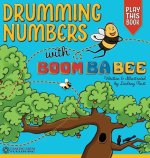
Drumming Numbers with Boom Ba Bee
27.20 € -

Wood Characteristics
139.35 € -9 % -

Partition and the Practice of Memory
84.12 € -4 % -

Learning to Learn in Practice
42.51 € -9 % -

Peter Pan Reimagined
22.20 € -14 % -

Právo mezinárodního obchodu
45.01 € -

BABADADA black-and-white, Sranantongo - bahasa Melayu, prenki wortu buku - kamus visual
6.69 € -

Careers in the Oil & Gas Industry: A Guidebook of Practical Advice
22.30 € -7 % -
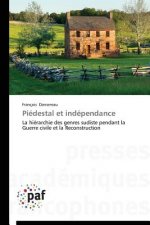
Piedestal Et Independance
48.41 € -11 % -

C?l?toria lui Vlad pe Cel?lalt T?râm
12.60 € -25 % -
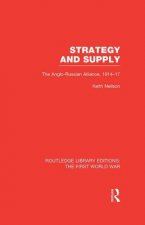
Strategy and Supply
69.12 € -

Three Jovial Huntsmen (Traditional Chinese): 01 Paperback Color
12.19 € -7 % -

Ironside
46.51 € -10 % -

The Science Of Legislation V2 (1806)
29.70 € -2 % -

Four Hasidic Masters and their Struggle against Melancholy
29.20 € -

Dreams Just Begin
17.30 € -

Jerusalem: All The Bible Teaches About
17.50 € -6 % -

E. Von Esmarchs Hygienisches Taschenbuch
52.51 € -4 % -

Splash & Squirt: Underwater
5.79 € -

Shirley Temple and the Screaming Specter
29.70 € -2 % -

The Ghostly Frozen Chicken of Highgate Hill
9.29 € -6 % -

Gender and Personality
38.91 € -

?Puede el feminismo vencer al populismo?
13.40 € -14 % -

Jacinto Verdaguer, 17 Avril 1845-10 Juin 1902
13.70 € -2 % -

The Middleman - Volume 2 - The Sino-Mexican Revelation
13.90 € -7 % -
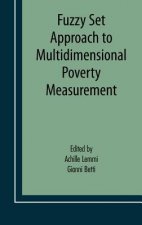
Fuzzy Set Approach to Multidimensional Poverty Measurement
109.33 € -

Personification in Piers Plowman
124.94 € -

Asian Mathematical Conference
213.28 € -

Where's the Fire?: Selected Poems
13.90 € -6 % -

INTRODUCCIÓN AL MANEJO DE LA VÍA AÉREA DEL ADULTO
9.39 € -

bhoudhika resathanthram
12.09 € -

Escultura publica en Gran Canaria entre 1980-2010
101.03 € -14 % -
Biology: How Life Works, Volume 2
223.28 € -

Oxford Handbook of Strategy
303.11 € -

Archaeology of the Lower Ohio River Valley
276.10 € -

Beitrage zur Geologie Syriens
16 € -10 % -

Noces de velours
8.19 € -14 % -

Das Zeitalter der Revolution, des Kaiserreiches und der Befreiungskriege
121.24 € -12 % -
Algorithmic Learning Theory
51.01 € -7 % -

Computer Vision and Recognition Systems
148.55 € -

L'Alphabet de l'Amour, Comedie-Vaudeville En 1 Acte
12.30 € -9 % -

Destana Evina Seid Mistefe u Axcihane
11.09 € -4 % -

Credibility of the Gospel History. Part II. Or, the Principal Facts of the New Testament Confirmed by Passages of Ancient Authors, Who Were Contempora
26.10 € -24 % -
AVANCES EN EL METABOLISMO DEL NITROGENO
34.40 € -

Droit Des Obligations
30.40 € -

Best British Short Stories Of 1922
29.70 € -2 % -

Luna Station Quarterly Issue 037
8.79 € -7 % -

Cobblers Crisps More
10.49 € -9 % -

Contes doux amers de ma Mère Russie
26 € -

Collection and Abridgement of Celebrated Criminal Trials in Scotland
36.90 € -1 % -

I Just Can't Tell It All
8.49 € -24 % -
Forest Nenets Language
102.03 € -14 % -

Darwinismus und Sozialismus
5.59 € -

Dr. Montessori's Own Handbook
11.29 € -

Combinatorics on Traces
51.01 € -7 % -

Adventures of Hardluck Hannigan
16 € -24 % -

On zhil kak svoj sredi svoih
22 € -14 % -

Life of St. Leonard of Port-Maurice, O.F.M. (1676-1751)
34.20 € -9 % -

Imaginario Griego
21.30 € -

Shipping, Part 500 to End
25.80 € -6 % -

Omagua
10.29 € -10 % -

Feudal Manuals Of English History: A Series Of Popular Sketches Of Our National History Compiled At Different Periods, From The Thirteenth Century To
23.50 € -2 %
Give this book as a present today
- Order book and choose Gift Order.
- We will send you book gift voucher at once. You can give it out to anyone.
- Book will be send to donee, nothing more to care about.
More about Comparative Method in Evolutionary Biology
You get 245 loyalty points
 Book synopsis
From Darwin onward, it has been second nature for evolutionary biologists to think comparatively because comparisons establish the generality of evolutionary phenomena. Do large genomes slow down development? What lifestyles select for large brains? Are extinction rates related to body size? These are all questions for the comparative method, and this book is about how such questions can be answered. The first chapter elaborates on suitable questions for the comparative approach and shows how it complements other approaches to problem-solving in evolution. The second chapter identifies the biological causes of similarity among closely related species for almost any observed character. The third chapter discusses methods for reconstructing phylogenetic trees and ancestral character states. The fourth chapter sets out to develop statistical tests that will determine whether different characters that exist in discrete states show evidence for correlated evolution. Chapter 5 turns to comparative analyses of continuously varying characters. Chapter 6 looks at allometry to exemplify the themes and methods discussed earlier, while the last chapter looks to future development of the comparative approach in both molecular and organismic biology.
Book details
Book category Knihy po anglicky Mathematics & science Biology, life sciences Life sciences: general issues
100.03 €
- Full title: Comparative Method in Evolutionary Biology
- Author: Harvey
- Language: English
- Binding: Paperback
- Number of pages: 248
- EAN: 9780198546405
- ISBN: 0198546408
- ID: 04477207
- Publisher: Oxford University Press
- Weight: 396 g
- Dimensions: 232 × 157 × 14 mm
- Date of publishing: 18. April 1991
Trending among others
-
Hidden Spring
14.70 € -30 % -

Brain Rules (Updated and Expanded)
11.49 € -27 % -
Ways of Attending
34.80 € -

Evolution of Childhood
46.61 € -

Hidden History of the Human Race
15.10 € -8 % -

Inferior
10.69 € -27 % -

Undoing Project
13.70 € -20 % -

Beast and Man
143.55 € -

Genetics and Philosophy
36 € -

Role of Fire in Mediterranean-Type Ecosystems
51.01 € -7 % -

Cosmic Hologram
11.69 € -30 % -

The Selfish Gene
16.60 € -14 % -

The Molecule of More
19.60 € -

Story Genius
13.30 € -24 % -

Descartes' Error
15.10 € -17 % -

Conscious Mind
21.90 € -23 % -

Cosmic Serpent
11.79 € -24 % -

Moral Animal
15.80 € -25 % -

Homo Deus
34.10 € -3 % -

Power of Habit
13.70 € -15 % -
The Extended Phenotype
14.80 € -24 % -

Oxygen
14.20 € -22 % -
The Story of the Human Body
15.80 € -25 % -

Power, Sex, Suicide
13.30 € -24 % -

Symbiotic Planet
13.90 € -25 % -

Into the Magic Shop
13.30 € -24 % -

Speculations on the Evolution of Human Intelligence
7.79 € -25 % -

Crack In Creation
13.90 € -25 % -

Wonderful Life
13.80 € -24 % -

Venomous
14.60 € -25 % -

Homo Deus
18.70 € -25 % -
Brain
12.49 € -27 % -

Incognito
11.29 € -34 % -

Stealing Fire
11.69 € -24 % -

The Storytelling Animal
14.60 € -21 % -

Epigenetics Revolution
13.60 € -13 % -
Sapiens
31.50 € -11 % -

Biocentrism
12.70 € -27 % -

Psychopath Inside
14.20 € -23 % -
Double Helix
11.69 € -24 % -

Wisdom of Psychopaths
14.50 € -18 % -

Systems View of Life
24.90 € -28 % -

Vital Question - Energy, Evolution, and the Origins of Complex Life
22.80 € -22 % -

Diversity of Life
13.80 € -24 % -

Cartoon Guide to Genetics
17.40 € -24 % -

Epigenetics
12.60 € -24 % -

Science of Meditation
14.20 € -17 % -

Human Brain Coloring Book
17.90 € -24 % -

Manual of Percutaneous Coronary Interventions
92.53 € -4 %
Osobný odber Bratislava a 13422 dalších
Copyright ©2008-26 najlacnejsie-knihy.sk Všetky práva vyhradenéSúkromieCookies

 25 miliónov titulov
 Vrátenie do mesiaca
 02/210 210 99 (8-15.30h)