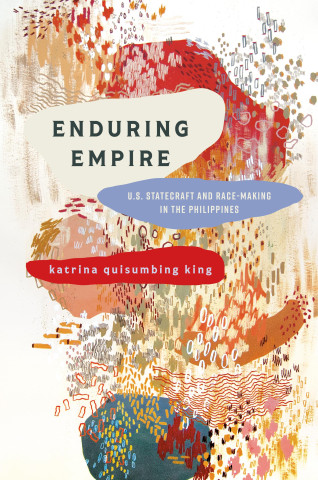
Kód: 46739265
Enduring Empire
Autor katrina quisumbing king
In 1898 the United States became a formal overseas empire and claimed sovereignty over the Philippine islands, justifying its rule in explicitly racial terms. Less than fifty years later, in 1946, Philippine independence was recog ... celý popis


- Jazyk:
 Angličtina
 - Väzba: Pevná
- Počet strán: 344
Nakladateľ: Bissera V. Pentcheva, 2025
- Viac informácií o knihe


Mohlo by sa vám tiež páčiť
-

Moonwalk
14.15 € -17 % -

The Score
13.65 € -13 % -

The Deal
11.42 € -27 % -

The Mistake
14.56 € -

Jujutsu Kaisen, Vol. 30
9.60 € -22 % -

Witch Hat Atelier: Grimoire Edition 1
34.59 € -29 % -
Invincible Compendium Volume 2
46.42 € -23 % -

Berserk Deluxe Volume 1
35.60 € -25 % -

The Goal
14.66 € -7 % -

Berserk Deluxe Volume 2
33.17 € -30 % -

Invincible Compendium Volume 1
45.81 € -24 % -

Witch Hat Atelier Manga Box Set 1
51.28 € -31 % -

Heated Rivalry
12.63 € -7 % -

Murdoku
17.09 € -29 % -

Moonwalk: A Memoir
23.05 € -25 % -
Lord of Mysteries, Vol. 3: The Clown, Part III
14.96 € -29 % -

Jujutsu Kaisen, Vol. 25
9.90 € -20 % -

Jujutsu Kaisen, Vol. 26
9.90 € -20 % -

White Nights
4.74 € -11 % -

Veil Volume 1
12.03 € -25 % -

Berserk Deluxe Volume 3
55.12 €
Darčekový poukaz: Radosť zaručená
- Darujte poukaz v ľubovoľnej hodnote, a my sa postaráme o zvyšok.
- Poukaz sa vzťahuje na všetky produkty v našej ponuke.
- Elektronický poukaz si vytlačíte z e-mailu a môžete ho ihneď darovať.
- Platnosť poukazu je 12 mesiacov od dátumu vystavenia.
Viac informácií o knihe Enduring Empire
Nákupom získate 330 bodov
 Anotácia knihy
In 1898 the United States became a formal overseas empire and claimed sovereignty over the Philippine islands, justifying its rule in explicitly racial terms. Less than fifty years later, in 1946, Philippine independence was recognized by the United States, even as it continued to exert influence over the domestic and foreign affairs of the newly decolonized Republic. Despite some differences, U.S. control remained racial and imperial.
Enduring Empire shows how U.S. federal state actors translated their ideas of race into state structures. Through innovating constitutional law, bureaucratic administration, and legislation, state actors built a durable and flexible system of racial-imperial rule that not only lasted beyond the period of formal empire but continues to this day. katrina quisumbing king traces debates among U.S. presidents, federal legislators, administrators, and justices about what kind of state the United States should be, the place of nonwhite people in the polity, and the best way to maintain U.S. white hegemony. In charting how state actors' positions-some nativist, isolationist, and protectionist and others expansionist, interventionist, and imperialist-evolved, quisumbing king identifies key moments when they cemented racial ideas into law and reshaped the terms of U.S. racial-imperial formation.
Parametre knihy
Zaradenie knihy Knihy po nemecky Sozialwissenschaften, Recht, Wirtschaft Medien, Kommunikation Medienwissenschaft
136.45 €
- Celý názov: Enduring Empire
- Autor: katrina quisumbing king
- Jazyk: Angličtina
- Väzba: Pevná
- Počet strán: 344
- EAN: 9781503642676
- ISBN: 1503642674
- ID: 46739265
- Nakladateľ: Bissera V. Pentcheva
- Hmotnosť: 634 g
- Dátum vydania: 08. July 2025
Osobný odber Bratislava a 12790 dalších
Copyright ©2008-26 najlacnejsie-knihy.sk Všetky práva vyhradenéSúkromieCookies

 24 miliónov titulov
 Vrátenie do mesiaca
 02/210 210 99 (8-15.30h)