
Kód: 02931314
Forensic Epidemiology
Autor Michael Freeman
It is an inescapable fact that causation, both generally (in populations), and specifically (in individuals), cannot be observed. Rather, causation is determined when it can be inferred that the risk of an observed injury or disea ... celý popis


- Jazyk:
 Angličtina
 - Väzba: Pevná
- Počet strán: 434
Nakladateľ: Elsevier Science Publishing Co Inc, 2016
- Viac informácií o knihe


Mohlo by sa vám tiež páčiť
-

Maia and What Matters
19.21 € -10 % -

Die Volume 1: Fantasy Heartbreaker
7.88 € -25 % -

Taoistické kosmické léčení
12.23 € -23 % -

Ettore Sottsass and the Poetry of Things
23.97 € -15 % -

Bibliocollège - Ali Baba et les quarante voleurs - Les Mille et Une Nuits
6.57 € -

Living in a Foreign Language
13.45 € -24 % -

Kuningas Auto
17.90 € -14 % -

Religious Freedom and the Universal Declaration of Human Rights
113.01 € -14 % -

Natural History of Birds
64.24 € -

Softlasertherapie
8.99 € -10 % -

Organogene Dunenbildung
51.89 € -6 % -

Colorimetry and Spectrophotometry
12.43 € -
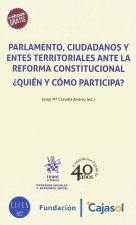
Parlamento, ciudadanos y entes territoriales ante la reforma constitucional. ¿Quién y cómo participa
37.12 € -

Computer Mediated Communication
44 € -9 % -

Date with Death
8.59 € -1 % -

Religion and Superstition in Reformation Europe
31.25 € -9 % -

Psilocybin Mushrooms
16.79 € -25 % -

Huascaran
18.30 € -16 % -

Bill Clinton's Guide to Appropriate Behavior - Completely Unabridged Version
7.68 € -1 % -

Jana's Pocket Posh Journal, Mum
7.27 € -24 % -

Conduct Literature for Women, Part III, 1720-1770 vol 5
116.55 € -

Quantifying Aesthetics of Visual Design Applied to Automatic Design
102.99 € -7 % -

Empty Bones and Other Stories
12.54 € -9 % -

Funhouse Of Horrors: The House Of Horrors
10.61 € -7 % -

Broadcasting in the Modernist Era
172.80 € -

ESPAÑOL PICTOGRAMÁTICA
19.42 € -

Nous mettrons nos enfants à l'école publique...
23.26 € -

Daniel Boone
23.77 € -2 % -

Kinship and Marriage in Early Arabia
41.07 € -

Local Activity Principle: The Cause Of Complexity And Symmetry Breaking
174.12 € -

Shyness and Social Anxiety Workbook: Ideal and Perfect Gift for Shyness and Social Anxiety Workbook Best Shyness and Social Anxiety Workbook for You,
7.27 € -6 % -

Die völkische Ordnung von Armut
37.53 € -11 % -

Chamy i żydy w dzisiejszej Polsce
17.70 € -

Moderne Asthmabehandlung
65.96 € -

Gesammelte Schriften, Band 19 (III/Band 6), Moralphilosophie, Rechtsphilosophie und Religionsphilosophie
183.63 € -4 %
Darčekový poukaz: Radosť zaručená
- Darujte poukaz v ľubovoľnej hodnote, a my sa postaráme o zvyšok.
- Poukaz sa vzťahuje na všetky produkty v našej ponuke.
- Elektronický poukaz si vytlačíte z e-mailu a môžete ho ihneď darovať.
- Platnosť poukazu je 12 mesiacov od dátumu vystavenia.
Viac informácií o knihe Forensic Epidemiology
Nákupom získate 345 bodov
 Anotácia knihy
It is an inescapable fact that causation, both generally (in populations), and specifically (in individuals), cannot be observed. Rather, causation is determined when it can be inferred that the risk of an observed injury or disease from a plausible cause is greater than the risk from other plausible causes. While many causal evaluations performed in forensic medicine are simplified by fact that the circumstances surrounding the onset of an injury or disease clearly rules out competing causes (e.g. a death following a fall) there are many cases that present a more complicated picture. It is these types of investigations, in which an analysis of comparative levels of risk from competing causes is required to arrive at a reliable and accurate determination of cause, that forensic epidemiology (FE) is directed at. In Forensic Epidemiology the authors present the legal and scientific theories underlying the methods by which risk is used in the investigation of individual causation. Methods and principles from epidemiology are combined with those from a multitude of other disciplines, including general medicine, pharmacology, forensic pathology, biostatistics, and biomechanics, inter alia, as a basis for investigating the plausibility of injury and disease exposures and mechanisms. The ultimate determination of the probability of causation (PC) results from an assessment of the strength of association of the investigated relationship in the individual, based on a comparison between the risk of disease or injury from the investigated exposure versus the risk of the same disease or injury occurring at the same point in time in the individual, but absent the exposure. The principles and methods described in Forensic Epidemiology will be of interest to those who work and study in the fields of forensic medicine, epidemiology, and the law. Historical perspective on how epidemiologic evidence of causation has been used in courts in U.S. and EuropeTheory and science underlying the use of risk to assess individual causationPrimer on epidemiologic methods, and various measures used to arrive at individualized comparative risk assessments and PCThe use of statistical methods applied to publicly available data for ad hoc analysis of PC applicable to the specific circumstances of a caseBackground on adjunctive disciplines, including forensic pathology, death investigation, biomechanics, and survival analysis
Parametre knihy
Zaradenie knihy Knihy po anglicky Society & social sciences Social services & welfare, criminology Crime & criminology
142.45 €
- Celý názov: Forensic Epidemiology
- Podnázov: Principles and Practice
- Autor: Michael Freeman
- Jazyk: Angličtina
- Väzba: Pevná
- Počet strán: 434
- EAN: 9780124045842
- ISBN: 0124045847
- ID: 02931314
- Nakladateľ: Elsevier Science Publishing Co Inc
- Hmotnosť: 1082 g
- Rozmery: 199 × 244 × 25 mm
- Dátum vydania: 04. May 2016
Obľúbené z iného súdka
-

Anatomy of Violence
14.96 € -29 % -

Yakuza
34.09 € -
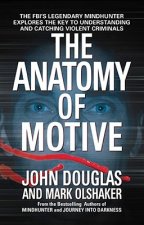
The Anatomy of Motive
9.60 € -21 % -

Are Prisons Obsolete?
11.83 € -25 % -

History of the Mafia
21.64 € -25 % -

Papillon
11.02 € -30 % -

Inside the Criminal Mind (Newly Revised Edition)
14.66 € -25 % -

Cosa Nostra: A History of the Sicilian Mafia
13.95 € -24 % -

FBI Handbook of Forensic Science
10.82 € -

Escape from Alcatraz
12.43 € -26 % -

Donnie Brasco
13.95 € -30 % -

Confessions Of A Yakuza
9.30 € -24 % -

Executioner's Song
18.81 € -30 % -

Forensic Science
11.83 € -25 % -

Savage God
19.92 € -18 % -

Criminal Capital
38.03 € -9 % -

Excellent Cadavers: The Mafia and the Death of the First Italian Republic
16.99 € -17 % -

Hotel K
13.95 € -19 % -

Good Mothers
11.83 € -25 % -

Prisons of Poverty
26.50 € -

El Sicario
18.10 € -25 % -

Journey Into Darkness
19.92 € -18 % -

Assessing Risk
54.02 € -

Environmental Psychology of Prisons and Jails
45.92 € -

Punishment
58.98 € -

Last Good Heist
15.37 € -18 % -

Tokyo Underworld: The Fast Times and Hard Life of an American Gangster in Japan
13.14 € -25 % -

Detection of Deception in Forensic Contexts
64.24 € -
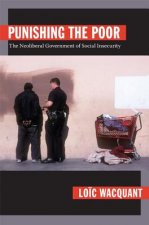
Punishing the Poor
32.16 € -

Extraordinary Circumstances
18.61 € -25 % -
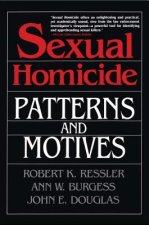
Sexual Homicide: Patterns and Motives- Paperback
23.67 € -19 % -

Peaky Blinders: the Real Story
11.02 € -30 % -

Sherlock: The Casebook
18.91 € -34 % -

Forensics
11.93 € -27 % -

Why Kids Kill
17.19 € -26 % -

All That Remains
13.24 € -22 % -

Zero Zero Zero
11.42 € -34 % -

Narcoland
13.45 € -14 % -

Wolf Boys
11.83 € -25 % -

Guantanamo Diary
11.83 € -25 % -

Criminology: A Very Short Introduction
10.01 € -24 % -

El Narco
13.95 € -24 % -

At The Devil's Table
11.83 € -25 % -

Gulag Archipelago
14.76 € -25 % -

Deranged
13.95 € -17 % -

Journalist And The Murderer
11.83 € -25 % -

Elements of Murder
25.39 € -

Eye of the Hurricane
18.61 € -9 % -

Gangs Of New York
11.83 € -25 %
Osobný odber Bratislava a 12744 dalších
Copyright ©2008-26 najlacnejsie-knihy.sk Všetky práva vyhradenéSúkromieCookies

 24 miliónov titulov
 Vrátenie do mesiaca
 02/210 210 99 (8-15.30h)