Kód: 51043764
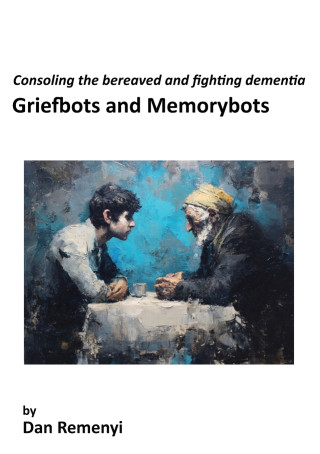
Griefbots and Memorybots
Autor Dan Remenyi
The computer age effectively began in 1950. In the 75 years since, both hardware and software have developed at a staggering pace, transforming computing from a niche field into a central pillar of modern life. What is truly remar ... celý popis


- Jazyk:
 Angličtina
 - Väzba: Brožovaná
- Počet strán: 124
Nakladateľ: ACPIL, 2025
- Viac informácií o knihe

23.86 €
Bežne: 24.34 €
Ušetríte 0.48 €

Skladom u dodávateľa
Odosielame za 9 - 15 dní
Mohlo by sa vám tiež páčiť
-

Moonwalk
14.15 € -

The Score
13.65 € -17 % -

The Deal
12.43 € -24 % -

The Mistake
14.56 € -

Jujutsu Kaisen, Vol. 30
9.60 € -22 % -

Witch Hat Atelier: Grimoire Edition 1
34.59 € -29 % -

Invincible Compendium Volume 2
46.42 € -23 % -

Berserk Deluxe Volume 1
35.60 € -25 % -

The Goal
14.66 € -10 % -

Berserk Deluxe Volume 2
33.17 € -30 % -

Invincible Compendium Volume 1
45.81 € -24 % -

Witch Hat Atelier Manga Box Set 1
51.28 € -31 % -

Heated Rivalry
12.63 € -7 % -

Murdoku
17.09 € -17 % -

Moonwalk: A Memoir
23.36 € -25 % -

Lord of Mysteries, Vol. 3: The Clown, Part III
14.96 € -29 % -

Jujutsu Kaisen, Vol. 25
9.90 € -20 % -

Jujutsu Kaisen, Vol. 26
9.90 € -20 % -

White Nights
4.74 € -11 % -

Veil Volume 1
13.54 € -30 % -

Berserk Deluxe Volume 3
55.12 €
Darčekový poukaz: Radosť zaručená
- Darujte poukaz v ľubovoľnej hodnote, a my sa postaráme o zvyšok.
- Poukaz sa vzťahuje na všetky produkty v našej ponuke.
- Elektronický poukaz si vytlačíte z e-mailu a môžete ho ihneď darovať.
- Platnosť poukazu je 12 mesiacov od dátumu vystavenia.
Viac informácií o knihe Griefbots and Memorybots
Nákupom získate 58 bodov
 Anotácia knihy
The computer age effectively began in 1950. In the 75 years since, both hardware and software have developed at a staggering pace, transforming computing from a niche field into a central pillar of modern life. What is truly remarkable is not just the technological evolution itself, but the way these innovations have woven themselves into the fabric of daily existence. In developed nations today, computer-based technology provides us with solutions for nearly every conceivable challenge or opportunity concerning work, health and leisure time. The range and depth of these applications are not just impressive; they are ever-increasing, constantly pushing the boundaries of what is possible.
In recent years, however, computer technology in the form of AI has begun to address aspects of people's lives that have traditionally been reserved for only human interaction. We've seen the rise of digital therapy apps, virtual health assistants, and social robots designed to combat loneliness. One of the latest and perhaps most profound trends in this respect is the development of systems aimed at assisting with the grieving process, and the term digital mourning has been coined. These systems, sometimes called Griefbots, Legacybots, Deadbots, etc., or memory reservoirs, represent a new frontier in human-computer interaction. They function by creating a so-called digital replica of an individual, often using data from a deceased person's social media accounts, text messages, and other parts of their digital footprints. The goal is to provide a form of continued post-mortem connection, i.e. a voice from beyond the grave, a way for bereaved individuals to interact with a digital avatar of their departed loved one, with the purpose of helping to soften the profound impact of their loss. And the use of AI in this way is being referred to as Digital Immortality.
Thus, Digital Immortality through the use of a Griefbot is a completely new frontier for AI technology which is based on the fact that an LLM can simulate a conversation on a wide range of subjects in a non-offensive way and with an appropriate data set produce an acceptable imitation of how an individual would think and react in such a conversation. This adventure into prosopopoeia[1] is a highly specialised application of AI for which there is not yet much awareness in the market.
Although Griefbots are primarily designed to preserve and access memories in a post-mortem context, the same technology can also be adapted to assist individuals living with reduced cognitive capability such as dementia. In this case, the technology may be used with the help of appropriate professionals to support those whose cognitive abilities have declined due to illness, helping them to reconnect with their own memories and identity. In such a case the term Memorybot is more appropriate than Griefbot.
This book delves into this complex and emerging technology. It explores the concept of Griefbots and the data they rely on, and the potential they hold for future development. But more importantly, the book will examine the significant opportunity and challenge these systems present. While they may offer a unique form of comfort, they also raise profound theoretical, practical, and ethical dilemmas. It will ask difficult questions about the nature of memory and identity in this digital age: What does it mean to have a digital copy of a person? How do these systems impact the natural human process of grief and acceptance? And what are the ethical lines that should be drawn when technology seeks to fill a void that has always been the domain of human relationships? This book is a guide through this new landscape, exploring both the promises and the perils.
[1] A figure of speech in which an imagined, absent, or dead person or thing is represented as speaking.
Parametre knihy
23.86 €
- Celý názov: Griefbots and Memorybots
- Autor: Dan Remenyi
- Jazyk: Angličtina
- Väzba: Brožovaná
- Počet strán: 124
- EAN: 9781917204583
- ISBN: 1917204582
- ID: 51043764
- Nakladateľ: ACPIL
- Hmotnosť: 159 g
- Rozmery: 210 × 148 × 7 mm
- Dátum vydania: 17. October 2025
Osobný odber Bratislava a 12790 dalších
Copyright ©2008-26 najlacnejsie-knihy.sk Všetky práva vyhradenéSúkromieCookies

 24 miliónov titulov
 Vrátenie do mesiaca
 02/210 210 99 (8-15.30h)