Kód: 04558846
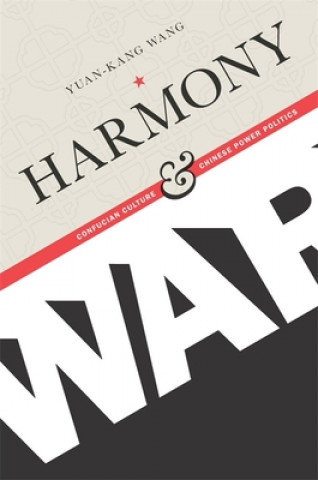
Harmony and War
Autor Yuan-Kang Wang
Confucianism has shaped a certain perception of Chinese security strategy, symbolized by the defensive, nonaggressive Great Wall. Many believe China is antimilitary and reluctant to use force against its enemies. It practices paci ... celý popis


- Jazyk:
 Angličtina
 - Väzba: Pevná
- Počet strán: 328
Nakladateľ: Columbia University Press, 2010
- Viac informácií o knihe


Mohlo by sa vám tiež páčiť
-

Pozapomenutá místa
7.89 € -23 % -

Tattooing in the Marquesas
9.31 € -24 % -

Aquinas's Way to God
136.62 € -

Introduction to Data Envelopment Analysis and Its Uses
98.94 € -

Oculist. a Dramatic Entertainment of Two Acts
28.35 € -1 % -

Oxford Reading Tree TreeTops Myths and Legends: Levels 12 and 13: Pack of 36
376.05 € -

What Scares the Boogey Man?
16.70 € -6 % -

Industrial Waste Treatment Processes Engineering
57.62 € -

Christianity
19.03 € -10 % -

Dr. Crystal's Santa's Socks: Do the Bow Thing
12.35 € -7 % -

Sacrifice and Other Plays
22.07 € -

Mathematics That Every Secondary School Math Teacher Needs to Know
150.39 € -

Poetry Criticism
432.77 € -

De L'Influence De L'Homme De Lettres Sur La Societe (1862)
23.79 € -2 % -

Louise Adventure
23.89 € -1 % -

Soft Matters for Catalysts
150.39 € -

Free Range
20.55 € -14 % -

Mass Communication and American Social Thought
121.43 € -

Compression, Denoising for the Medical and Space Image Based on DDWT
44.55 € -14 % -

All Citizens
21.56 € -14 % -

Themistocle: Tragedie
16.60 €
Darčekový poukaz: Radosť zaručená
- Darujte poukaz v ľubovoľnej hodnote, a my sa postaráme o zvyšok.
- Poukaz sa vzťahuje na všetky produkty v našej ponuke.
- Elektronický poukaz si vytlačíte z e-mailu a môžete ho ihneď darovať.
- Platnosť poukazu je 12 mesiacov od dátumu vystavenia.
Viac informácií o knihe Harmony and War
Nákupom získate 201 bodov
 Anotácia knihy
Confucianism has shaped a certain perception of Chinese security strategy, symbolized by the defensive, nonaggressive Great Wall. Many believe China is antimilitary and reluctant to use force against its enemies. It practices pacifism and refrains from expanding its boundaries, even when nationally strong. In a path-breaking study traversing six centuries of Chinese history, Yuan-kang Wang resoundingly discredits this notion, recasting China as a practitioner of realpolitik and a ruthless purveyor of expansive grand strategies. Leaders of the Song Dynasty (960-1279) and Ming Dynasty (1368-1644) prized military force and shrewdly assessed the capabilities of China's adversaries. They adopted defensive strategies when their country was weak and pursued expansive goals, such as territorial acquisition, enemy destruction, and total military victory, when their country was strong. Despite the dominance of an antimilitarist Confucian culture, warfare was not uncommon in the bulk of Chinese history. Grounding his research in primary Chinese sources, Wang outlines a politics of power that are crucial to understanding China's strategies today, especially its policy of "peaceful development," which, he argues, the nation has adopted mainly because of its military, economic, and technological weakness in relation to the United States.
Parametre knihy
Zaradenie knihy Knihy po anglicky Society & social sciences Politics & government International relations
83.04 €
- Celý názov: Harmony and War
- Podnázov: Confucian Culture and Chinese Power Politics
- Autor: Yuan-Kang Wang
- Jazyk: Angličtina
- Väzba: Pevná
- Počet strán: 328
- EAN: 9780231151405
- ISBN: 0231151403
- ID: 04558846
- Nakladateľ: Columbia University Press
- Hmotnosť: 574 g
- Rozmery: 229 × 160 × 27 mm
- Dátum vydania: 15. December 2010
Obľúbené z iného súdka
-
Diplomacy
20.25 € -10 % -

World Order
13.56 € -22 % -

Structured Analytic Techniques for Intelligence Analysis
166.30 € -

Planetary Cycles Mundane Astrology
17.51 € -2 % -

Secret World
20.96 € -17 % -

Dawn of Eurasia
12.35 € -21 % -

Grand Chessboard
20.35 € -

Clash of Civilizations and the Remaking of World Order
14.78 € -25 % -

Tragedy of Great Power Politics
16.09 € -27 % -

Going to Tehran
23.79 € -24 % -

The Spy and the Traitor
12.65 € -23 % -

Cold War
19.33 € -23 % -

Israel Lobby and US Foreign Policy
15.79 € -26 % -

World Order
11.54 € -29 % -

Countdown to Zero Day
15.99 € -19 % -

Adults In The Room
14.88 € -15 % -

Search for the "Manchurian Candidate"
19.23 € -10 % -

European Union: A Very Short Introduction
10.42 € -24 % -

Hell of Good Intentions
15.49 € -25 % -

Chaos in the Liberal Order
2.42 € -94 % -

Revenge of Geography
14.78 € -33 % -

PEACE TO END ALL PEACE
19.44 € -25 % -

Prisoners of Geography
21.87 € -

On Palestine
11.84 € -14 % -

Legacy of Ashes
22.68 € -

Righteous Victims
18.93 € -25 % -
How Spies Think
12.85 € -21 % -

Geopolitics: A Very Short Introduction
10.22 € -26 % -

Craft of Intelligence
15.39 € -18 % -

Future War and the Defence of Europe
35.14 € -12 % -

Assad or We Burn the Country
15.89 € -26 % -

Monsoon
14.17 € -27 % -

Burning Shores
14.78 € -28 % -

What Every Young Person Should Know
11.64 € -18 % -

Sorry States
18.93 € -25 % -

Evolution of Cooperation
18.83 € -

Prisoners of Geography
18.12 € -25 % -

PostCapitalism
12.95 € -25 % -

Gaza in Crisis
11.84 € -25 % -

Spy Handler
25.51 € -

Directorate S
14.88 € -24 % -

Diplomatic Theory from Machiavelli to Kissinger
160.02 € -

Origins of Alliances
37.46 € -5 % -

Destroying Libya and World Order
17.41 € -7 % -

Oxford Handbook of European History, 1914-1945
55.70 € -

Spycraft
30.07 € -

New & Old Wars
26.63 € -

Codename Tricycle
13.97 € -24 % -

Analyzing Intelligence
28.55 € -25 %
Osobný odber Bratislava a 12840 dalších
Copyright ©2008-26 najlacnejsie-knihy.sk Všetky práva vyhradenéSúkromieCookies

 24 miliónov titulov
 Vrátenie do mesiaca
 02/210 210 99 (8-15.30h)