Kód: 52535649
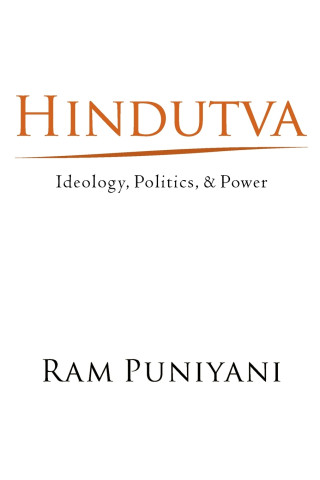
Hindutva
Autor Ram Puniyani, Vivek Sakpal
What turns a neighbour into a threat? What transforms a historical grievance into a justification for mob violence? And how does a democracy - built on the foundations of equality and pluralism - begin to hollow itself out from wi ... celý popis


- Jazyk:
 Angličtina
 - Väzba: Brožovaná
- Počet strán: 300
Nakladateľ: Peoples Literature Publication, 2026
- Viac informácií o knihe

18.32 €
Bežne: 19.74 €
Ušetríte 1.42 €

Skladom u dodávateľa
Odosielame za 9 - 15 dní
Mohlo by sa vám tiež páčiť
-

Moonwalk
14.07 € -14 % -

The Score
13.76 € -12 % -

The Deal
12.34 € -21 % -

The Mistake
14.47 € -8 % -

Jujutsu Kaisen, Vol. 30
11.23 € -14 % -

Berserk Deluxe Volume 1
35.63 € -25 % -

Invincible Compendium Volume 2
46.67 € -43 % -

The Goal
14.57 € -7 % -

Witch Hat Atelier: Grimoire Edition 1
34.62 € -29 % -

Berserk Deluxe Volume 2
33.10 € -31 % -

Murdoku
18.12 € -25 % -

Lord of Mysteries, Vol. 3: The Clown, Part III
15.89 € -22 % -

Witch Hat Atelier Manga Box Set 1
51.33 € -31 % -

Jujutsu Kaisen, Vol. 25
9.71 € -25 % -

Moonwalk: A Memoir
19.94 € -31 % -

Legacy
11.94 € -12 % -

Heated Rivalry
12.55 € -7 % -

JoJo's Bizarre Adventure: Part 7--Steel Ball Run, Vol. 7
18.22 € -25 % -

Berserk Deluxe Volume 3
55.08 € -

Jujutsu Kaisen, Vol. 26
9.31 € -25 % -

White Nights
4.75 € -11 %
Darčekový poukaz: Radosť zaručená
- Darujte poukaz v ľubovoľnej hodnote, a my sa postaráme o zvyšok.
- Poukaz sa vzťahuje na všetky produkty v našej ponuke.
- Elektronický poukaz si vytlačíte z e-mailu a môžete ho ihneď darovať.
- Platnosť poukazu je 12 mesiacov od dátumu vystavenia.
Viac informácií o knihe Hindutva
Nákupom získate 44 bodov
 Anotácia knihy
What turns a neighbour into a threat? What transforms a historical grievance into a justification for mob violence? And how does a democracy - built on the foundations of equality and pluralism - begin to hollow itself out from within?
These are the questions at the centre of this landmark work by Ram Puniyani, one of India's most respected scholars of communalism and religious nationalism. Comprehensive in scope, rigorous in argument, and urgent in its relevance, this book offers the most complete account available of how divisive politics operates in India - where it comes from, how it sustains itself, and who it ultimately serves.
Puniyani begins by examining how hatred is manufactured through what he calls 'social common sense' - the accumulated myths, biases, and distorted perceptions that prepare the ground for communal violence. He then moves systematically through the fault lines of Indian history: the contested narratives of ancient India and the origin of the Aryan race; the medieval period reread not as Hindu-Muslim conflict but as a rich civilisational synthesis; the colonial era and the making of Indian nationalism; and the tragedy of Kashmir, examined with rare nuance and historical honesty.
The book devotes close, critical attention to the ideological formations that have shaped modern India - the rise of Hindu communalism through RSS and its affiliated organisations, the parallel history of Muslim communalism, and the forces that together produced Partition and its long aftermath. It chronicles communal violence in post-Independence India, the targeted persecution of Christian communities, and the renewed assault on Dalit aspirations in contemporary politics.
Two chapters stand apart in their importance. The analysis of fundamentalism and women's rights exposes how religious nationalism across traditions is structurally dependent on the subordination of women - making gender equality and communal politics irreconcilable opposites. And the closing examination of the relationship between politics, religion, and terrorism situates India's experience within a global landscape, tracing the manufactured links between Islam and terror that have fed Islamophobia worldwide and intensified anti-minority prejudice in India.
Throughout, Puniyani's argument remains consistent and clear: communalism is not a product of ancient hatreds. It is a modern political project, rooted in the interests of declining elites, sustained by institutional machinery, and directed against everyone for whom the Constitution of India represents a living promise - religious minorities, Dalits, women, Adivasis, and the poor.
This book is essential reading for students of Indian history, politics, and society; for researchers working on nationalism, communalism, and human rights; and for every citizen who wants to understand - with clarity and without illusion - the forces shaping the republic today.
Parametre knihy
18.32 €
- Celý názov: Hindutva
- Podnázov: Ideology, Politics, & Power
- Autor: Ram Puniyani, Vivek Sakpal
- Jazyk: Angličtina
- Väzba: Brožovaná
- Počet strán: 300
- EAN: 9788199989573
- ISBN: 8199989572
- ID: 52535649
- Nakladateľ: Peoples Literature Publication
- Hmotnosť: 406 g
- Rozmery: 229 × 152 × 16 mm
- Dátum vydania: 25. May 2026
Osobný odber Bratislava a 12742 dalších
Copyright ©2008-26 najlacnejsie-knihy.sk Všetky práva vyhradenéSúkromieCookies

 24 miliónov titulov
 Vrátenie do mesiaca
 02/210 210 99 (8-15.30h)