Kód: 04112551
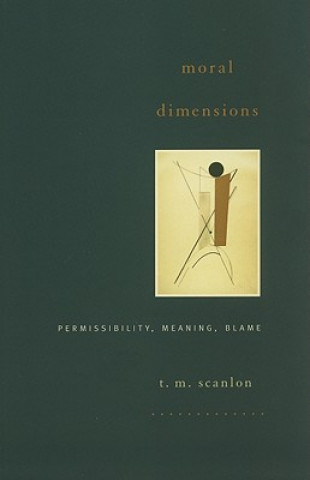
Moral Dimensions
Autor T M Scanlon
In a clear and elegant style, T. M. Scanlon reframes current philosophical debates as he explores the moral permissibility of an action. Permissibility may seem to depend on the agent's reasons for performing an action. For exampl ... celý popis


- Jazyk:
 Angličtina
 - Väzba: Brožovaná
- Počet strán: 264
Nakladateľ: Harvard University Press, 2010
- Viac informácií o knihe


Mohlo by sa vám tiež páčiť
-

Project Hail Mary
11.84 € -4 % -

Court of Thorns and Roses Hardcover Box Set
87.09 € -24 % -

The Legend of Zelda: Hyrule Historia
43.34 € -

The Comfort Book
12.35 € -9 % -

Saga of Tanya the Evil, Vol. 1 (manga)
10.02 € -24 % -

Atlas of Human Anatomy for the Artist
16.40 € -29 % -
Architecture Patterns with Python
46.48 € -25 % -

Onyx Storm
15.69 € -24 % -

Designing Your Life
28.65 € -9 % -

How Migration Really Works
11.94 € -31 % -

Growing Gourmet and Medicinal Mushrooms
39.59 € -9 % -

Haikyu!!, Vol. 14
7.89 € -25 % -

One Day
10.62 € -28 % -

1930s Fashion: The Definitive Sourcebook
18.22 € -25 % -

Christmas Coloring Postcards
10.02 € -24 % -

Awaken The Giant Within
17.31 € -

Gleipnir 2
10.02 € -24 % -

Devils' Line, Volume 3
10.62 € -24 % -

F-15 Eagle: McDonnell Douglas Strike Fighter
18.32 € -24 % -

Summer Nights Coloring Book
13.46 € -24 % -

Dragon Ball Full Color Freeza Arc, Vol. 3
13.97 € -24 % -

A Day of Fallen Night
24.70 € -28 % -

Asana, Pranayama, Mudra and Bandha
35.24 € -

Legend of Zelda Complete Box Set
77.07 € -27 % -

Chromophobia
18.12 € -24 % -

Giving Tree
12.65 € -29 % -

Difference Engine
12.95 € -18 % -

Digital Painting Techniques
49.11 € -29 % -

Divine Nature
20.45 € -27 % -

Little Women
30.17 € -25 % -

Illustrated Encyclopaedia of Traditional Symbols
13.76 € -30 % -

Snow Falling
10.42 € -30 % -

Sense and Sensibility
10.12 € -29 % -

Paper Girls Deluxe Edition Volume 1
25.11 € -25 % -

Gallant
13.36 € -29 % -

America
13.26 € -19 % -

Bradbury Stories
22.78 € -27 % -

First Steps in SAP(R) S/4HANA Sales and Distribution (SD)
26.93 € -6 % -

Complete Stories and Poems of Edgar Allan Poe
21.06 € -29 % -
Intermediate Turkish Short Stories - Based on a comprehensive grammar and vocabulary framework (CEFR B1) - with quizzes , full answer key and online a
19.44 € -

Troubleshooting BGP
64.41 € -1 % -

Difficulty of Tolerance
34.53 € -

Abiy Project
41.01 € -

Deck of Many Things (Includes the Book of Many Things, 66-Card Deck of Many Things + Card Reference
82.13 € -11 % -

Death Takes Me
11.33 € -28 % -

The New York Times 36 Hours. Europe.
39.39 € -29 % -

Mionší Forest
32.60 € -21 % -

Aru Shah and the End of Time (A Pandava Novel Book 1)
7.69 € -34 % -

What to Eat for How You Feel
28.05 € -27 % -

You Have the Right to Remain Innocent
8.40 € -26 % -

Business Partner A2+ Coursebook and Standard MyEnglishLab Pack
58.43 € -

On Human Nature
26.63 € -

Plagues upon the Earth
39.59 € -

Bill Ward: The Fantagraphics Studio Edition
121.73 € -24 % -

Equity Asset Valuation, Fourth Edition
108.87 € -4 % -

Influencer Code
18.63 € -25 % -

MIKAPIKAZO (ARTBOOK VO JAPONAIS)
68.96 € -

What Is a Quantum Field Theory?
100.87 € -

NX-OS and Cisco Nexus Switching
72.81 € -

Esoteric Lessons
41.82 € -15 % -

Strong Boy
15.39 € -18 % -

Being Realistic about Reasons
29.16 € -

Ethics, Life and Institutions
12.14 € -16 % -

The Hobbit Deluxe Illustrated by the Author
130.64 € -28 % -

Essays on Marx's Theory of Value
28.05 € -

Boca Juniors
11.54 € -10 % -

Wurst Case Scenario (Octavius Bear Book 11)
14.78 € -2 % -

Mexico's Pivotal Democratic Election
37.57 € -12 % -
Essentials of Visual Communication
55.29 € -

Depraved
14.98 € -6 % -

Plain Vanilla Murder
21.06 € -21 % -

Ready, Set . . . Baby!
13.76 € -26 % -

Remana
9 € -6 % -

Collectible Lighters
20.04 € -

Superstorm Sandy
42.02 € -

Myth and Fairy Tale in Contemporary Women's Fiction
185.84 € -

Wellspring
13.97 € -24 %
Darčekový poukaz: Radosť zaručená
- Darujte poukaz v ľubovoľnej hodnote, a my sa postaráme o zvyšok.
- Poukaz sa vzťahuje na všetky produkty v našej ponuke.
- Elektronický poukaz si vytlačíte z e-mailu a môžete ho ihneď darovať.
- Platnosť poukazu je 12 mesiacov od dátumu vystavenia.
Viac informácií o knihe Moral Dimensions
Nákupom získate 88 bodov
 Anotácia knihy
In a clear and elegant style, T. M. Scanlon reframes current philosophical debates as he explores the moral permissibility of an action. Permissibility may seem to depend on the agent's reasons for performing an action. For example, there seems to be an important moral difference between tactical bombing and a campaign by terrorists - even if the same number of non-combatants are killed - and this difference may seem to lie in the agents' respective aims. However, Scanlon argues that the apparent dependence of permissibility on the agent's reasons in such cases is merely a failure to distinguish between two kinds of moral assessment: assessment of the permissibility of an action and assessment of the way an agent decided what to do. Distinguishing between these two forms of assessment leads Scanlon to an important distinction between the permissibility of an action and its meaning: the significance for others of the agent's willingness to act in this way. An action's meaning depends on the agent's reasons for performing it in a way that its permissibility does not. Blame, he argues, is a response to the meaning of an action rather than its permissibility. This analysis leads to a novel account of the conditions of moral responsibility and to important conclusions about the ethics of blame.
Parametre knihy
Zaradenie knihy Knihy po anglicky Humanities Philosophy Ethics & moral philosophy
36.35 €
- Celý názov: Moral Dimensions
- Autor: T M Scanlon
- Jazyk: Angličtina
- Väzba: Brožovaná
- Počet strán: 264
- EAN: 9780674057456
- ISBN: 0674057457
- ID: 04112551
- Nakladateľ: Harvard University Press
- Hmotnosť: 312 g
- Rozmery: 235 × 156 × 15 mm
- Dátum vydania: 03. September 2010
Obľúbené z iného súdka
-
Skin in the Game
9.71 € -29 % -

Justice
11.84 € -25 % -

Beyond Good and Evil
11.13 € -35 % -

Philosophy of Freedom
13.16 € -

Moral Man and Immoral Society
23.08 € -25 % -

Might is Right
11.33 € -

Reasons and Persons
30.58 € -11 % -

After Virtue
30.58 € -9 % -

What We Owe to Each Other
35.84 € -

Theory of Moral Sentiments
14.88 € -24 % -

Wholeness and the Implicate Order
23.59 € -6 % -

When Species Meet
18.22 € -25 % -

The Genealogy of Morals
6.07 € -22 % -

A Confession
9.31 € -25 % -

Notes on Suicide
13.97 € -24 % -

Sickness Unto Death
9.21 € -2 % -

Most Good You Can Do
15.39 € -14 % -

Justice for Hedgehogs
34.73 € -

Marriage and Morals
24.91 € -

Training the Mind and Cultivating Loving-Kindness
12.55 € -26 % -

Ethics and the Limits of Philosophy
25.51 € -9 % -

Philebus
13.97 € -24 % -

Niccolo Machiavelli
60.86 € -

Spy the Lie
14.07 € -25 % -

Civil Disobedience and Other Essays
3.74 € -30 % -
Apology, Crito and Phaedo of Socrates
9.81 € -

Dependent Rational Animals
18.22 € -25 % -

Formalism in Ethics and Non-Formal Ethics of Values
39.29 € -10 % -

The Ethics of Star Trek
14.68 € -18 % -

Better Never to Have Been
39.59 € -6 % -

Meditations
8.70 € -25 % -

Lila
10.12 € -17 % -

What Money Can't Buy
12.65 € -12 % -

Idea of Justice
13.16 € -34 % -

Responsibility and Judgment
13.87 € -29 % -

Ethics
13.97 € -24 % -

Theory of Moral Sentiments
11.33 € -24 % -

Against Empathy
13.56 € -14 % -

Will to Power
10.62 € -26 % -

On Human Nature
11.33 € -24 % -

Born to Be Good
12.75 € -24 % -

Concept of Law
64 € -

Inventing the Individual
11.84 € -25 % -

Pedagogy of Freedom
22.98 € -

Art of Worldly Wisdom
8.60 € -1 % -

Just
32 € -

Freedom of the Will
18.42 € -2 % -
Lying
13.16 € -24 % -

What Money Can't Buy
10.12 € -27 %
Osobný odber Bratislava a 12762 dalších
Copyright ©2008-26 najlacnejsie-knihy.sk Všetky práva vyhradenéSúkromieCookies

 24 miliónov titulov
 Vrátenie do mesiaca
 02/210 210 99 (8-15.30h)