Kód: 24304239
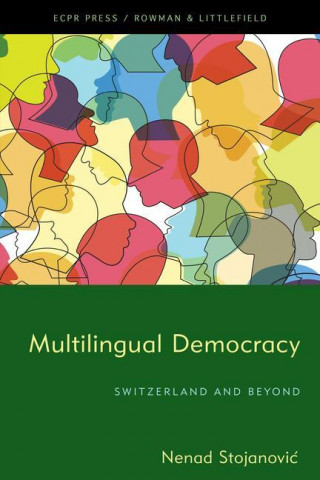
Multilingual Democracy
Autor NENAD STOJANOVIC
Most experts on divided societies and institutional design broadly agree that it is more difficult to establish and maintain a stable, functioning democracy in a country with multiple languages and linguistically fragmented public ... celý popis


- Jazyk:
 Angličtina
 - Väzba: Pevná
- Počet strán: 244
Nakladateľ: ECPR Press, 2021
- Viac informácií o knihe

95.88 €
Bežne: 97.89 €
Ušetríte 2 €

Skladom u dodávateľa
Odosielame za 9 - 15 dní
Mohlo by sa vám tiež páčiť
-

Moonwalk
14.07 € -

The Score
13.76 € -12 % -

The Deal
12.34 € -21 % -

The Mistake
14.47 € -8 % -

Jujutsu Kaisen, Vol. 30
11.23 € -14 % -

Berserk Deluxe Volume 1
35.63 € -25 % -

Invincible Compendium Volume 2
42.32 € -30 % -

The Goal
14.57 € -7 % -

Witch Hat Atelier: Grimoire Edition 1
34.62 € -29 % -

Berserk Deluxe Volume 2
33.10 € -31 % -

Murdoku
18.12 € -25 % -

Lord of Mysteries, Vol. 3: The Clown, Part III
14.98 € -24 % -

Witch Hat Atelier Manga Box Set 1
51.33 € -31 % -

Jujutsu Kaisen, Vol. 25
9.71 € -25 % -

Moonwalk: A Memoir
19.94 € -31 % -

Legacy
11.94 € -12 % -

Heated Rivalry
12.55 € -7 % -

JoJo's Bizarre Adventure: Part 7--Steel Ball Run, Vol. 7
18.22 € -25 % -

Berserk Deluxe Volume 3
55.08 € -

Jujutsu Kaisen, Vol. 26
9.31 € -25 % -
White Nights
4.75 € -11 %
Darčekový poukaz: Radosť zaručená
- Darujte poukaz v ľubovoľnej hodnote, a my sa postaráme o zvyšok.
- Poukaz sa vzťahuje na všetky produkty v našej ponuke.
- Elektronický poukaz si vytlačíte z e-mailu a môžete ho ihneď darovať.
- Platnosť poukazu je 12 mesiacov od dátumu vystavenia.
Viac informácií o knihe Multilingual Democracy
Nákupom získate 232 bodov
 Anotácia knihy
Most experts on divided societies and institutional design broadly agree that it is more difficult to establish and maintain a stable, functioning democracy in a country with multiple languages and linguistically fragmented public spheres than in more homogeneous countries.
Multilingual countries such as Canada and Belgium have been experiencing considerable difficulties in past decades (see the almost successful 1995 referendum on sovereignty in Quebec or the institutional deadlock and the rise of Flemish nationalism in Belgium since the 1970s). The prospects for the EU to become a viable democracy are even more haunted by multilingualism, considering that it has 24 official languages and no lingua franca.
Switzerland, however, is also a multilingual country without a lingua franca, fragmented into 22 mono-lingual and three multilingual cantons, as well as into four distinct public spheres (German, French, Italian, Romansh). And yet it is widely seen as one of the most stable and successful democracies.
Conventional wisdom in political science literature suggests that "consociational" political institutions account for the success of Swiss multilingual democracy. This book offers a different institutional explanation. The author argues that in mainstream literature important Swiss institutions - in particular direct democracy, Parliament and the federal executive - have largely been misinterpreted: they have been labelled as consociational, whereas they are rather a product of "centripetalism", an approach to institutional design in which political incentives are directed toward intergroup compromise because of the need to appeal to voters across group lines in order to form majorities. This approach to achieving long-term democratic stability stands in sharp contrast to consociationalism.
Parametre knihy
Zaradenie knihy Knihy po anglicky Society & social sciences Politics & government
95.88 €
- Celý názov: Multilingual Democracy
- Podnázov: Switzerland and Beyond
- Autor: NENAD STOJANOVIC
- Jazyk: Angličtina
- Väzba: Pevná
- Počet strán: 244
- EAN: 9781785523311
- ISBN: 1785523317
- ID: 24304239
- Nakladateľ: ECPR Press
- Hmotnosť: 512 g
- Rozmery: 158 × 238 × 23 mm
- Dátum vydania: 29. June 2021
Osobný odber Bratislava a 12742 dalších
Copyright ©2008-26 najlacnejsie-knihy.sk Všetky práva vyhradenéSúkromieCookies

 24 miliónov titulov
 Vrátenie do mesiaca
 02/210 210 99 (8-15.30h)