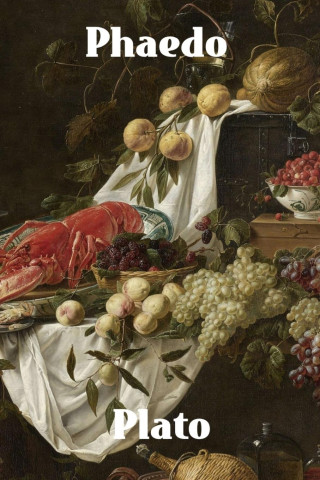
Kód: 43737595
Phaedo
Autor Plato
Phaedo, also known to ancient readers as On The Soul, is one of the best-known dialogues of Plato's middle period, along with the Republic and the Symposium. The philosophical subject of the dialogue is the immortality of the soul ... celý popis


- Jazyk:
 Angličtina
 - Väzba: Brožovaná
- Počet strán: 110
Nakladateľ: Binker North, 2023
- Viac informácií o knihe

13.04 €
Bežne: 13.31 €
Ušetríte 0.27 €

Skladom u dodávateľa
Odosielame za 9 - 15 dní
Mohlo by sa vám tiež páčiť
-

Moonwalk
14.15 € -17 % -

The Score
13.65 € -13 % -

The Deal
11.42 € -27 % -

The Mistake
14.56 € -7 % -

Jujutsu Kaisen, Vol. 30
9.60 € -22 % -

Witch Hat Atelier: Grimoire Edition 1
34.59 € -29 % -

Invincible Compendium Volume 2
46.42 € -23 % -

Berserk Deluxe Volume 1
35.60 € -25 % -

The Goal
14.66 € -7 % -

Berserk Deluxe Volume 2
33.17 € -30 % -

Invincible Compendium Volume 1
45.81 € -24 % -

Witch Hat Atelier Manga Box Set 1
51.28 € -31 % -

Heated Rivalry
12.63 € -7 % -

Moonwalk: A Memoir
23.36 € -25 % -
Murdoku
17.09 € -29 % -
Lord of Mysteries, Vol. 3: The Clown, Part III
14.96 € -29 % -

Jujutsu Kaisen, Vol. 25
9.90 € -20 % -

White Nights
4.74 € -11 % -

Veil Volume 1
13.54 € -30 % -

Jujutsu Kaisen, Vol. 26
9.90 € -20 % -

Legacy
11.93 € -12 %
Darčekový poukaz: Radosť zaručená
- Darujte poukaz v ľubovoľnej hodnote, a my sa postaráme o zvyšok.
- Poukaz sa vzťahuje na všetky produkty v našej ponuke.
- Elektronický poukaz si vytlačíte z e-mailu a môžete ho ihneď darovať.
- Platnosť poukazu je 12 mesiacov od dátumu vystavenia.
Viac informácií o knihe Phaedo
Nákupom získate 32 bodov
 Anotácia knihy
Phaedo, also known to ancient readers as On The Soul, is one of the best-known dialogues of Plato's middle period, along with the Republic and the Symposium. The philosophical subject of the dialogue is the immortality of the soul. It is set in the last hours prior to the death of Socrates, and is Plato's fourth and last dialogue to detail the philosopher's final days, following Euthyphro, Apology, and Crito.
One of the main themes in the Phaedo is the idea that the soul is immortal. In the dialogue, Socrates discusses the nature of the afterlife on his last day before being executed by drinking hemlock. Socrates has been imprisoned and sentenced to death by an Athenian jury for not believing in the gods of the state (though some scholars think it was more for his support of "philosopher kings" as opposed to democracy)[2] and for corrupting the youth of the city.
By engaging in dialectic with a group of Socrates's friends, including the two Thebans, Cebes, and Simmias, Socrates explores various arguments for the soul's immortality in order to show that there is an afterlife in which the soul will dwell following death and, for couples and good people, be more at one with "every loving thing" and be more powerful than the Greek gods. Phaedo tells the story that following the discussion, he and the others were there to witness the death of Socrates.
The Phaedo was first translated into Latin from Greek by Apuleius but no copy survived, so Henry Aristippus produced a new translation in 1160.
Parametre knihy
Zaradenie knihy Knihy po nemecky Geisteswissenschaften, Kunst, Musik Philosophie Mittelalter
13.04 €
- Celý názov: Phaedo
- Autor: Plato
- Jazyk: Angličtina
- Väzba: Brožovaná
- Počet strán: 110
- EAN: 9781774419885
- ISBN: 1774419882
- ID: 43737595
- Nakladateľ: Binker North
- Hmotnosť: 173 g
- Rozmery: 229 × 152 × 6 mm
- Dátum vydania: 15. July 2023
Osobný odber Bratislava a 12825 dalších
Copyright ©2008-26 najlacnejsie-knihy.sk Všetky práva vyhradenéSúkromieCookies

 24 miliónov titulov
 Vrátenie do mesiaca
 02/210 210 99 (8-15.30h)