Kód: 32936470
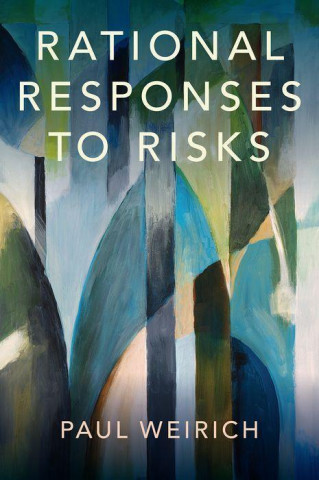
Rational Responses to Risks
Autor Paul Weirich
Good decisions account for risks. For example, the risk of an accident while driving in the rain makes a reasonable driver decide to slow down. While risk is a large topic in theoretical disciplines such as economics and psycholog ... celý popis


- Jazyk:
 Angličtina
 - Väzba: Pevná
- Počet strán: 282
Nakladateľ: Oxford University Press Inc, 2020
- Viac informácií o knihe


Mohlo by sa vám tiež páčiť
-

Moonwalk
14.07 € -

The Score
13.76 € -12 % -

The Deal
12.34 € -21 % -

The Mistake
14.47 € -8 % -

Jujutsu Kaisen, Vol. 30
9.61 € -22 % -

Witch Hat Atelier: Grimoire Edition 1
34.62 € -29 % -

Invincible Compendium Volume 2
46.47 € -23 % -

Berserk Deluxe Volume 1
35.63 € -25 % -

The Goal
14.57 € -7 % -

Berserk Deluxe Volume 2
33.10 € -31 % -

Invincible Compendium Volume 1
57.20 € -9 % -

Witch Hat Atelier Manga Box Set 1
51.33 € -31 % -

Lord of Mysteries, Vol. 3: The Clown, Part III
14.98 € -29 % -

Murdoku
18.12 € -25 % -

Moonwalk: A Memoir
19.94 € -31 % -

Heated Rivalry
12.55 € -7 % -

Jujutsu Kaisen, Vol. 25
9.91 € -20 % -

Legacy
11.94 € -12 % -

Berserk Deluxe Volume 3
55.08 € -

Veil Volume 1
12.04 € -25 % -

White Nights
4.75 € -11 %
Darčekový poukaz: Radosť zaručená
- Darujte poukaz v ľubovoľnej hodnote, a my sa postaráme o zvyšok.
- Poukaz sa vzťahuje na všetky produkty v našej ponuke.
- Elektronický poukaz si vytlačíte z e-mailu a môžete ho ihneď darovať.
- Platnosť poukazu je 12 mesiacov od dátumu vystavenia.
Viac informácií o knihe Rational Responses to Risks
Nákupom získate 179 bodov
 Anotácia knihy
Good decisions account for risks. For example, the risk of an accident while driving in the rain makes a reasonable driver decide to slow down. While risk is a large topic in theoretical disciplines such as economics and psychology, as well as in practical disciplines such as medicine and finance, philosophy has a unique contribution to make in developing a normative theory of risk that states what risk is, and to what extent our responses to it are rational. Weirich here develops a philosophical theory of the rationality of responses to risk. He first distinguishes two types of risk: first, a chance of a bad event, and second, an act's risk in relation to its possible outcomes. He argues that this distinction has normative significance in the sense that one's attitudes towards these types of risks - and how one acts on them - are governed by different general principles of rationality. Consequently, a comprehensive account of risk must not only characterize rational responses to risk but also explain why these responses are rational. Weirich explains how, for a rational ideal agent, the expected utilities of the acts available in a decision problem explain the agent's preferences among the acts. As a result, maximizing expected utility is just following preferences among the acts. His view takes an act's expected utility, not just as a feature of a representation of preferences among acts, but also as a factor in the explanation of preferences among acts. The book's precise formulation of general standards of rationality for attitudes and for acts, and its rigorous argumentation for these standards, make it philosophical; but while mainly of interest to philosophers, its broader arguments will contribute to the conceptual foundations of studies of risk in all disciplines that study it.
Parametre knihy
Zaradenie knihy Knihy po anglicky Humanities Philosophy Philosophy: epistemology & theory of knowledge
74.01 €
- Celý názov: Rational Responses to Risks
- Autor: Paul Weirich
- Jazyk: Angličtina
- Väzba: Pevná
- Počet strán: 282
- EAN: 9780190089412
- ISBN: 0190089415
- ID: 32936470
- Nakladateľ: Oxford University Press Inc
- Hmotnosť: 538 g
- Rozmery: 243 × 163 × 24 mm
- Dátum vydania: 04. September 2020
Osobný odber Bratislava a 12542 dalších
Copyright ©2008-26 najlacnejsie-knihy.sk Všetky práva vyhradenéSúkromieCookies

 24 miliónov titulov
 Vrátenie do mesiaca
 02/210 210 99 (8-15.30h)