Kód: 16060063
Restless Clock
Autor Jessica Riskin
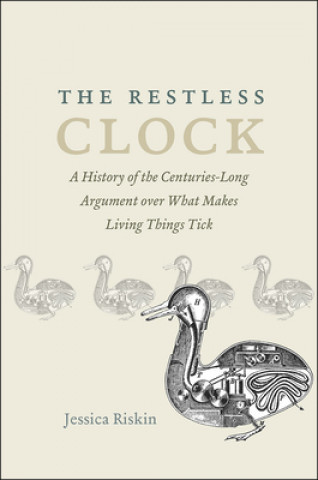
Today, a scientific explanation is not meant to ascribe agency to natural phenomena: we would not say a rock falls because it seeks the center of the earth. Even for living things, in the natural sciences and often in the social s ... celý popis


- Jazyk:
 Angličtina
 - Väzba: Brožovaná
- Počet strán: 544
Nakladateľ: The University of Chicago Press, 2018
- Viac informácií o knihe


Mohlo by sa vám tiež páčiť
-

Coloriages mystères Les Grands classiques Disney Tome 9
21.50 € -
Classical Mechanics
14.02 € -24 % -

Muqaddimah
18.97 € -21 % -
English for Mathematics: Book A
14.93 € -

Dukes of Burgundy
98.44 € -

Up, Down, and Around
7.26 € -24 % -

Owl Wants to Share at Moonlight School
7.66 € -25 % -

Echoes
22 € -

Mandalorian. Star Wars. Le più belle storie
23.21 € -9 % -

First Steps for Little Feet in Gospel Paths
23.21 € -14 % -

Fizyka na start
20.99 € -
Moral Machines
26.04 € -

Valenztheorie und historische Sprachwissenschaft
118.93 € -4 % -

Special Topics in Structural Dynamics, Volume 6
205.36 € -7 %
Darčekový poukaz: Radosť zaručená
- Darujte poukaz v ľubovoľnej hodnote, a my sa postaráme o zvyšok.
- Poukaz sa vzťahuje na všetky produkty v našej ponuke.
- Elektronický poukaz si vytlačíte z e-mailu a môžete ho ihneď darovať.
- Platnosť poukazu je 12 mesiacov od dátumu vystavenia.
Viac informácií o knihe Restless Clock
Nákupom získate 84 bodov
 Anotácia knihy
Today, a scientific explanation is not meant to ascribe agency to natural phenomena: we would not say a rock falls because it seeks the center of the earth. Even for living things, in the natural sciences and often in the social sciences, the same is true. A modern botanist would not say that plants pursue sunlight. This has not always been the case, nor, perhaps, was it inevitable. Since the seventeenth century, many thinkers have made agency, in various forms, central to science. The Restless Clock examines the history of this principle, banning agency, in the life sciences. It also tells the story of dissenters embracing the opposite idea: that agency is essential to nature. The story begins with the automata of early modern Europe, as models for the new science of living things, and traces questions of science and agency through Descartes, Leibniz, Lamarck, and Darwin, among many others. Mechanist science, Jessica Riskin shows, had an associated theology: the argument from design, which found evidence for a designer in the mechanisms of nature. Rejecting such appeals to a supernatural God, the dissenters sought to naturalize agency rather than outsourcing it to a "divine engineer." Their model cast living things not as passive but as active, self-making machines. The conflict between passive- and active-mechanist approaches maintains a subterranean life in current science, shaping debates in fields such as evolutionary biology, cognitive science, and artificial intelligence. This history promises not only to inform such debates, but also our sense of the possibilities for what it means to engage in science and even what it means to be alive.
Parametre knihy
Zaradenie knihy Knihy po anglicky Mathematics & science Science: general issues History of science
34.72 €
- Celý názov: Restless Clock
- Autor: Jessica Riskin
- Jazyk: Angličtina
- Väzba: Brožovaná
- Počet strán: 544
- EAN: 9780226528267
- ISBN: 022652826X
- ID: 16060063
- Nakladateľ: The University of Chicago Press
- Hmotnosť: 1022 g
- Rozmery: 152 × 228 × 42 mm
- Dátum vydania: 08. February 2018
Obľúbené z iného súdka
-
Anatomy of Melancholy
24.63 € -30 % -

Quantum
15.74 € -9 % -

de Re Metallica
23.72 € -

Marie Curie
20.69 € -17 % -
Physics
9.88 € -25 % -

Poison
21.60 € -25 % -
Orgone Accumulator Handbook
26.44 € -1 % -
Lost in Math
15.44 € -20 % -
Thirteen Books of the Elements, Vol. 3
21.70 € -24 % -

Looking for Spinoza
14.02 € -28 % -

1001 Inventions
21.70 € -24 % -
Evolution of Physics
14.73 € -25 % -
Greek Astronomy
11.30 € -24 % -
Medicine
27.96 € -27 % -
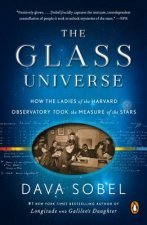
Glass Universe
14.13 € -34 % -
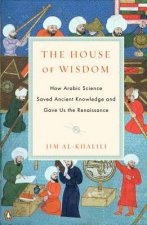
House of Wisdom
14.02 € -25 % -
Science and Poetry
30.18 € -

Science and Islam (Icon Science)
11.80 € -25 % -

Romantic Machine
37.25 € -
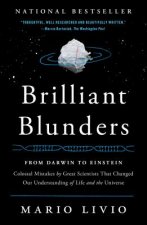
Brilliant Blunders
14.02 € -25 % -
Disappearing Spoon...and other true tales from the Periodic Table
12.81 € -25 % -
Information
14.93 € -29 % -
Complexity
26.65 € -
Molecular Biology: A Very Short Introduction
9.99 € -24 % -
God's Philosophers
12.01 € -23 % -
Quadrivium
18.87 € -25 % -

Astronomia Nova
35.33 € -25 % -
The Scientists
14.83 € -24 % -

Beginnings of Western Science
29.78 € -
Scientific Revolution
23.82 € -

New Answers, Book 4
11.90 € -29 % -

Lost Art of Finding Our Way
18.87 € -25 % -

Six-Cornered Snowflake
39.17 € -

On The Shoulders Of Giants
21.70 € -24 % -

Phenomenon of Man
14.02 € -25 % -
Oxford Book of Modern Science Writing
15.03 € -30 % -

Almagest
17.46 € -25 % -
History of Physics: A Very Short Introduction
9.99 € -24 % -
Origin Story
7.46 € -30 % -
Age of Wonder
16.15 € -24 % -
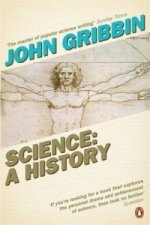
Science: A History
20.18 € -24 % -
Ascent Of Man
16.04 € -24 % -
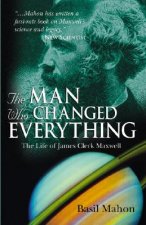
Man Who Changed Everything
12.01 € -25 % -
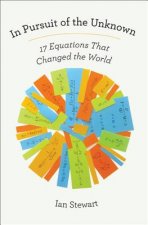
In Pursuit of the Unknown
14.73 € -25 % -

Galileo Goes to Jail and Other Myths about Science and Religion
28.26 € -2 % -

Pathfinders
15.03 € -29 % -

Bursting the Limits of Time
40.88 € -
Fortunate Universe
40.98 € -
New Science of Geology
237.27 €
Osobný odber Bratislava a 12422 dalších
Copyright ©2008-26 najlacnejsie-knihy.sk Všetky práva vyhradenéSúkromieCookies

 24 miliónov titulov
 Vrátenie do mesiaca
 02/210 210 99 (8-15.30h)