Kód: 02404873
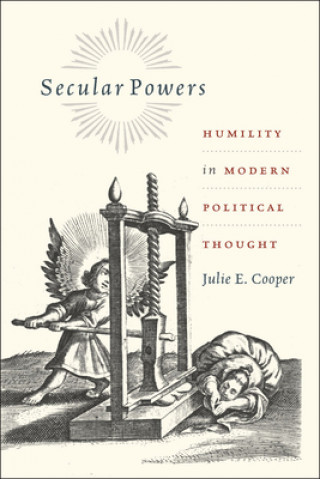
Secular Powers
Autor Julie E Cooper
Secularism is usually thought to contain the project of self-deification, in which humans attack God's authority in order to take his place. Julie E. Cooper overturns this conception through an incisive analysis of the early moder ... celý popis


- Jazyk:
 Angličtina
 - Väzba: Pevná
- Počet strán: 256
Nakladateľ: The University of Chicago Press, 2013
- Viac informácií o knihe

51.08 €

Skladom u dodávateľa v malom množstve
Odosielame za 13 - 18 dní
Potrebujete viac kusov?Ak máte záujem o viac kusov, preverte, prosím, najprv dostupnosť titulu na našej zákazníckej podpore.
Pridať medzi želanie
Mohlo by sa vám tiež páčiť
-

Rarum : priesvitnosť
10.71 € -26 % -

Elég jó vagy!
12.23 € -13 % -

Game AI Pro 360: Guide to Tactics and Strategy
58.98 € -

Way of Infinite Harmony: Path of Her Holiness Princess Ma Gu, Goddess of Cannabis
12.13 € -2 % -

Snöfrid Virágvölgyből
11.02 € -12 % -

Cruising the Library
26.20 € -12 % -

Como polvo en el viento
26.80 € -

Krtek - Kvarteto
2.22 € -32 % -

Nouvelles inquiètes - Pavillons Poche
13.65 € -

Odswietna butelka Tom 15
6.77 € -4 % -

Deníčky jednorožce Duháčkův nový kouzelný kamarád
7.88 € -16 % -

The Man from Glengarry: A Tale of the Ottawa
15.77 € -9 % -

Profanations
25.28 € -5 % -

Ce Que Coute Un Caprice, Suivi de Un Coup de Foudre Sous Un Ciel Serein. 4e Edition
13.85 € -2 % -

Nightstorm and the Grand Slam
8.69 € -25 % -

Opium's Orphans
46.13 € -

Indian Uprising of 1857-8
25.39 € -12 % -

Vetting and Other Stories
10.61 € -25 % -

Mrs. Farrell
10.61 € -6 % -

Combining Ability Analysis and Authentication of F1 Hybrids in Wheat
49.97 € -3 % -

Viva Mexiko - Farben und Freude (Wandkalender 2026 DIN A3 quer), CALVENDO Monatskalender
28.42 € -12 % -

Myth Truer Than History
18.40 € -1 % -

In the Oneness of Time
15.77 € -9 % -

Mark Twain in the Margins
34.19 € -

Gravitational N-Body Simulations
86.60 € -

REPORT ON THE CLIMATIC & AGRIC
18.40 € -1 % -

Bernard Pourriere
20.43 € -

Criaturas míticas de España
27.11 € -

Responsible Innovation
50.07 € -

Biomechanical Modelling at the Molecular, Cellular and Tissue Levels
154.39 € -7 % -

Great Stories from the Mountain: 8 Expansive Short Stories
16.18 € -24 % -

Common Core Reading Lessons
174.42 € -

diaspora (2984)
26.20 € -2 % -

Sudoku Counter Display
87.61 € -9 % -

Machine Learning Methods for Visual Object Detection
43.80 € -14 %
Darčekový poukaz: Radosť zaručená
- Darujte poukaz v ľubovoľnej hodnote, a my sa postaráme o zvyšok.
- Poukaz sa vzťahuje na všetky produkty v našej ponuke.
- Elektronický poukaz si vytlačíte z e-mailu a môžete ho ihneď darovať.
- Platnosť poukazu je 12 mesiacov od dátumu vystavenia.
Viac informácií o knihe Secular Powers
Nákupom získate 124 bodov
 Anotácia knihy
Secularism is usually thought to contain the project of self-deification, in which humans attack God's authority in order to take his place. Julie E. Cooper overturns this conception through an incisive analysis of the early modern justifications for secular politics. While she agrees that secularism is a means of empowerment, she argues that we have misunderstood the sources of secular empowerment and the kinds of strength to which it aspires. Contemporary understandings of secularism, Cooper contends, have been shaped by a limited understanding of it as a shift from vulnerability to power. But the works of the foundational thinkers of secularism tell a different story. Analyzing the writings of Hobbes, Spinoza, and Rousseau at the moment of secularity's inception, she shows that all three understood that acknowledging one's limitations was a condition of successful self-rule. And while all three invited humans to collectively build and sustain a political world, their invitations did not amount to self-deification. Cooper establishes that secular politics as originally conceived does not require a choice between power and vulnerability. Rather, it challenges us - today as then - to reconcile them both as essential components of our humanity.
Parametre knihy
Zaradenie knihy Knihy po anglicky Humanities Philosophy Social & political philosophy
51.08 €
- Celý názov: Secular Powers
- Autor: Julie E Cooper
- Jazyk: Angličtina
- Väzba: Pevná
- Počet strán: 256
- EAN: 9780226081298
- ISBN: 022608129X
- ID: 02404873
- Nakladateľ: The University of Chicago Press
- Hmotnosť: 485 g
- Rozmery: 229 × 152 × 20 mm
- Dátum vydania: 06. December 2013
Obľúbené z iného súdka
-

The 48 Laws of Power
20.53 € -22 % -

Between Past and Future
14.05 € -25 % -

Dividuum
13.14 € -25 % -

End of History and the Last Man
16.08 € -24 % -

Free Will
8.39 € -27 % -

Calendar of Wisdom
9.70 € -25 % -

Prince: The Original Classic
11.42 € -33 % -

Lean Thinking
25.08 € -29 % -

Essential Drucker
12.64 € -29 % -

Years of Rice and Salt
10.61 € -9 % -

The Republic
12.03 € -30 % -

One-Dimensional Man
22.35 € -11 % -

BIRTH OF BIOPOLITICS
17.59 € -24 % -

Future of Nostalgia
25.39 € -

On The Abolition Of All Polictical
10.82 € -25 % -

To Have or To Be?
26.20 € -19 % -

Concept of the Political - Expanded Edition
27.31 € -

Race, Nation, Class
15.17 € -26 % -

Rising Up and Rising Down
17.59 € -24 % -

Making of the Indebted Man
11.32 € -24 % -

Progress
20.33 € -4 % -

Frames of War
14.05 € -19 % -

Candlestick Charting Explained Workbook: Step-by-Step Exercises and Tests to Help You Master Candlestick Charting
28.22 € -18 % -

Common Sense, The Rights Of Man And Other Essential Writings
7.17 € -25 % -

Small Arcs of Larger Circles
21.14 € -14 % -

Managing Your Manager: How to Get Ahead with Any Type of Bos
19.21 € -18 % -

Lectures on the History of Political Philosophy
34.09 € -

Ego and His Own
31.15 € -18 % -

Studies of Political Thought from Gerson to Grotius
34.59 € -

This Wheel's on Fire
14.05 € -25 % -

Politics of Affect
23.06 € -3 % -

Experience Machines
59.48 € -

Struggle for a Christian Politics
8.99 € -1 % -

A Conflict of Visions
26.40 € -

Platform Capitalism
12.33 € -7 % -

On Practice and Contradiction
19.92 € -18 % -

Discourse on Inequality
8.39 € -27 % -

Rene Girard's Mimetic Theory
21.64 € -25 % -

German Ideology
12.23 € -

Beyond Nature and Culture
40.97 € -

Zapp!: the Lightning of Empowerment
14.16 € -27 % -

Methodology of Scientific Research Programmes: Volume 1
25.08 € -25 % -

Ascent of Humanity
21.95 € -26 % -

Philosophy of Mathematics
53.41 € -

Fashion System
17.09 € -24 % -

Republic of Plato
22.65 € -19 % -

Ideas Have Consequences
24.37 € -

Post-Truth
15.67 € -7 % -

Facing Gaia
24.27 € -7 %
Osobný odber Bratislava a 12744 dalších
Copyright ©2008-26 najlacnejsie-knihy.sk Všetky práva vyhradenéSúkromieCookies

 24 miliónov titulov
 Vrátenie do mesiaca
 02/210 210 99 (8-15.30h)