Kód: 13816021
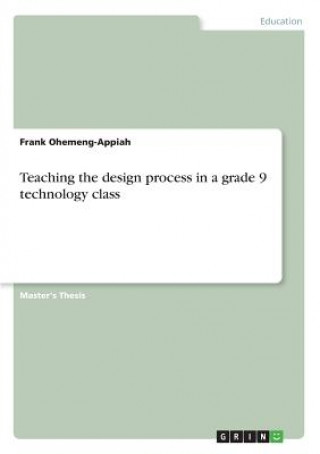
Teaching the design process in a grade 9 technology class
Autor Frank Ohemeng-Appiah
Master's Thesis from the year 2014 in the subject Pedagogy - General, , language: English, abstract: This study therefore explores grade 9 technology teachers' views of the design process and how these views influence their teachi ... celý popis


- Jazyk:
 Angličtina
 - Väzba: Brožovaná
- Počet strán: 132
Nakladateľ: Grin Publishing, 2016
- Viac informácií o knihe

42.70 €
Bežne: 50.08 €
Ušetríte 7.38 €

Skladom u dodávateľa
Odosielame za 5 - 8 dní
Mohlo by sa vám tiež páčiť
-

1984
4.43 € -

Song Machine - Inside the Hit Factory
14.53 € -21 % -

Plus Plus,100 Kreativ Bausteine BIG Basic
24.02 € -

Die ewige Suche des Menschen
16.85 € -16 % -
Printing on Polymers
264.13 € -

Murder at Redmire Hall
9.48 € -27 % -
Flexible Pescatarian
25.23 € -26 % -

A Practical Guide To The Collodion Process In Photography
13.82 € -2 % -

L'art à la manière Art abstrait - Collage et assemblage - boîte avec accessoires
18.67 € -
Dirty Dishes
13.92 € -9 % -

How to Be a Best Friend Forever: Making and Keeping Lifetime Relationships
17.86 € -9 % -

CD petite histoire de France vol .2. de François Ier à Louis XVI
19.28 € -

Discorso sul sintomo. I movimenti creativi dello spirito
13.92 € -9 % -
In a Materialist Way
50.47 € -

Christian Marlowe and the Faberge Egg
14.33 € -2 % -

Renovacao Carismatica Catolica na condicao Pos-Moderna
48.86 € -14 % -

Contramansedumbre
9.58 € -

Yes! I Knew the Queen
18.37 € -6 % -

Confession and Communion Coloring Book
3.83 € -25 % -

Zu Tisch bei den Royals
25.23 € -16 % -

Pentagon and the Presidency
48.05 € -

Gather the Moon
16.15 € -24 % -
Intelligenza artificiale in pratica. Diventare maestri nell'utilizzo dei modelli OperAI
48.56 € -9 % -

Trust and Deception in Virtual Societies
55.93 € -

Das Glokale Management
104.80 € -4 % -

Knowing Yourself - A Medieval Romance
11.70 € -6 % -
Abolition and Its Aftermath
224.24 € -

Songs From A San Diego Morning
15.54 € -

Beitrage Zur Geographie Kurhessens Und Der Umliegenden Gegenden, Aus Der Kurhessischen Triangulirung Der Jahre 1822 Bis 1837 (1839)
27.35 € -2 % -

Sharia Incorporated
59.36 € -5 % -

On the Shortness of Life
32.80 € -1 % -

Everything the Bible Says About Parenting and Children
8.27 € -9 % -

Surveillance of Adverse Drug Reactions in Ooty, India
40.88 € -14 % -

Momentos estelares : la fotografía en el siglo XX
13.12 € -

Working with Drug and Alcohol Users
42.80 € -

Blue, the Gray, and the Green
97.32 € -

Effet Bioinsecticide de Deux Alcalo des Sur Tribolium Castaneum
83.79 € -
Internationale Und Materielle Recht Der Elterlichen Sorge Im Mehrrechtsstaat Mexiko
122.97 € -4 % -

On Core Mathematics Middle School Grade 6
18.77 € -6 % -
Ética y actividad empresarial
15.44 € -
Dimensions of Urban Social Structure
31.59 € -

National, State and Local Politics.
11.20 € -24 % -

Outsiders
13.32 € -1 % -

Healthy Habit Revolution
9.99 € -24 % -

A Midsummer Night's Dream
7.06 € -

Light in the Darkness: Studies in the Gospel of John
14.83 € -9 % -

Life is Your Song: Discover Your Voice!
9.78 € -6 % -
Pessebre vivent independentista d'Arenys de Munt
7.66 € -

Klima von Frankfurt am Main
19.68 € -11 %
Darčekový poukaz: Radosť zaručená
- Darujte poukaz v ľubovoľnej hodnote, a my sa postaráme o zvyšok.
- Poukaz sa vzťahuje na všetky produkty v našej ponuke.
- Elektronický poukaz si vytlačíte z e-mailu a môžete ho ihneď darovať.
- Platnosť poukazu je 12 mesiacov od dátumu vystavenia.
Viac informácií o knihe Teaching the design process in a grade 9 technology class
Nákupom získate 104 bodov
 Anotácia knihy
Master's Thesis from the year 2014 in the subject Pedagogy - General, , language: English, abstract: This study therefore explores grade 9 technology teachers' views of the design process and how these views influence their teaching of the design process. Shulman's Pedagogical Content Knowledge (PCK) model (1986), the Argyris and Schön (1974) notion of "espoused theory" and "theory in use", and Singh-Pillay's (2010) notion of interface have been used to frame the research. A qualitative case study approach was used. Purposive and convenience sampling were used to obtain the respondents for this study. An open ended questionnaire, semi-structured interviews, observation of lessons and post-observation interviews were used to collect data. The study occurs in the Chatsworth West ward in Durban, KwaZulu Natal. The findings indicate that grade 9 technology teachers hold two core views of the design process, namely: design process as problem-solving and design process as a step-by-step process that provides "comfort" to learners during problem-solving. The findings indicate that teachers' views of the design process are an amalgam of their diverse qualification in technology education, their pedagogical content knowledge, their previous teaching experience, their training and (re)training and existing support in the school ecosystem. Thus, it is concluded that the PCK of the technology teacher influences how they teach the design process to their learners. It is recommended that if the non-linear approach of problem-solving in the design process is to be adhered to then there is the need for the retraining and reskilling of technology teachers and that teacher education should also focus more on the development of the PCK of future teachers. The design process undergirds technology education and therefore it is quintessential to the teaching, learning and assessment of technology education. Since the introduction of technology education into the South African curriculum, there has been a series of changes that teachers have had to contend with: C2005, RNCS and now the NCS-CAPS. In the CAPS technology policy there has been a (re)-presentation of the design process from a linear to nonlinear. This (re)presentation of the design process has led to uncertainties amongst teachers of technology in terms of how the teaching of the design process should unfold.
Parametre knihy
Zaradenie knihy Knihy po anglicky Society & social sciences Education
42.70 €
- Celý názov: Teaching the design process in a grade 9 technology class
- Autor: Frank Ohemeng-Appiah
- Jazyk: Angličtina
- Väzba: Brožovaná
- Počet strán: 132
- EAN: 9783668272446
- ISBN: 3668272441
- ID: 13816021
- Nakladateľ: Grin Publishing
- Hmotnosť: 181 g
- Rozmery: 210 × 148 × 8 mm
- Dátum vydania: 10. August 2016
Obľúbené z iného súdka
-
Imagine If...
12.71 € -23 % -
Cambridge IGCSE (R) & O Level Complete Physics: Student Book Fourth Edition
41.89 € -4 % -
Identifying Japanese Seal Script
34.52 € -9 % -
Oxford International Primary Maths Second Edition: Student Book 5
31.59 € -
Cambridge IGCSE (R) & O Level Complete Chemistry: Student Book Fourth Edition
41.89 € -4 % -

OET Preparation
9.28 € -
Maria Montessori's Erdkinder
40.38 € -4 % -
Speed and Accuracy: Multiplication
5.85 € -24 % -
Oxford International Primary Maths Second Edition: Practice Book 5
15.64 € -4 % -
geog.2 Workbook
13.01 € -
My Book of Measurement: Length
6.55 € -24 % -
My Book of Measurement: Weight
6.55 € -24 % -

Deutsch Ferienhefte - 2. Klasse - Volksschule
10.49 € -10 % -

Teaching English for Medical Purposes
20.28 € -1 % -

Guerrilla Warfare Tactics in Urban Environments
17.26 € -2 % -

iPrimary Building Blocks: Spelling, Punctuation, Grammar and Handwriting Year 1
18.27 € -
Friendly Introduction to Mathematical Logic
31.39 € -2 % -

Curse of Capistrano
14.83 € -2 % -
Teaching in the Online Classroom
14.73 € -25 % -

Educational Achievement in Japan
60.57 € -
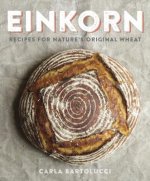
Einkorn
18.27 € -24 % -
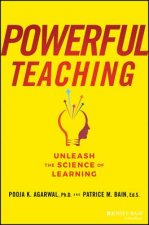
Powerful Teaching: Unleash the Science of Learning
24.53 € -26 % -

Business Partner B2 Workbook
18.87 € -3 % -
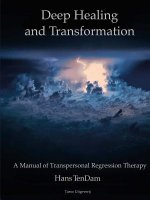
Deep Healing and Transformation
41.69 € -2 % -
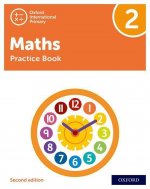
Oxford International Primary Maths Second Edition: Practice Book 2
18.16 € -

MOWIE PO POLSKU DWICZENIA POZIOM B1 I B2
16.55 € -
Cambridge IGCSE (R) & O Level Complete Biology: Student Book Fourth Edition
41.89 € -4 % -
Blue Book of Grammar and Punctuation: An Easy- to-Use Guide with Clear Rules, Real-World Examples , and Reproducible Quizzes, Twelfth Edition
14.83 € -24 % -

Business Partner B1 Workbook
18.87 € -
Oxford IB Study Guides: Economics for the IB Diploma
45.33 € -4 % -

Read Write Inc. Phonics: Red Ditty Book Bag Books (Mixed Pack of 10)
83.59 € -
Oxford International Primary Maths Second Edition: Practice Book 1
13.01 € -4 % -
Growth Mindset Classroom-ready Resource Book
17.36 € -27 % -

Freedom Writers Diary Teacher's Guide
17.86 € -26 % -

Numicon: Numicon Pupil Book 4
18.97 € -
Education
10.79 € -18 % -

240 Vocabulary Words Kids Need to Know: Grade 3
9.99 € -24 % -
Oxford International Primary Maths Second Edition: Student Book 2
31.59 € -
VINES & VINIFICATION
47.95 € -
They Don't Teach This at School
21.19 € -25 % -
Euclidean Geometry
27.76 € -25 % -
Mindset Mathematics - Visualizing and Investigating Big Ideas, Grade 7
18.57 € -30 % -

KS3 Maths 10-Minute Weekly Workouts - Year 7
8.88 € -12 % -
Positive Discipline Tools for Teachers
16.04 € -24 % -
(ISC) SSCP SG & SSCP Practice Test Kit, 3e
67.03 € -26 % -
Power of Making Thinking Visible - Practices to Engage and Empower All Learners
24.83 € -19 % -

Teach Reading With Orton-gillingham
23.21 € -

Speed and Accuracy: Division
5.85 € -24 % -

ESL/ELL Teacher's Survival Guide: Ready-to-Use Strategies, Tools, and Activities for Teaching En glish Language Learners of All Levels, 2nd Edition
26.44 € -25 %
Osobný odber Bratislava a 12422 dalších
Copyright ©2008-26 najlacnejsie-knihy.sk Všetky práva vyhradenéSúkromieCookies

 24 miliónov titulov
 Vrátenie do mesiaca
 02/210 210 99 (8-15.30h)