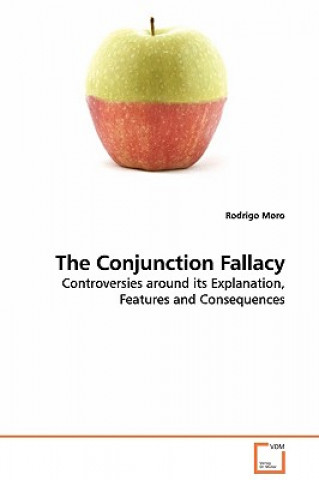
Kód: 06820021
Conjunction Fallacy - Controversies around its Explanation, Features and Consequences
Autor Rodrigo Moro
In 1983 A. Tversky and D. Kahneman showed that §people sometimes tend to believe that a conjunction §of events (e.g., It rains and it is cold) is more §likely to occur than one of the events at stake §(e.g., It rains). This phenom ... celý popis


- Jazyk:
 Angličtina
 - Väzba: Brožovaná
- Počet strán: 88
Nakladateľ: VDM Verlag, 2008
- Viac informácií o knihe

49.97 €
Bežne: 52 €
Ušetríte 2.03 €

U vydavateľa na objednávku
Odosielame za 17 - 27 dní
Mohlo by sa vám tiež páčiť
-

Unmasked
20.02 € -17 % -

Five Feet Apart
8.99 € -26 % -

IELTS 16 Academic Student's Book with Answers
51.08 € -4 % -

Let's Get Pickled!
14.05 € -25 % -

Gente hoy 1 (A1-A2)
23.46 € -

Prince Caspian
9.20 € -7 % -

Der Diamant des Salomon
10.92 € -10 % -

Od plamy do obrazka. Nauka kreatywnego rysowania
4.95 € -20 % -

Shostakovich
44.20 € -

Osiem dni maja. Ostateczny upadek III Rzeszy
12.33 € -17 % -

Word of Promise-NKJV
152.57 € -25 % -
Dictionnaire des chefs de brigade, colonels et capitaines de vaisseau de Bonaparte, premier consul
38.44 € -6 % -

Den Svenske Lotsen Eller Va Gledning Genom En del AF de Nordiska Farvattnen, Innefattande O Stersjo N Med Norrbottniska Och Finska Vikarne, O Resund O
14.66 € -24 % -

State-Owned Enterprise Reform in China
18.71 € -5 % -

Prinzipien des Projektmanagements im Gesundheitswesen
53.11 € -4 % -

Battle of the Crater
51.79 € -

What are We Waiting for?
9.70 € -9 % -

Sumomomo, Momomo, Vol. 7
11.83 € -14 % -

Feminist Activism in the Supreme Court
37.22 € -5 % -
La voie Toltèque de la transformation - Embrasser les quatre éléments du changement
13.45 € -

Supplement to the Grammar of Heraldry, Now in the Press
11.83 € -25 % -

Honeymoon in Purdah: An Iranian Journey
17.59 € -24 % -

Dolore orofacciale: una guida per il medico
54.32 € -14 % -

Die Schweizer Sportvereine
30.14 € -

Pensees Politiques d'Un Homme Qui n'Est d'Aucune Faction
13.55 € -10 % -

Cupido libro para colorear 2
9.80 € -6 % -

Advances in Quantum Chemistry
221.37 € -9 % -

M'ha caigut una dent
7.78 € -9 %
Darčekový poukaz: Radosť zaručená
- Darujte poukaz v ľubovoľnej hodnote, a my sa postaráme o zvyšok.
- Poukaz sa vzťahuje na všetky produkty v našej ponuke.
- Elektronický poukaz si vytlačíte z e-mailu a môžete ho ihneď darovať.
- Platnosť poukazu je 12 mesiacov od dátumu vystavenia.
Viac informácií o knihe Conjunction Fallacy - Controversies around its Explanation, Features and Consequences
Nákupom získate 121 bodov
 Anotácia knihy
In 1983 A. Tversky and D. Kahneman showed that §people sometimes tend to believe that a conjunction §of events (e.g., It rains and it is cold) is more §likely to occur than one of the events at stake §(e.g., It rains). This phenomenon is §called conjunction fallacy as it involves a §logical mistake. Researchers in psychology and §philosophy have engaged in important controversies §around the phenomenon. This work explores three of §these debates. First, it addresses the issue §of the nature of the conjunction fallacy. Is the §conjunction fallacy mainly due to a misunderstanding §of the problem by participants or is it mainly due §to a genuine reasoning bias? Second, it explores §empirical controversies about the factors that §elicit or help to avoid the fallacy. Third, it deals §with the impact of the conjunction fallacy studies §on the issue of human rationality. Does the fact §that most people commit the conjunction fallacy §imply that human beings are in some contexts §irrational? This book should help shed some light on §these debates and should be of interest of §psychologists, philosophers or anyone interested in §the tricks of the human mind.
Parametre knihy
Zaradenie knihy Knihy po anglicky Society & social sciences Psychology
49.97 €
- Celý názov: Conjunction Fallacy - Controversies around its Explanation, Features and Consequences
- Autor: Rodrigo Moro
- Jazyk: Angličtina
- Väzba: Brožovaná
- Počet strán: 88
- EAN: 9783639111132
- ISBN: 3639111133
- ID: 06820021
- Nakladateľ: VDM Verlag
- Hmotnosť: 127 g
- Rozmery: 229 × 152 × 5 mm
- Dátum vydania: 30. December 2008
Obľúbené z iného súdka
-

Healing Trauma Wth Guided Drawing
21.95 € -25 % -

The Heroine's Journey
14.76 € -25 % -

Man Who Mistook His Wife for a Hat
13.04 € -12 % -
What Do You Say After You Say Hello
12.84 € -25 % -

Coercive Control
39.25 € -
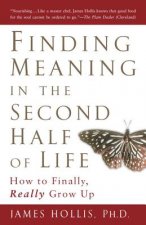
Finding Meaning in the Second Half of Life
14.05 € -25 % -

Visual Intelligence
13.14 € -30 % -

101 Healing Stories for Kids and Teens - Using Metaphors in Therapy
65.25 € -1 % -

The Evolution of Desire
16.18 € -25 % -

Scripts People Live
14.86 € -24 % -

Mindfulness, 25th anniversary edition
14.05 € -25 % -

On Killing
16.18 € -25 % -

Trauma-Sensitive Mindfulness
31.15 € -7 % -

Psychology of Kundalini Yoga
18.20 € -25 % -

True Hallucinations
20.02 € -29 % -
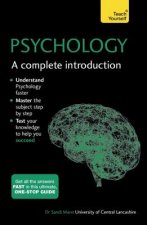
Psychology: A Complete Introduction: Teach Yourself
14.76 € -25 % -

Psychological Birth Of The Human Infant Symbiosis And Individuation
34.09 € -

Twilight Mind
18.40 € -18 % -

Power of Attachment
14.86 € -24 % -

Psychology and Alchemy
39.25 € -
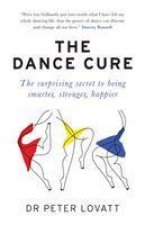
Dance Cure
13.95 € -24 % -

Phototherapy Techniques
34.59 € -2 % -

Scent of Desire
14.66 € -18 % -

Human Tuning Sound Healing with Tuning Forks
23.77 € -2 % -

Degree in a Book: Psychology
19.42 € -23 % -

Handbook of Sandplay Therapy
44.20 € -
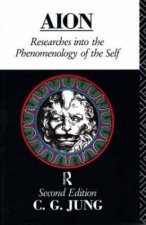
Aion
42.18 € -

Leaving My Father's House
25.08 € -25 % -

Play
14.05 € -25 % -
Collected Works of C.G. Jung, Volume 9 (Part 2): Aion: Researches into the Phenomenology of the Self
23.06 € -25 % -
How God Changes Your Brain
13.85 € -29 % -

Interpretation of Dreams
11.12 € -35 % -

Missing Out
13.95 € -24 % -

Notes on Grief
9.70 € -16 % -

On Murder, Mourning and Melancholia
14.16 € -23 % -

New Introductory Lectures on Psychoanalysis
20.73 € -17 % -

What It Takes To Thrive: Techniques For Severe Trauma And Stress Recovery
27.92 € -

Positive Family Therapy
24.37 € -

Oxford IB Diploma Programme: Psychology Course Companion
72.84 € -

Environmental Psychology - An Introduction, Second Edition
45.01 € -

Opening Skinner's Box
12.74 € -24 % -

Woman's Mysteries
23.67 € -18 % -

Wiley Handbook of Evolutionary Neuroscience
45.42 € -10 % -

Power of Appreciation
13.85 € -18 % -

The Healing Effect of the Forest in Integrative Therapy
18.30 € -10 % -

Solar Myths & Opicinus de Canistris
34.49 € -9 % -

Crossing Point
17.59 € -18 % -

The Mindful Body
10.82 € -29 % -

Later Lacan
39.85 €
Osobný odber Bratislava a 12848 dalších
Copyright ©2008-26 najlacnejsie-knihy.sk Všetky práva vyhradenéSúkromieCookies

 24 miliónov titulov
 Vrátenie do mesiaca
 02/210 210 99 (8-15.30h)